Pakoras – Crispy Pakistani & Indian Fritters
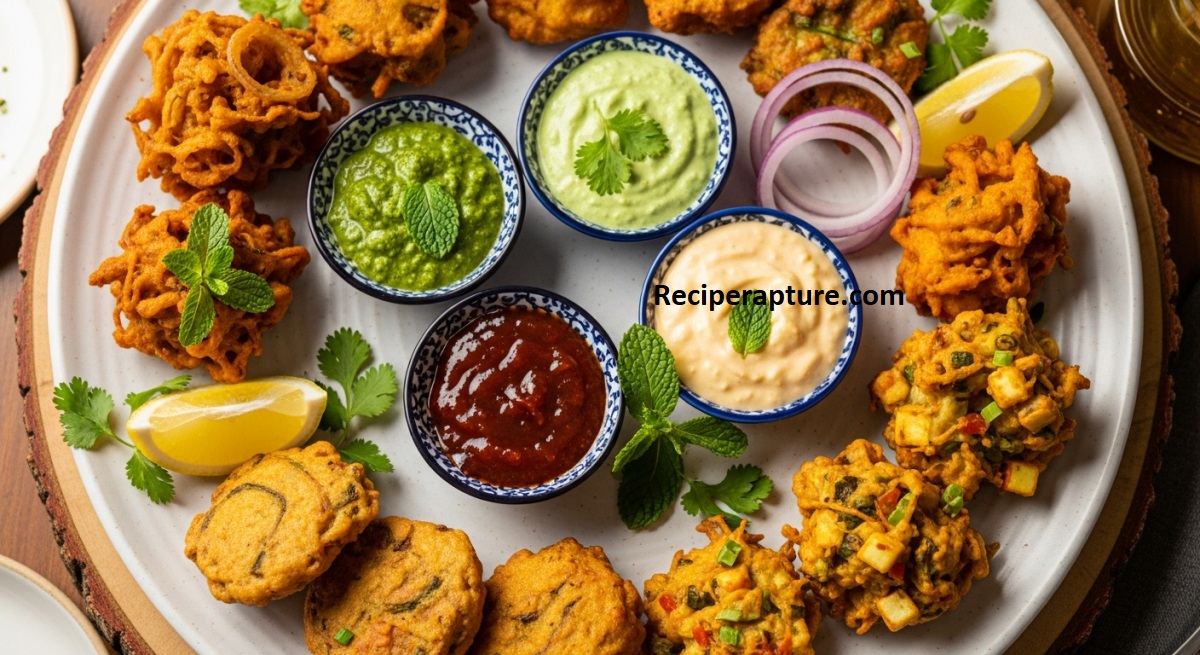
Pakoras are among the most loved South Asian snacks, enjoyed equally in Pakistan and India. These golden, crispy fritters are made by coating vegetables, meat, or herbs in a seasoned gram-flour batter and deep-frying them until perfectly crunchy. Pakoras are especially popular during rainy evenings, Ramadan iftars, tea-time gatherings, and family get-togethers.
What makes pakoras special is their simplicity and versatility—with just a handful of ingredients, you can create endless variations that are comforting, flavorful, and irresistibly crisp.
Ingredients Breakdown
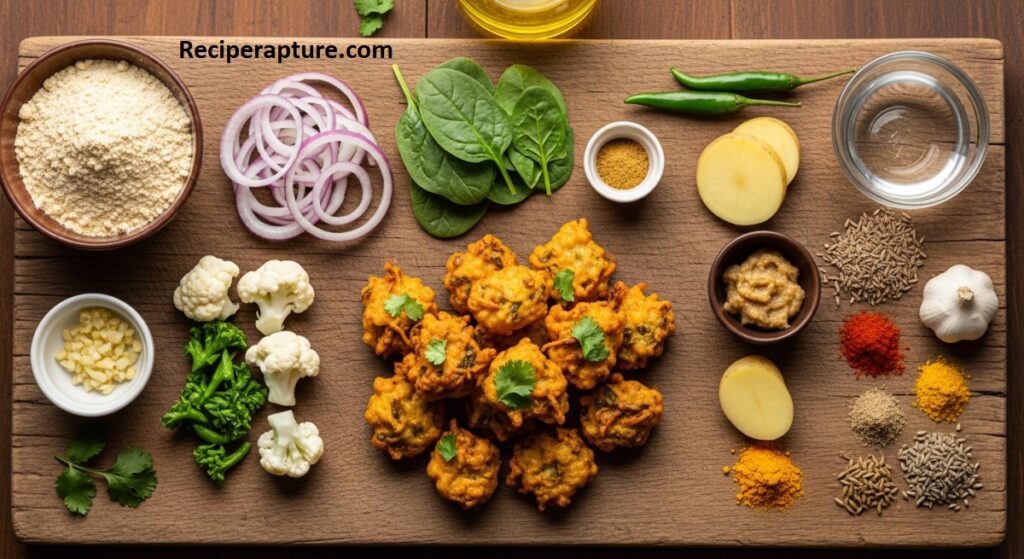
Pakoras rely on everyday ingredients that come together beautifully:
• Gram Flour (Besan): The base that gives pakoras their nutty flavor
• Vegetables: Potatoes, onions, spinach, cauliflower, eggplant
• Herbs & Aromatics: Green chilies, fresh coriander, ginger
• Spices: turmeric, cumin, coriander seeds, and red chili powder
• Liquids: Water to form batter
• Oil: For deep frying
Optional add-ins like ajwain or baking soda enhance texture and digestibility.
You Will Enjoy This: Malpura—Delicious Pakistani Sweet Treat
Equipment Needed
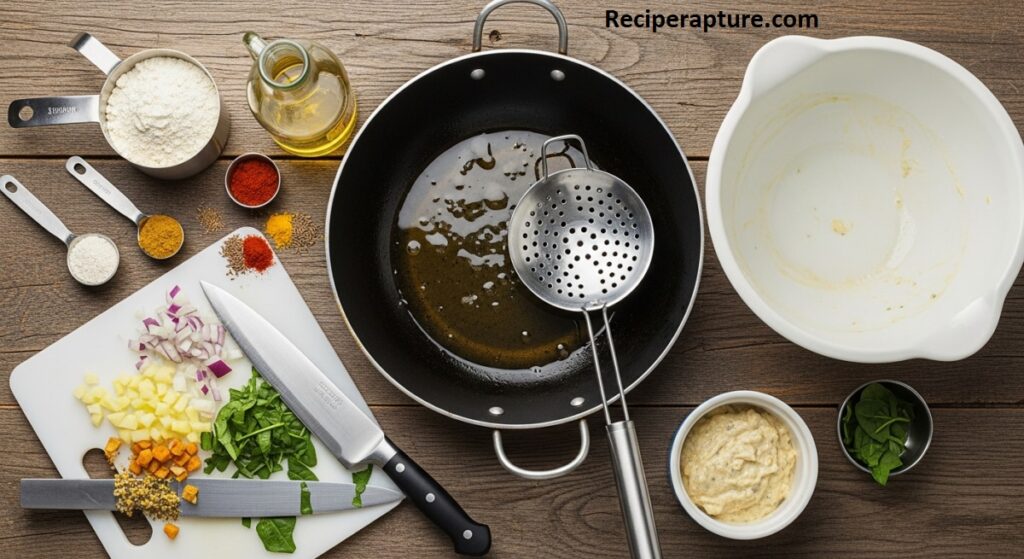
• Deep frying pan or wok
• Mixing bowl
• Whisk or spoon
• Slotted spoon
• Paper towels
• Knife and cutting board
Preparation
Vegetable Preparation
• Wash and slice vegetables evenly for uniform frying.
• Pat dry leafy greens like spinach to avoid excess moisture.
Batter Preparation
• Add gram flour to a mixing bowl.
• Mix in spices, chopped chilies, ginger, and herbs.
• To create a thick, flowing batter, gradually add water.
Oil Preparation
• Over a medium flame, heat the oil until it’s hot but not smoking.
• Use a tiny bit of batter to test the oil; it should rise and sizzle.
Cooking Time Table
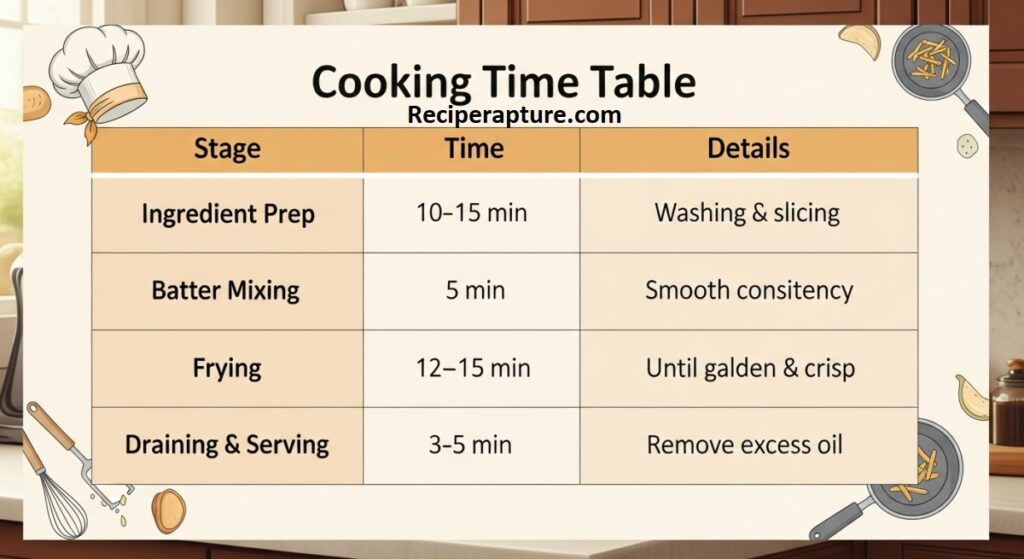
| Stage | Time | Details |
| Ingredient Prep | 10–15 min | Washing & slicing |
| Batter Mixing | 5 min | Smooth consistency |
| Frying | 12–15 min | Until golden & crisp |
| Draining & Serving | 3–5 min | Remove excess oil |
Step-by-Step Instructions
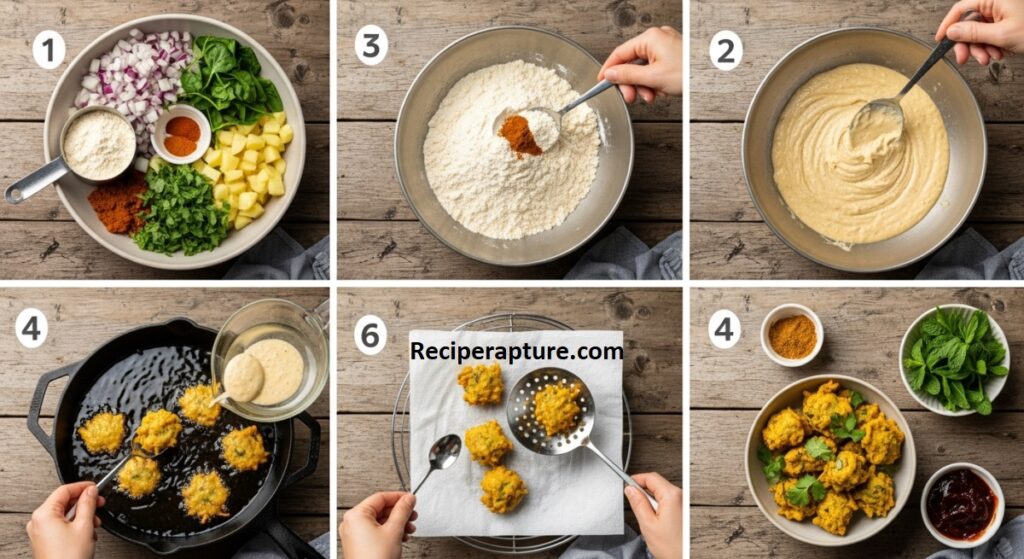
- Prepare vegetables and set aside.
- Mix gram flour, spices, herbs, and water into batter.
- In a deep pan, heat the oil over medium heat.
- Dip vegetables into batter, coating evenly.
- Gently drop into hot oil.
- Fry in batches, turning occasionally.
- Remove when golden and crispy.
- Drain on paper towels and serve hot.
Serving Suggestions
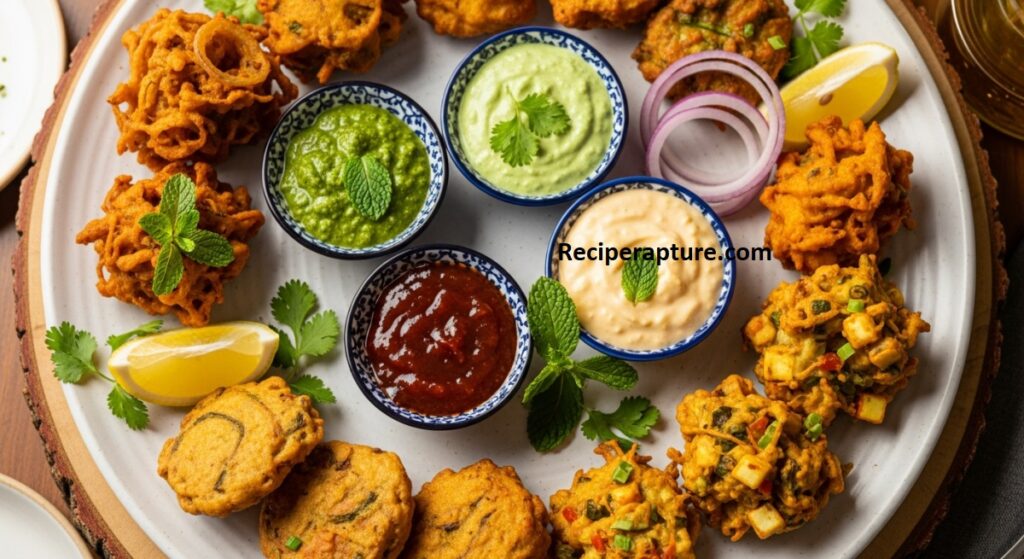
The ideal way to enjoy pakoras is hot and crispy with ketchup, tamarind sauce, or mint chutney. They pair perfectly with hot chai and are ideal as evening snacks, iftar starters, or party appetizers.
Comparison Table
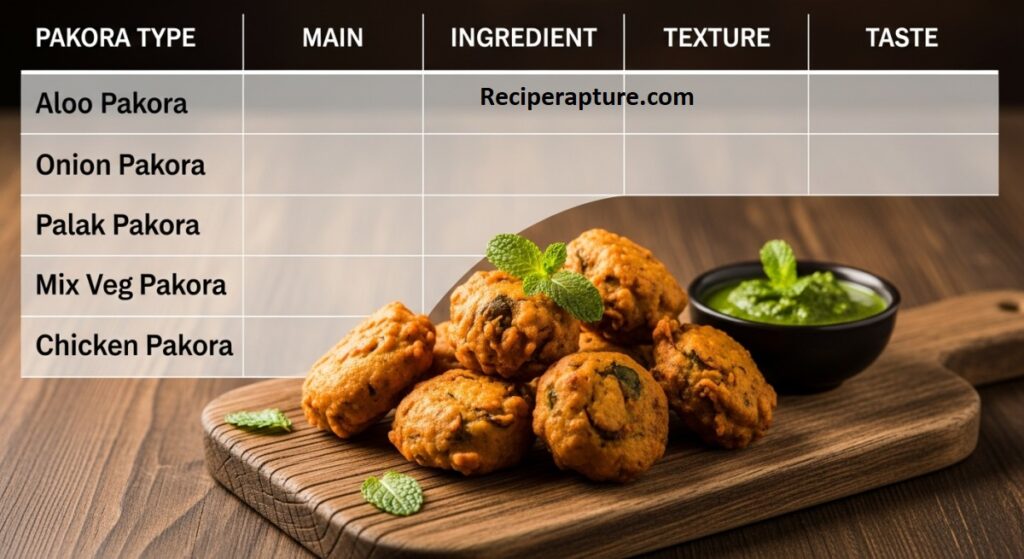
| Pakora Type | Main Ingredient | Texture | Taste |
| Aloo Pakora | Potato | Crisp outside, soft inside | Mild & savory |
| Onion Pakora | Onion | Extra crunchy | Sweet & spicy |
| Palak Pakora | Spinach | Light & crispy | Earthy |
| Mix Veg Pakora | Mixed vegetables | Chunky & crisp | Bold |
| Chicken Pakora | Boneless chicken | Juicy & crisp | Spicy |
Tips & Variations
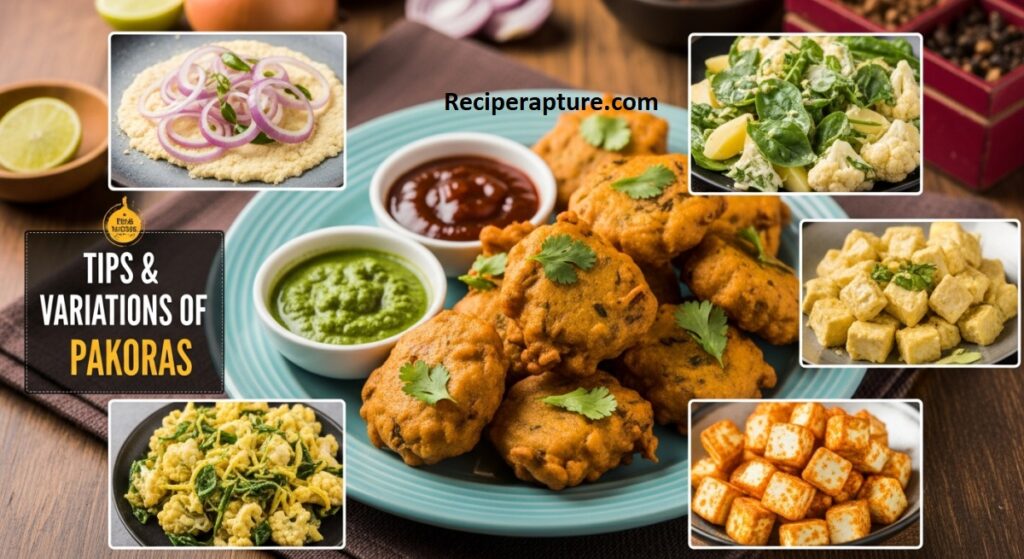
• Keep batter thick for crisp pakoras.
• Fry on medium heat to avoid soggy centers.
• Add rice flour for extra crunch.
• Use ajwain for better digestion.
• Air-fry or shallow-fry for a lighter version.
Ingredient Table
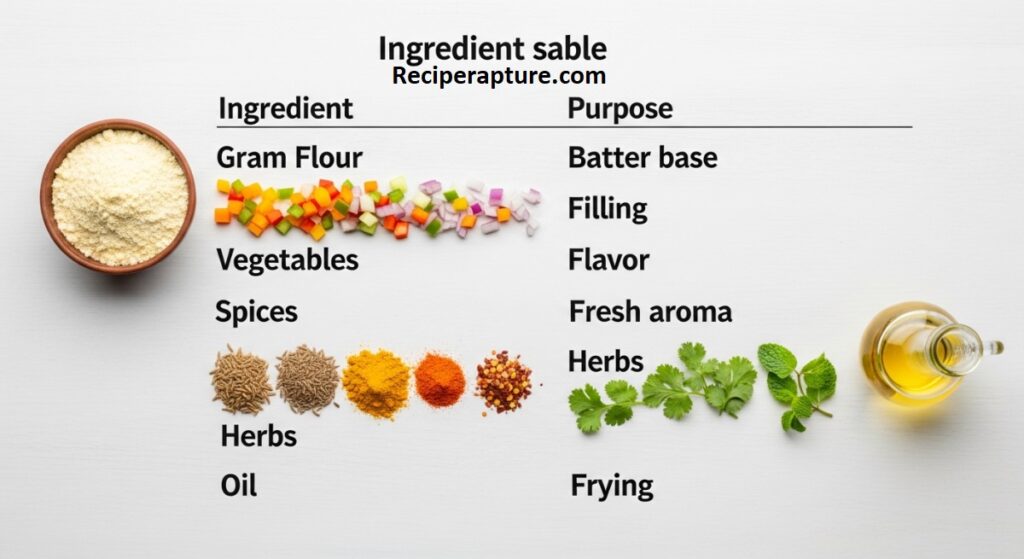
| Ingredient | Purpose |
| Gram Flour | Batter base |
| Vegetables | Filling |
| Spices | Flavor |
| Herbs | Fresh aroma |
| Oil | Frying |
FAQ’s
Q: Why do pakoras turn soggy?
Oil temperature may be too low or batter too thin.
Q: Can pakoras be reheated?
Yes, reheat in oven or air fryer for best crispiness.
Q: Are pakoras vegan?
Yes, traditional vegetable pakoras are naturally vegan.
Q: Can pakoras be frozen?
Yes, half-fry and freeze, then fry again before serving.
Nutritional Info (Approx. per serving)
• Calories: 300 kcal
• Protein: 8 g
• Carbohydrates: 30 g
• Fat: 18 g
• Fiber: 4 g
Final Thoughts
Pakoras are a timeless snack that bring comfort, warmth, and crunch to every table. Their adaptability makes them perfect for all seasons and occasions.
Conclusion
Whether enjoyed with tea on a rainy day or served at festive gatherings, pakoras never fail to satisfy. Easy to prepare and endlessly customizable, these crispy fritters remain a cherished favorite across Pakistani and Indian households.