Pakistani Tea – Traditional Chai & Kulhad Flavors
Pakistani tea, commonly known as chai, is more than just a beverage—it’s a daily ritual, a social connector, and a comfort drink enjoyed across the country. From early morning cups to late-night roadside conversations, chai is deeply woven into Pakistani culture. Whether served at home, in offices, or at bustling dhabas, tea brings warmth, conversation, and familiarity.
What makes Pakistani tea special is its strong brew, rich milkiness, bold spices, and the nostalgic charm of kulhad (clay cups) that add an earthy aroma and rustic experience.
Ingredients Breakdown of Pakistani Tea
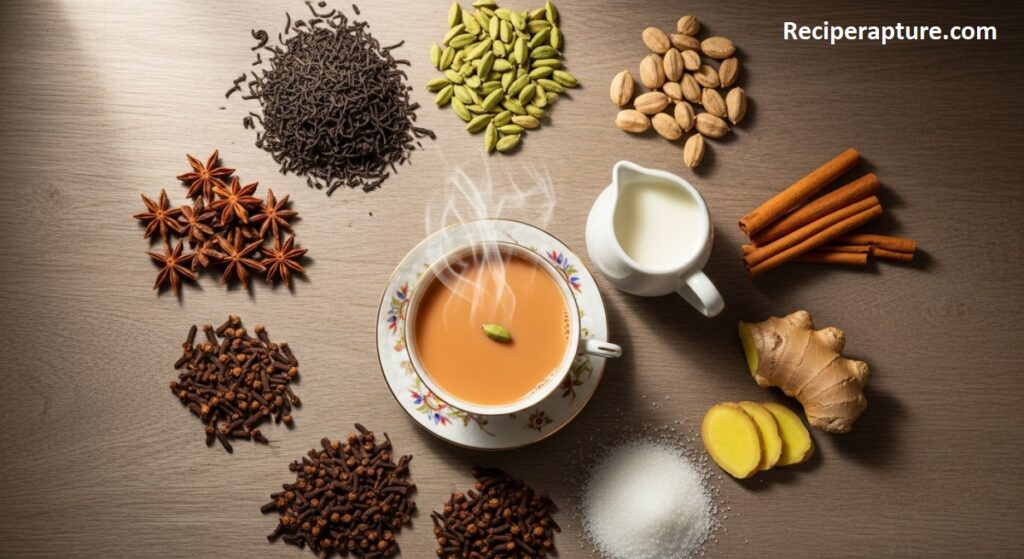
Pakistani chai is built on a few core ingredients that create its unmistakable taste:
• Black Tea Leaves: Strong Assam or local tea for deep color and flavor
• Milk: Full-cream milk for richness
• Water: Balances strength and texture
• Sugar: Adjusted to taste
• Optional Spices: Cardamom, ginger, cloves, cinnamon
• Kulhad (Optional): Enhances aroma and traditional feel
The balance between tea, milk, and heat is what defines authentic Pakistani chai.
Equipment Needed
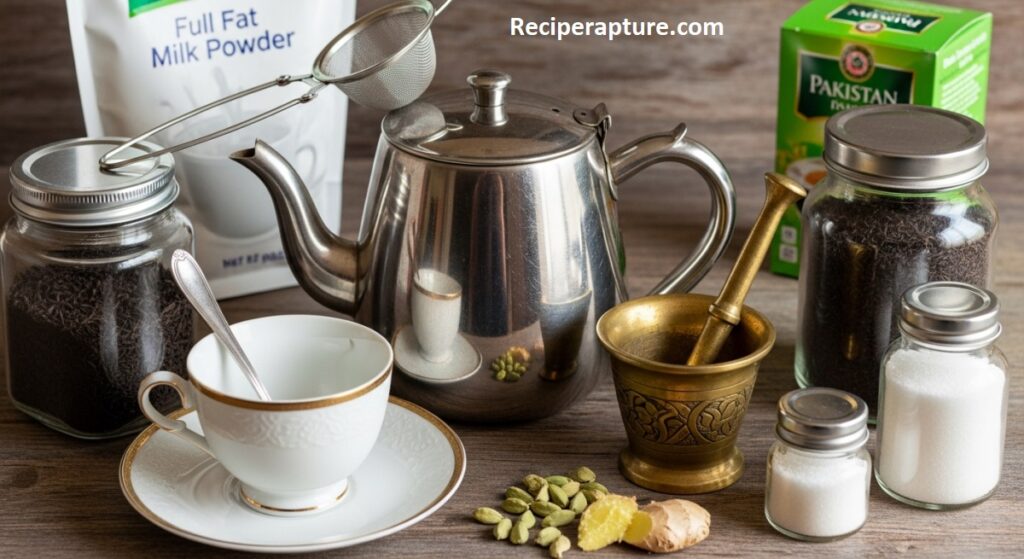
• Saucepan or tea pot
• Measuring cups
• Spoon for stirring
• Tea strainer
• Cups or traditional kulhads
• Mortar & pestle (for spices, optional)
Preparation of Pakistani Tea
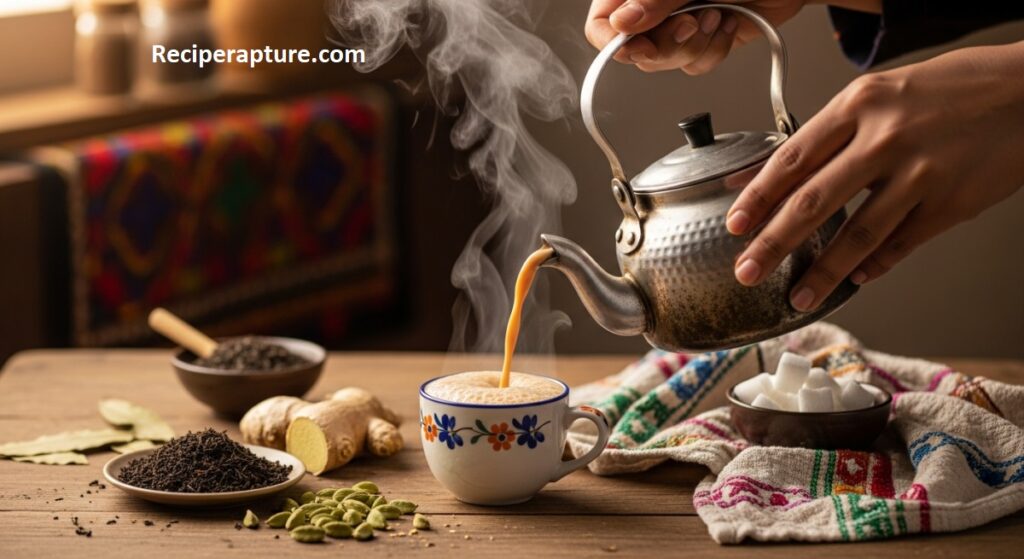
Tea Base Preparation
• Measure water and pour into a saucepan.
• Add black tea leaves directly to cold water.
• Place on medium heat and allow tea to boil.
Milk & Flavoring
- Add full-cream milk once tea darkens.
- Introduce crushed cardamom or ginger if using.
- Let the tea simmer to deepen flavor.
Sweetening & Finishing
- Add sugar according to taste.
- Continue simmering until tea thickens slightly.
- Strain into cups or kulhads.
Cooking Time Table
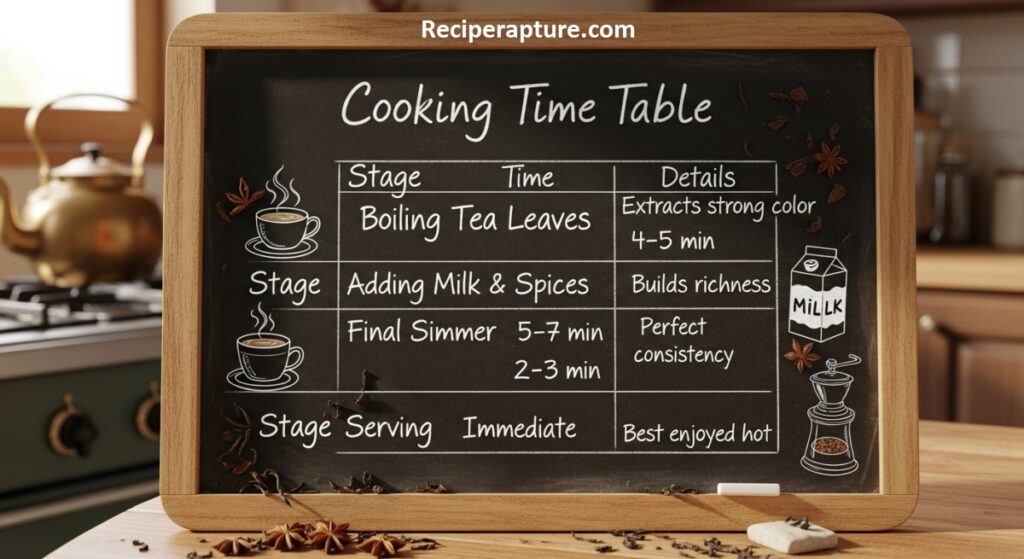
| Stage | Time | Details |
| Boiling Tea Leaves | 4–5 min | Extracts strong color |
| Adding Milk & Spices | 5–7 min | Builds richness |
| Final Simmer | 2–3 min | Perfect consistency |
| Serving | Immediate | Best enjoyed hot |
Step-by-Step Instructions of Pakistani Tea
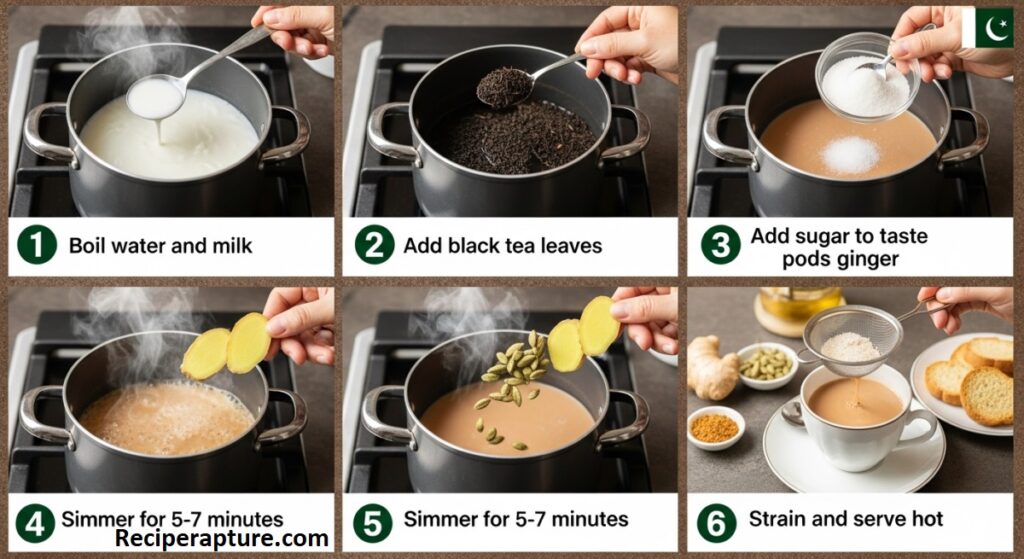
- Add water and tea leaves to a saucepan.
- Boil on medium heat until color deepens.
- Pour in milk and optional spices.
- Simmer gently, stirring occasionally.
- Add sugar and boil once more.
- Strain into cups or kulhads.
- Serve piping hot.
Serving Suggestions of Pakistani Tea
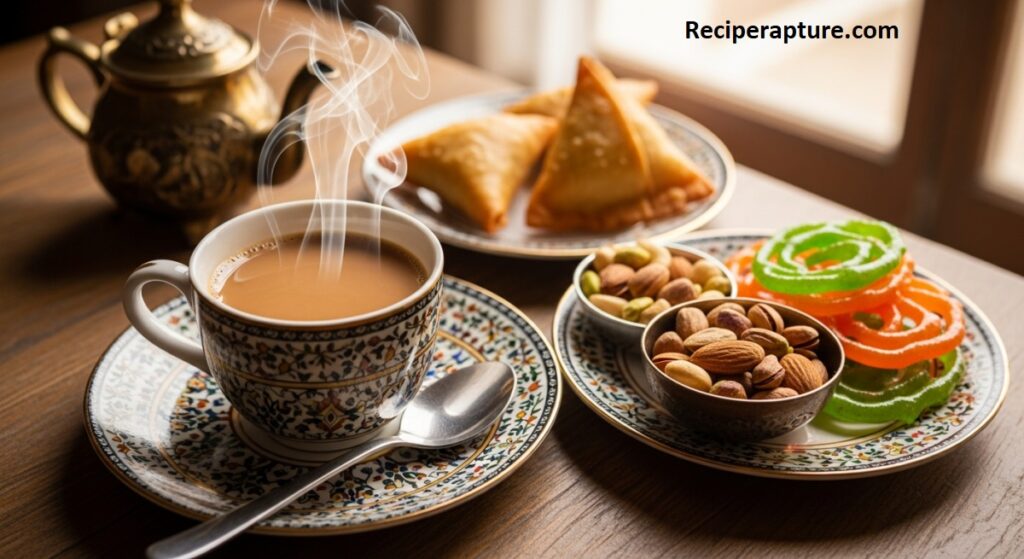
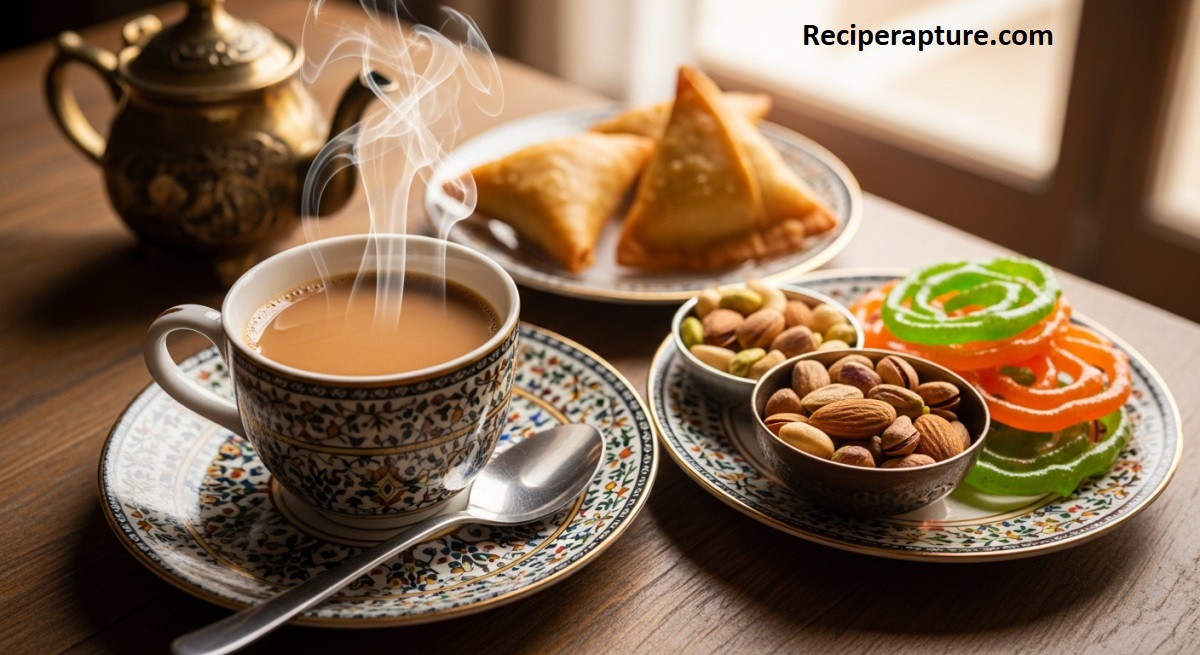
Pakistani tea is best served hot and fresh, paired with biscuits, rusks, samosas, or pakoras. Serving chai in a kulhad enhances its aroma and gives a nostalgic, earthy taste. It’s perfect for breakfast, evening snacks, or long conversations with friends and family.
Comparison Table
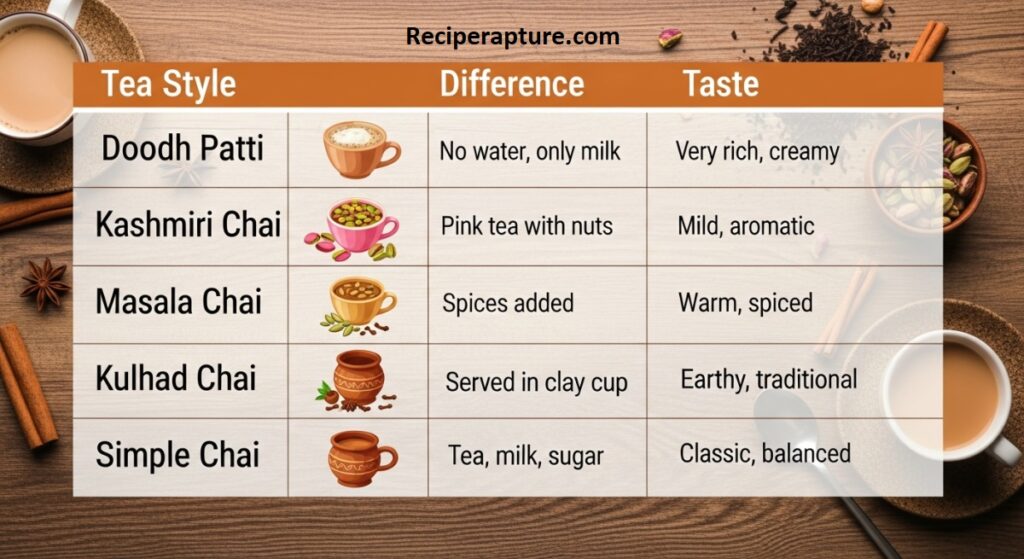
| Tea Style | Difference | Taste |
| Doodh Patti | No water, only milk | Very rich, creamy |
| Kashmiri Chai | Pink tea with nuts | Mild, aromatic |
| Masala Chai | Spices added | Warm, spiced |
| Kulhad Chai | Served in clay cup | Earthy, traditional |
| Simple Chai | Tea, milk, sugar | Classic, balanced |
Tips & Variations of Pakistani Tea
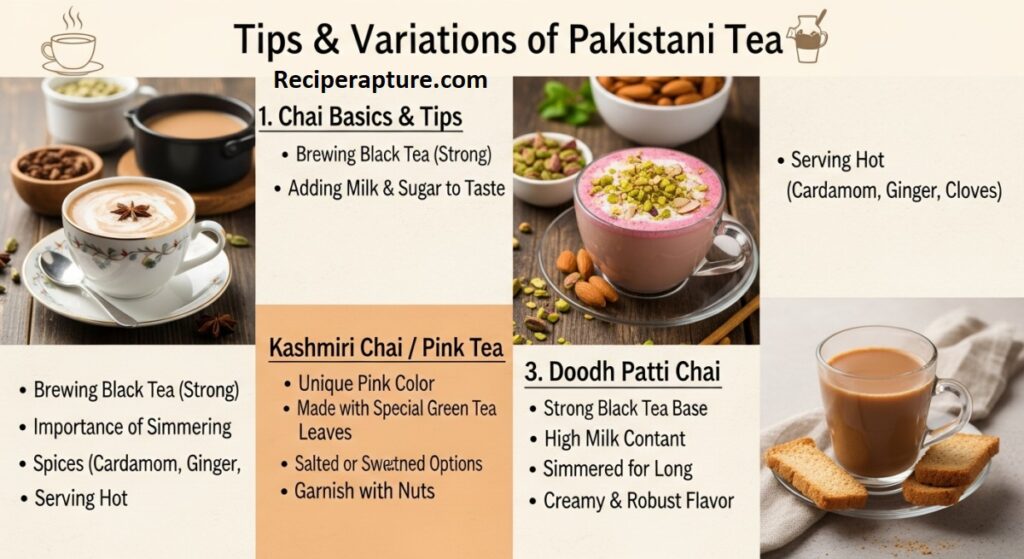
- Use full-cream milk for authentic taste.
- Crush spices fresh for stronger aroma.
- Avoid over-boiling to prevent bitterness.
- Reduce sugar and add cinnamon for a lighter version.
- For roadside-style chai, simmer slightly longer.
Ingredient Table
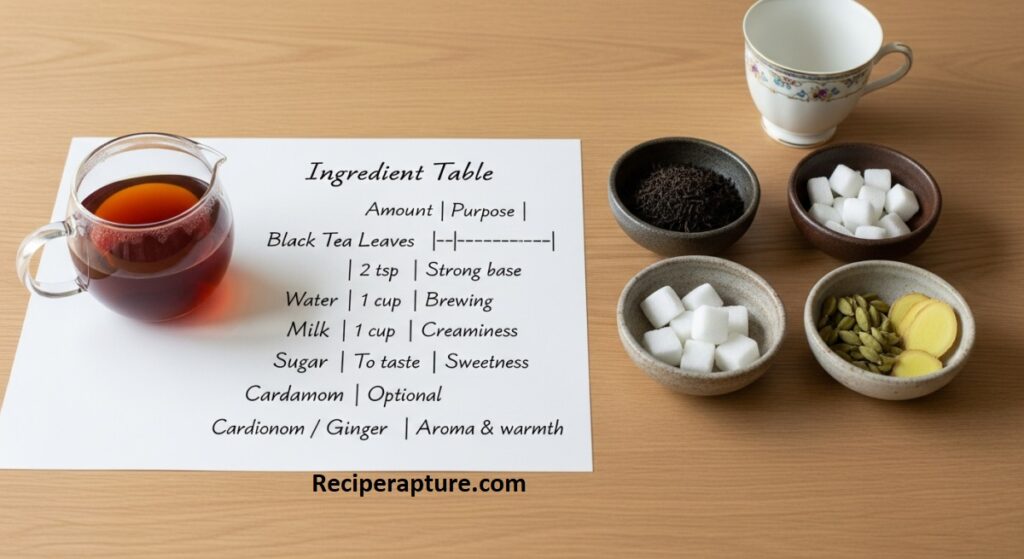
| Ingredient | Amount | Purpose |
| Black Tea Leaves | 2 tsp | Strong base |
| Water | 1 cup | Brewing |
| Milk | 1 cup | Creaminess |
| Sugar | To taste | Sweetness |
| Cardamom / Ginger | Optional | Aroma & warmth |
FAQ’s
Q: Why is Pakistani chai stronger than others?
Because tea leaves are boiled directly in water for longer extraction.
Q: What is kulhad chai?
Tea served in a clay cup that adds earthy aroma and traditional charm.
Q: Can Pakistani tea be made without spices?
Yes, simple chai without spices is very common.
Q: Is doodh patti different from regular chai?
Yes, doodh patti is made without water, using only milk.
Nutritional Info (Approx. per cup)
• Calories: 120 kcal
• Protein: 4 g
• Carbohydrates: 10 g
• Fat: 6 g
• Calcium: Moderate
Final Thoughts
Pakistani tea is a symbol of hospitality, routine, and togetherness. Whether sipped quietly in the morning or shared during lively conversations, chai remains a comforting constant in daily life.
Conclusion
From creamy doodh patti to rustic kulhad chai, Pakistani tea offers rich flavor and cultural warmth in every sip. Easy to prepare and deeply satisfying, it continues to be a timeless favorite across generations.