Pakistani Pan – Traditional Meetha & Saada Pan
Pakistani Pan is more than just a mouth freshener, it is a cultural tradition deeply rooted in hospitality, celebration, and everyday life. Served after meals, during weddings, or offered to guests as a sign of respect, pan holds a special place across Pakistan. From the sweet and aromatic Meetha Pan to the bold and refreshing Saada Pan, each variety delivers a unique sensory experience.
Prepared using fresh betel leaves and carefully selected fillings, Pakistani pan balances flavor, aroma, and texture, making it a timeless indulgence enjoyed by all ages.
Ingredients Breakdown of Pakistani Pan

Pakistani pan is built around fresh betel leaves, complemented by a variety of fillings depending on the type:
• Betel Leaves (Pan ke Patte): The foundation; fresh, soft, and glossy leaves are essential.
• Slaked Lime (Chuna): Used sparingly to activate flavors.
• Catechu (Katha): Adds depth and slight bitterness.
• Areca Nut (Supari): Provides crunch and traditional aroma.
For Meetha Pan:
• Gulkand (rose petal preserve)
• Sweetened fennel seeds
• Desiccated coconut
• Tutti frutti or candied fruits
• Cardamom powder
For Saada Pan:
• Plain fennel seeds
• Mild tobacco (optional, traditional use)
• Green cardamom
• Cloves
You Will Enjoy This: Makhni Handi Recipe – Creamy Pakistani Chicken Curry
Equipment Needed

• Clean chopping board
• Small spoon or butter knife
• Kitchen scissors (optional)
• Plate or tray for assembling pan
• Damp cloth to keep betel leaves fresh
Preparation of Pakistani Pan

Leaf Preparation
• Rinse betel leaves gently and pat dry.
• Trim thick stems and veins carefully.
• Keep leaves covered with a damp cloth to prevent drying.
Filling Preparation
• Chop supari finely if using whole nuts.
• Prepare sweet fillings separately for Meetha Pan.
• Measure chuna and katha carefully—use minimal amounts.
Assembly Planning
• Decide pan type (Meetha or Saada) beforehand.
• Arrange fillings in small portions for quick assembly.
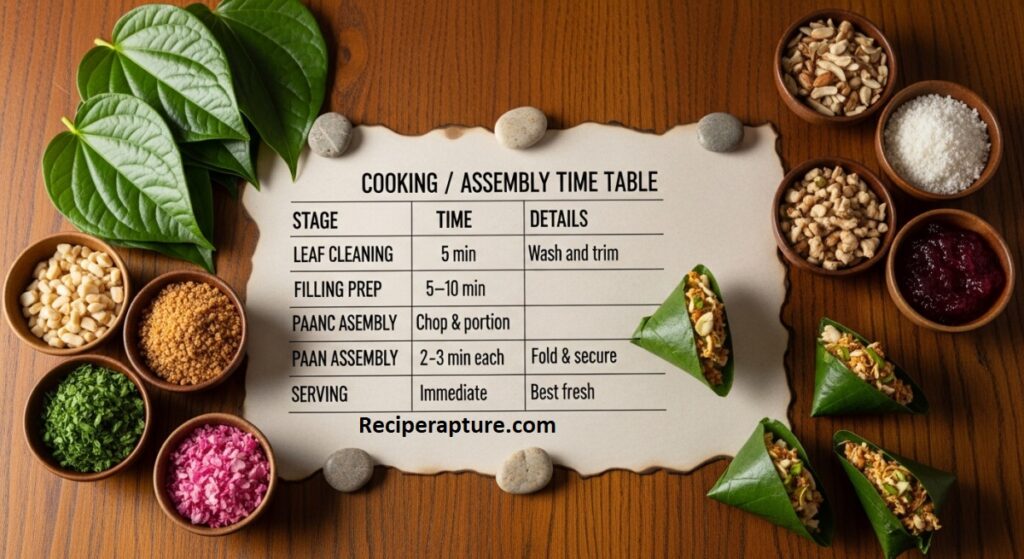
Cooking / Assembly Time Table
| Stage | Time | Details |
| Leaf Cleaning | 5 min | Wash and trim |
| Filling Prep | 5–10 min | Chop & portion |
| Paan Assembly | 2–3 min each | Fold & secure |
| Serving | Immediate | Best fresh |
Step-by-Step Instructions of Pakistani Pan

How to Make Meetha Pan
- Place a betel leaf shiny side down.
- Lightly spread chuna and katha.
- Add gulkand, fennel seeds, coconut, and candied fruits.
- Sprinkle cardamom powder.
- Fold into a neat triangle or cone shape.
- Secure with a clove or toothpick if needed.
How to Make Saada Pan
- Lay betel leaf flat.
- Apply minimal chuna and katha.
- Add supari, fennel seeds, cardamom, and clove.
- Fold tightly and secure.
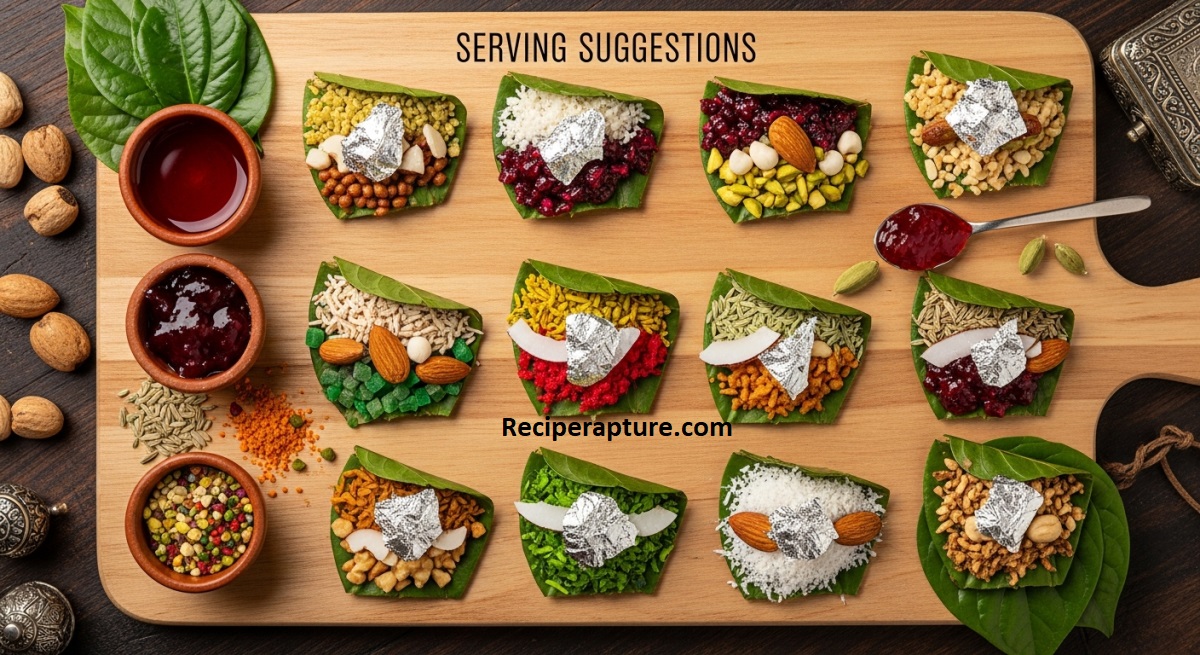
Serving Suggestions of Pakistani Pan

Pakistani pan is traditionally served after meals as a digestive and mouth freshener. Meetha pan is ideal for festive occasions and weddings, while saada pan is preferred after hearty meals. Serve pan fresh on a decorative tray for the best experience.
Comparison Table

| Type | Flavor Profile | Best Occasion |
| Meetha Pan | Sweet, fragrant | Weddings, celebrations |
| Saada Pan | Bold, refreshing | After meals |
| Gulkand Pan | Floral, cooling | Summer |
| Special Pan | Mixed flavors | Special guests |
Tips & Variations of Pakistani Pan
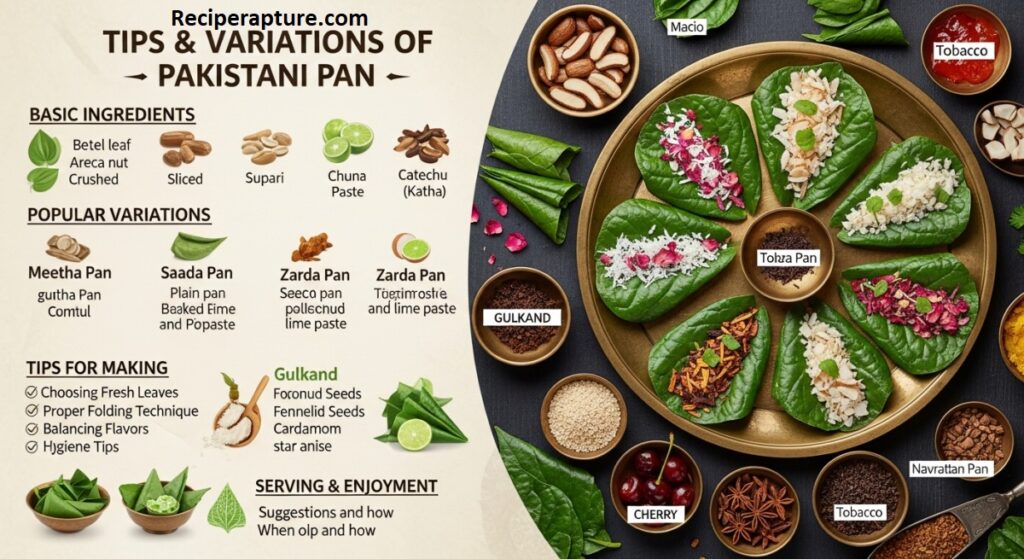
• Always use fresh, tender betel leaves for best taste.
• Avoid excess chuna—it can overpower flavors.
• Customize sweetness levels based on preference.
• Add edible silver leaf (varq) for festive pan.
• For kids, prepare pan without supari or lime.
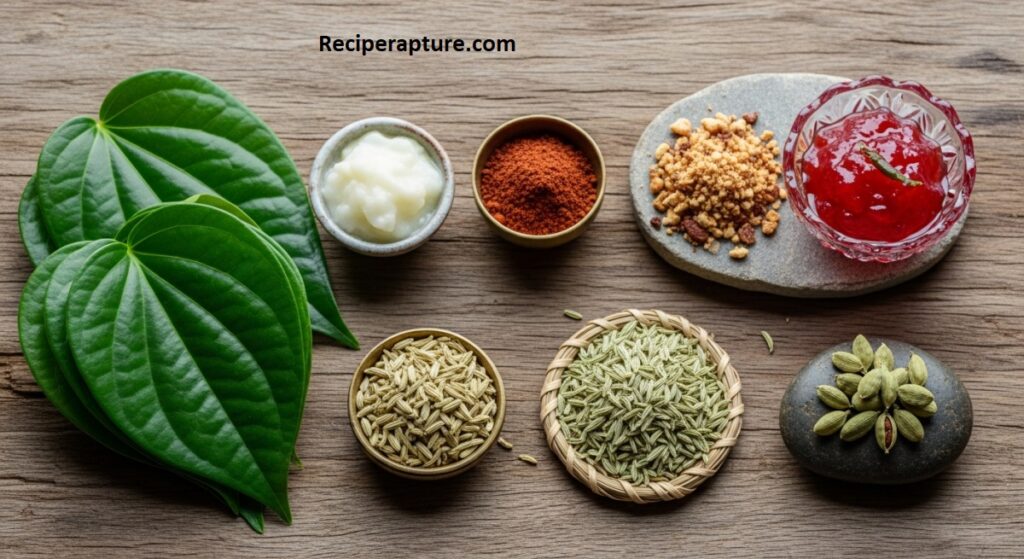
Ingredient Table
| Ingredient | Purpose |
| Betel Leaf | Base |
| Chuna | Flavor activation |
| Katha | Depth |
| Supari | Crunch |
| Gulkand | Sweetness |
| Fennel Seeds | Freshness |
| Cardamom | Aroma |
FAQ’s
Q: Is pan safe to consume daily?
Occasional consumption is preferred; moderation is key.
Q: Can pan be made without supari?
Yes, sweet pan can be prepared without it.
Q: How long does pan stay fresh?
Best consumed immediately; leaves wilt over time.
Q: Is pan served cold or warm?
Always served fresh at room temperature.
Nutritional Info (Approx. per Meetha Pan)
• Calories: 120 kcal
• Carbohydrates: 18 g
• Fat: 3 g
• Fiber: 1 g
Final Thoughts
Pakistani pan is a symbol of tradition, flavor, and hospitality. Whether sweet or plain, it offers a refreshing finish to meals and a cultural experience that goes beyond taste.
Conclusion
From festive Meetha Pan to classic Saada Pan, this traditional treat continues to hold its place in Pakistani culture. Made with care and balance, pan remains a timeless way to celebrate food, community, and heritage.