Pakistani Baking – Traditional & Modern Recipes
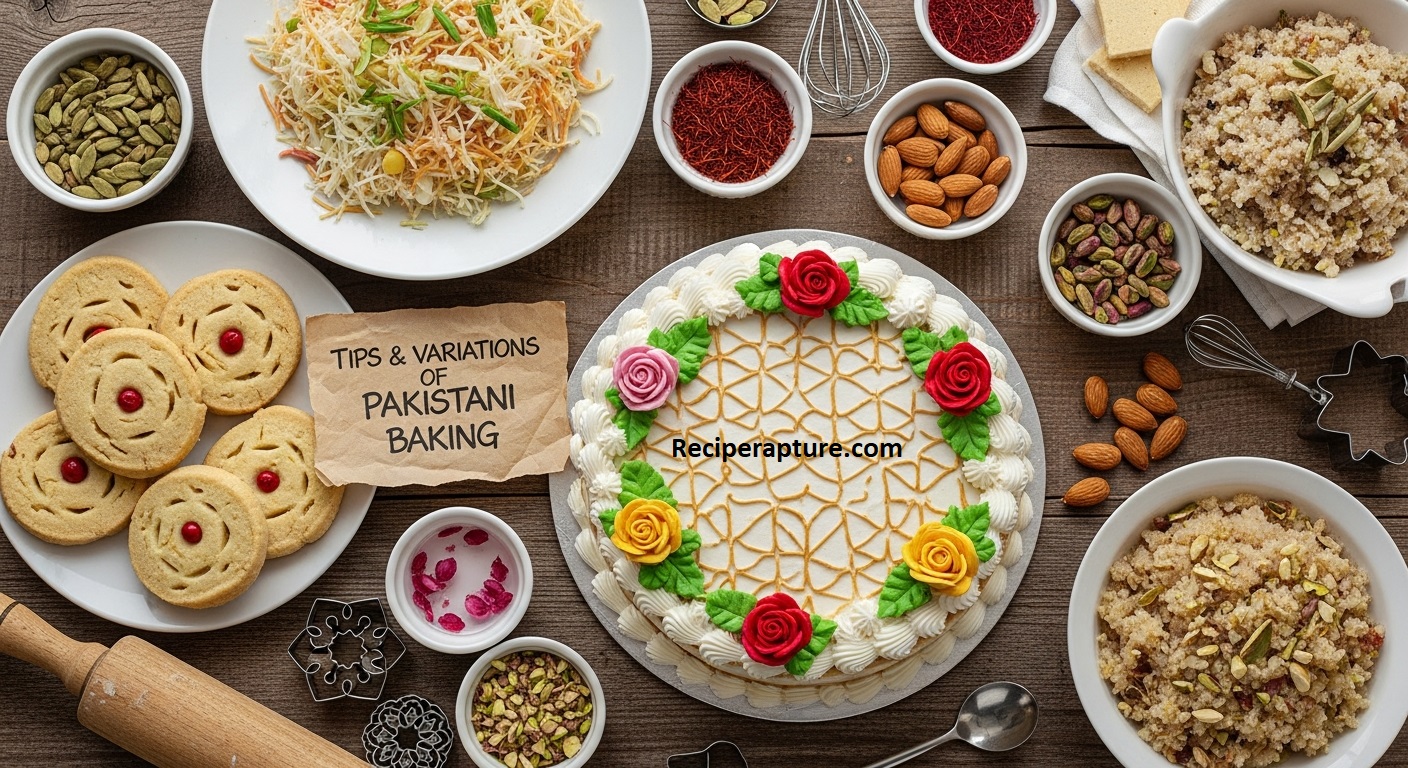
Pakistani baking is a beautiful blend of heritage, home kitchens, and evolving tastes. While traditional Pakistani desserts are often associated with stovetop cooking and deep-frying, baking has quietly become a beloved method for creating both classic sweets and modern treats. From old-fashioned bakery biscuits to contemporary cakes and breads, Pakistani baking reflects a balance between nostalgia and innovation.
Today, Pakistani ovens tell two stories: one of traditional recipes passed down through generations, and another of modern creations inspired by global flavors yet rooted in local taste preferences.
Ingredients Breakdown of Pakistani Baking
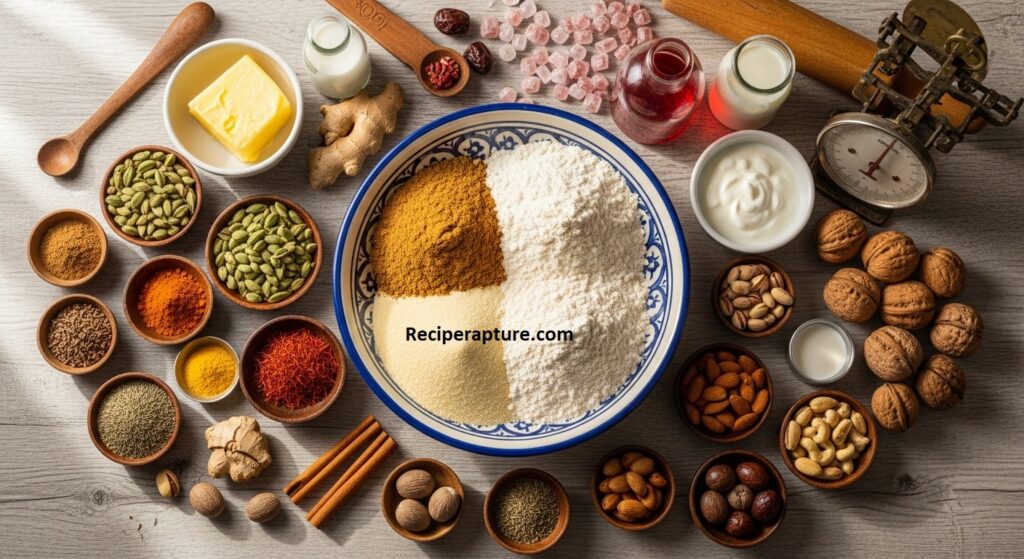
Pakistani baking relies on simple pantry staples, enhanced by aromatic local flavors:
- Flour (all-purpose or semolina) – the foundation for cakes, biscuits, and breads
- Butter OR Ghee – offers true flavor and richness.
- Milk & yogurt – moisture, tenderness, and subtle tang
- Jaggery or sugar – has a sweetness that ranges from delicate to rich caramel undertones.
- Eggs – structure and softness in modern bakes
- Baking powder & baking soda – leavening for airy textures
- Flavorings – cardamom, rose water, kewra, saffron, vanilla
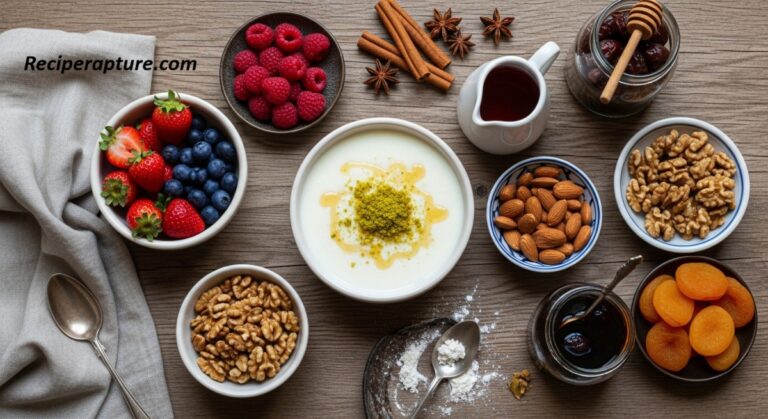
- Nuts & dried fruits – almonds, pistachios, raisins, dates
Traditional recipes lean toward ghee, cardamom, and nuts, while modern bakes introduce chocolate, cocoa, fruit, and cream-based elements.
You Will Enjoy This: Homemade Imli Ki Chutney | Easy Pakistani Recipe
Equipment Needed
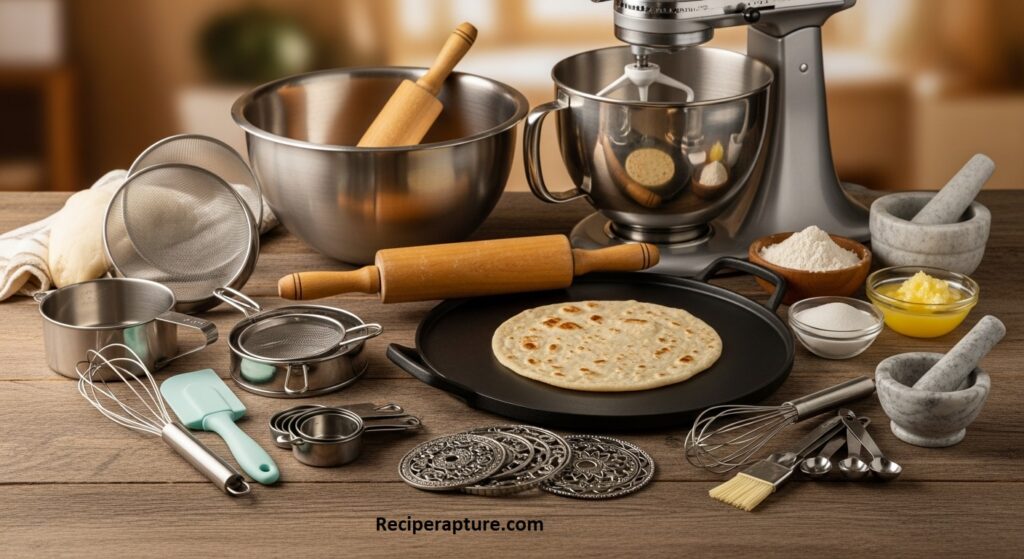
- Conventional oven or OTG
- Mixing bowls (small and large)
- Measuring cups and spoons
- Whisk or electric mixer
- Baking trays and cake pans
- Parchment paper or greased molds
- Cooling rack
Preparation of Pakistani Baking

- Preheat the oven according to recipe requirements.
- Measure all ingredients accurately—baking depends on precision.
- Bring butter, milk, and eggs to room temperature.
- Grease and line baking pans.
- Sift dry ingredients to ensure light texture.
- Prepare nuts, dates, or flavorings in advance.
Baking Time Table

| Recipe Type | Temperature | Time | Notes |
| Biscuits & Cookies | 170–180°C | 12–18 min | Crisp edges, soft centers |
| Cakes | 170°C | 30–45 min | Toothpick test recommended |
| Breads | 180–200°C | 25–35 min | Golden crust desired |
| Traditional Milk Cakes | 160–170°C | 40–60 min | Slow bake for moisture |
Step-by-Step Baking Process of Pakistani Baking

- Cream butter or ghee with sugar until light and fluffy.
- Add eggs gradually, mixing gently.
- Incorporate milk or yogurt for moisture.
- Fold in sifted dry ingredients carefully.
- Add flavorings like cardamom, rose water, or vanilla.
- Pour batter into prepared pans.
- Bake until golden and aromatic.
- Cool slightly before unmolding and fully before slicing.
Traditional Pakistani Baked Favorites
- Bakery-style butter biscuits
- Milk cake (baked version)
- Khajoor cake (date cake)
- Semolina rusks
- Nankhatai (oven-baked)
These recipes focus on warm spices, ghee richness, and comforting textures.
Modern Pakistani Baking Creations
- Chocolate fudge cake
- Matilda cake
- Marble cake
- Cheese-filled buns
- Brownies with desi twists
Modern baking brings lighter textures, refined sweetness, and creative presentation while maintaining Pakistani flavor preferences.
Comparison Table
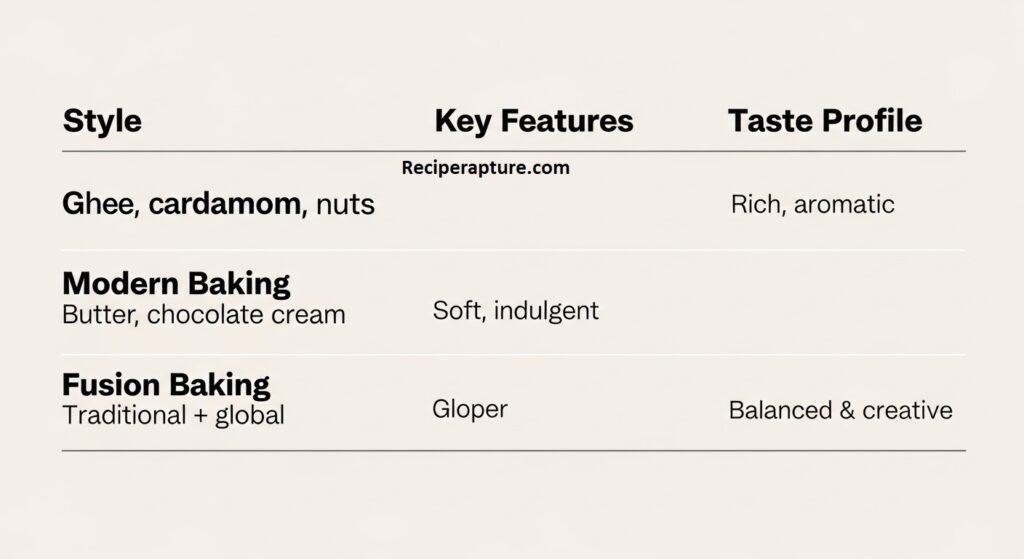
| Style | Key Features | Taste Profile |
| Traditional Baking | Ghee, cardamom, nuts | Rich, aromatic |
| Modern Baking | Butter, chocolate, cream | Soft, indulgent |
| Fusion Baking | Traditional + global | Balanced & creative |
Tips & Variations
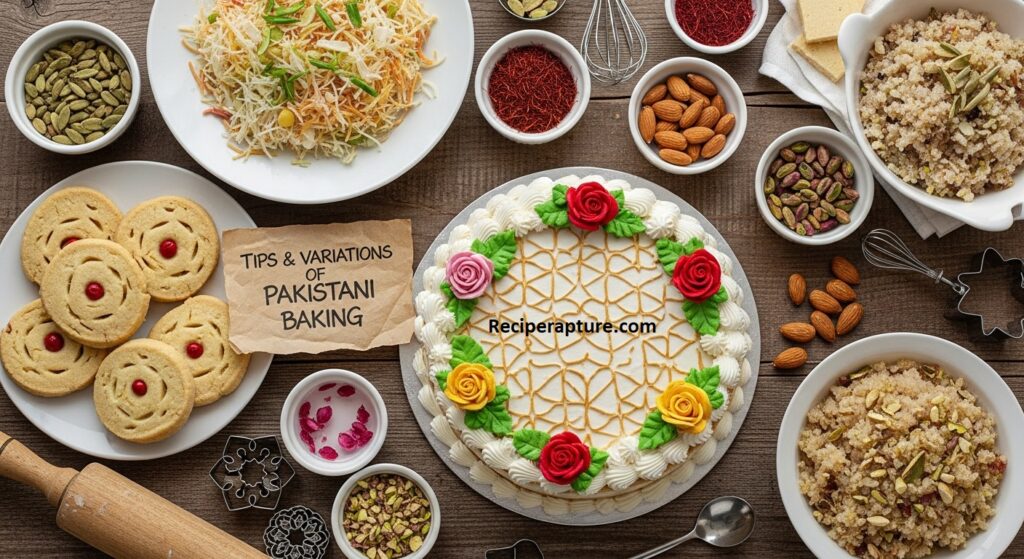
- Substitute part butter with ghee for authentic aroma.
- Use yogurt to keep cakes moist longer.
- Reduce sugar slightly—Pakistani bakes taste best when mildly sweet.
- Add cardamom to chocolate cakes for a unique twist.
- Bake low and slow for milk-based desserts.
Ingredient Table

| Ingredient | Purpose |
| Flour | Structure |
| Butter / Ghee | Flavor & richness |
| Sugar | Sweetness |
| Eggs | Texture |
| Milk / Yogurt | Moisture |
| Baking Powder | Rise |
| Cardamom / Vanilla | Aroma |
| Nuts & Dates | Texture & nutrition |
FAQ’s
Q: Is Pakistani baking traditionally common?
Yes, especially in bakery items like biscuits, rusks, and cakes.
Q: Can ghee replace butter in baking?
Yes, partially or fully, but adjust quantity slightly.
Q: Why are Pakistani cakes less sweet?
Traditionally, mild sweetness highlights aroma and richness.
Q: Can traditional desserts be baked instead of fried?
Many can, such as nankhatai and milk cake, with excellent results.
Nutritional Info (Average per serving)
- Calories: 280 kcal
- Protein: 6 g
- Carbohydrates: 34 g
- Fat: 14 g
- Fiber: 2 g
Final Thoughts
Pakistani baking beautifully connects old family traditions with modern creativity. Whether you’re baking a nostalgic bakery biscuit or a contemporary chocolate cake, the essence lies in warm flavors, simple ingredients, and heartfelt preparation.
Conclusion
Pakistani baking continues to evolve while honoring its roots. By combining traditional ingredients with modern techniques, home bakers can create desserts that feel both familiar and exciting. Whether you prefer classic cardamom-scented treats or rich chocolate bakes, Pakistani baking offers endless possibilities to explore and enjoy.