Murabba – Traditional Sweet Fruit Preserve
Murabba is a timeless fruit preserve that has been cherished across South Asia and the Middle East for centuries. Unlike modern jams, murabba focuses on simple ingredients, slow cooking, and natural sweetness, resulting in a preserve that’s aromatic, lightly spiced, and intensely flavorful.
Traditionally made with seasonal fruits like mango, amla (Indian gooseberry), quince, or apple, murabba is often enjoyed as a sweet accompaniment to meals or as a restorative treat.
Ingredients Breakdown

The heart of murabba lies in the fruit itself, fresh, ripe, and firm. Sugar acts as both a preservative and sweetener, while lemon juice balances sweetness with gentle acidity. Some versions include mild spices such as cardamom, cloves, or cinnamon, which enhance aroma and warmth without overwhelming the fruit.
The key is to cook slowly, allowing the fruit to absorb sugar while retaining its shape and flavor, unlike jams that are fully mashed.
You Will Enjoy This: Refreshing Fruit Chaat Recipe: Sweet, Tangy & Spicy Twist
Equipment Needed

- Heavy-bottomed saucepan or pot
- Wooden spoon
- Knife and chopping board
- Sterilized glass jars for storage
- Measuring cups and spoons
Preparation
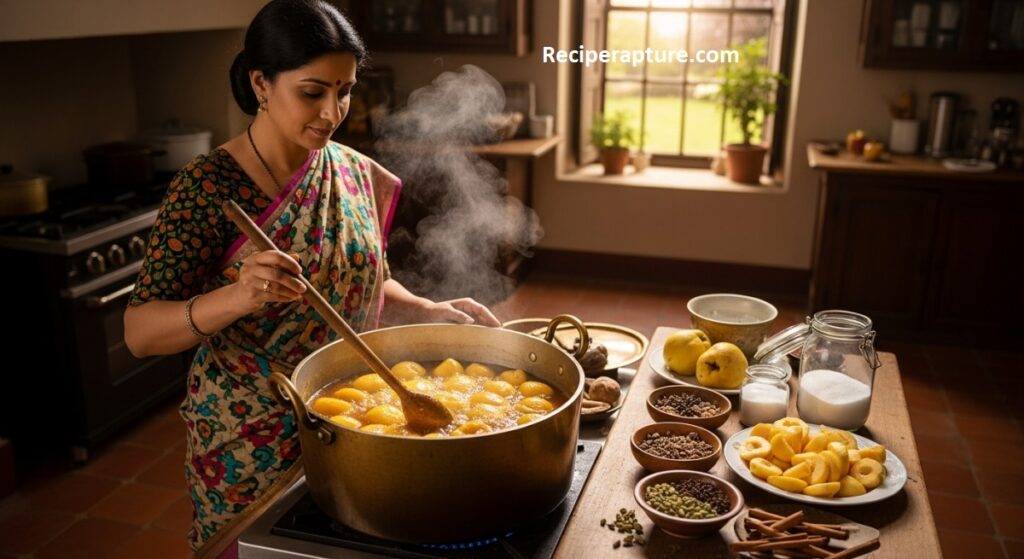
Start by washing and peeling the fruits as necessary. Cut them into uniform pieces to ensure even cooking. Measure sugar and spices before beginning to avoid disrupting the simmering process. Sterilize jars if you intend to store the murabba long-term.
Gentle preparation ensures the fruit keeps its texture and the preserve develops a clear, glossy syrup.
Cooking Timetable
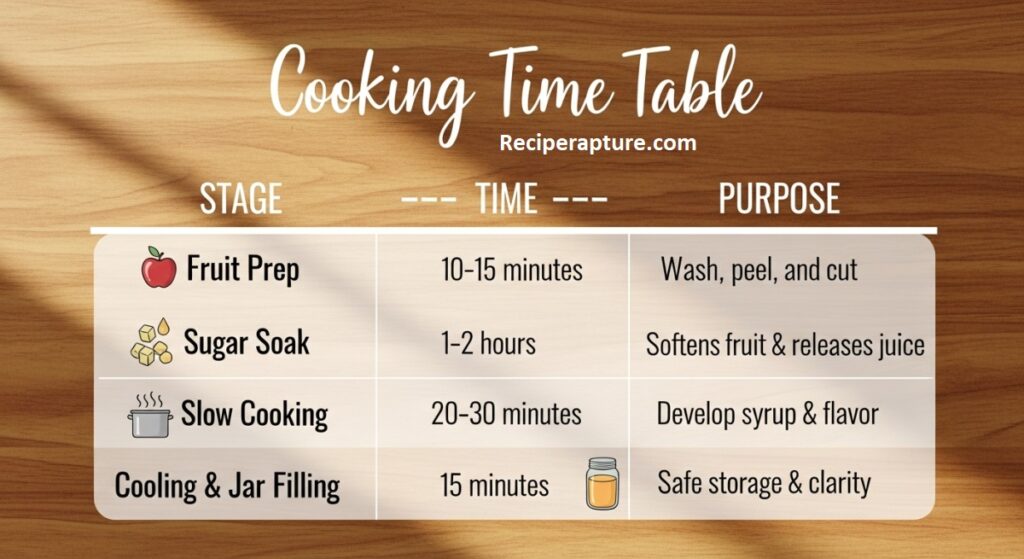
| Stage | Time | Purpose |
| Fruit Prep | 10–15 minutes | Wash, peel, and cut |
| Sugar Soak | 1–2 hours | Softens fruit & releases juice |
| Slow Cooking | 20–30 minutes | Develop syrup & flavor |
| Cooling & Jar Filling | 15 minutes | Safe storage & clarity |
Step-by-Step Instructions of Murabba

- Wash and peel fruit, then cut into evenly sized pieces.
- Combine fruit and sugar in a heavy-bottomed pot; allow to sit for 1–2 hours.
- Add lemon juice and any optional spices.
- Cook on low heat, stirring gently to prevent sticking, until fruit is tender and the syrup thickens.
- Taste and adjust sugar or lemon to balance sweetness and acidity.
- Let the murabba cool slightly before transferring into sterilized jars.
- Seal tightly and store in a cool, dry place.
Serving Suggestions of Murabba

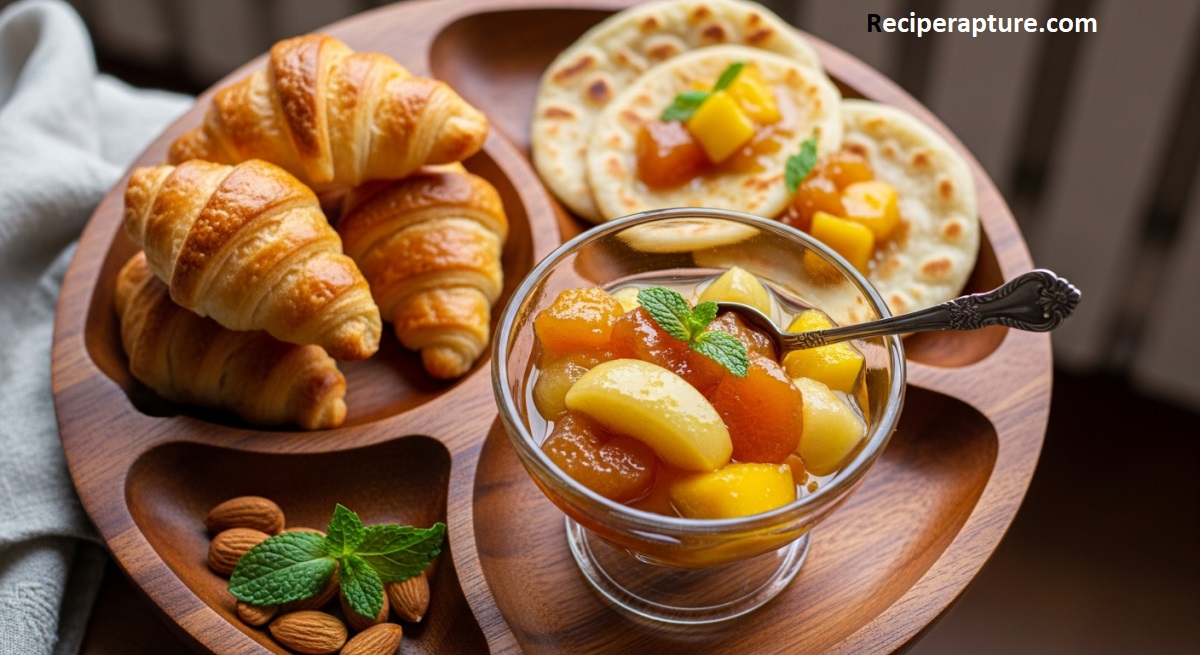
Murabba can be enjoyed in many ways: spread on toast, drizzled over yogurt, paired with parathas, or served alongside cheese. Traditionally, it is eaten as a restorative sweet, particularly in winter months or during mild illness, due to its natural fruit sugars and warming spices.
Comparison Table

| Fruit Preserve | Texture | Sweetness | Best For |
| Murabba | Firm fruit in syrup | Balanced | Everyday meals & gifts |
| Jam | Smooth/pureed | Sweet | Spreads & baking |
| Jelly | Clear & gelatinous | Sweet | Toast & desserts |
| Compote | Chunky | Mildly sweet | Desserts & breakfasts |
Tips & Variations of Murabba

- Use firm, fresh fruit to maintain shape during cooking.
- Adjust sugar according to the fruit’s natural sweetness.
- Add cardamom, cloves, or cinnamon for aroma.
- A splash of rose water or saffron can elevate flavor.
- Cook slowly; high heat can break the fruit or crystallize sugar.
Ingredient Table

| Ingredient | Amount | Purpose |
| Fruit (Mango, Amla, Apple, Quince) | 500 g | Base for preserve |
| Sugar | 300–400 g | Sweetness & preservation |
| Lemon Juice | 1 tbsp | Balances sweetness |
| Cardamom / Cloves (optional) | 2–3 pods | Aroma & warmth |
FAQ’s
Q: How long does murabba last?
Properly sealed and stored, murabba can last several months.
Q: Can I use frozen fruit?
Fresh fruit is best; frozen fruit can become mushy.
Q: Is murabba very sweet?
It is sweet but balanced by fruit flavor and lemon juice.
Q: Can I make sugar-free murabba?
Yes, but sugar acts as a preservative; refrigeration is needed.
Nutritional Info (Approx. per serving)
- Calories: 120 kcal
- Protein: 0.5 g
- Carbohydrates: 30 g
- Fat: 0 g
- Fiber: 1 g
Final Thoughts
Murabba is more than a preserve; it is a cultural tradition, a memory of home kitchens, and a sweet celebration of seasonal fruit. Its simplicity and longevity make it a unique pantry staple that brings warmth, flavor, and nostalgia to any meal.
Conclusion
Making murabba at home is rewarding, aromatic, and simple. With just a few ingredients and careful cooking, you can create a preserve that feels both classic and luxurious. Store it well, enjoy it in multiple ways, and share it, it’s a sweet taste of tradition in every spoonful.