Mascarpone Cheese—Rich & Creamy Italian Delight
Mascarpone cheese is a luxuriously smooth, mildly sweet Italian cheese celebrated for its rich texture and versatility. Originating from Northern Italy, this soft cheese is best known as the star ingredient in classic desserts like tiramisu, yet it also shines in savory dishes, sauces, and spreads.
With its buttery mouthfeel and delicate flavor, mascarpone elevates both sweet and savory recipes into indulgent creations.
Ingredients Breakdown of Mascarpone Cheese

Authentic mascarpone is made from just two simple ingredients: fresh cream and a gentle acidic agent. Heavy cream provides the signature richness and velvety texture, while lemon juice or tartaric acid is used to thicken the cream naturally without forming curds like traditional cheeses.
The absence of salt and aging gives mascarpone its clean, slightly sweet taste, making it an ideal base for desserts as well as creamy sauces.
You Will Enjoy This: How to Make the Perfect Three Milk Cake at Home
Equipment Needed of Mascarpone Cheese
- Heavy-bottomed saucepan
- Cooking thermometer
- Wooden spoon or silicone spatula
- Fine mesh strainer
- Cheesecloth or muslin cloth
- Mixing bowl
- Airtight container for storage
Preparation of Mascarpone Cheese

To prepare mascarpone at home, start with high-quality full-fat cream, as fat content directly affects texture. Heat the cream slowly over low heat while stirring to prevent scorching. Once the cream reaches the ideal temperature, add the acid gradually and stir gently until thickened.
The mixture should coat the back of a spoon but remain smooth. Straining removes excess whey, resulting in a thick, creamy cheese. Proper cooling and chilling are essential to achieve the final consistency.
Cooking Timetable
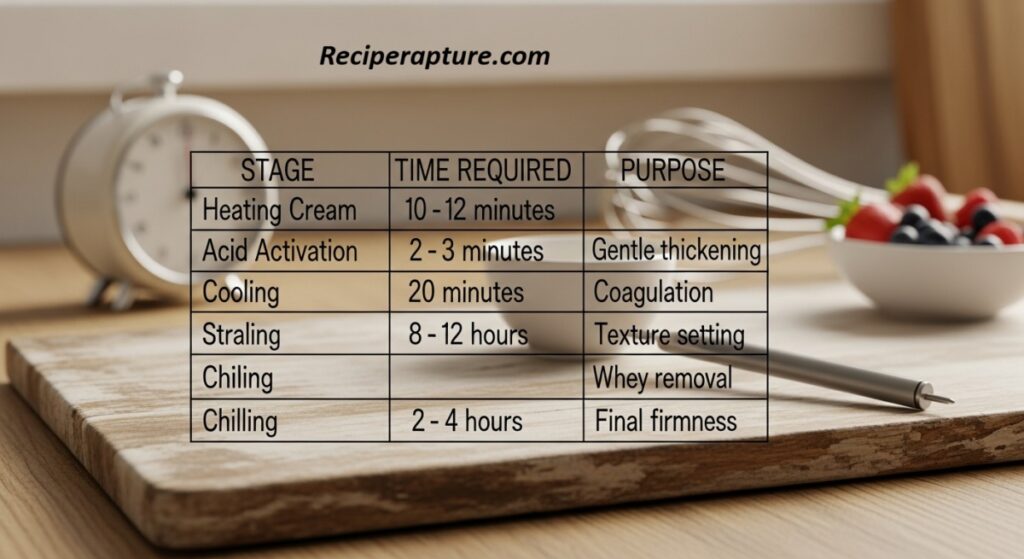
| Stage | Time Required | Purpose |
| Heating Cream | 10–12 minutes | Gentle thickening |
| Acid Activation | 2–3 minutes | Coagulation |
| Cooling | 20 minutes | Texture setting |
| Straining | 8–12 hours | Whey removal |
| Chilling | 2–4 hours | Final firmness |
Step-by-Step Instructions of Mascarpone Cheese

- Pour heavy cream into a saucepan and heat gently to about 185°F (85°C), stirring continuously.
- Add lemon juice slowly while stirring gently.
- Maintain heat for 2–3 minutes until the cream thickens slightly.
- Remove from heat and allow to cool for 15–20 minutes.
- Pour the mixture into the cloth and cover.
- Refrigerate and strain for 8–12 hours until thick and creamy.
- Transfer mascarpone to an airtight container and chill before use.
Serving Suggestions of Mascarpone Cheese

Mascarpone can be enjoyed in countless ways. Spread it on toast with honey and fruit for a simple breakfast, fold it into whipped cream for cake fillings, or stir it into pasta sauces for added richness. It pairs beautifully with coffee-based desserts, berries, chocolate, and even savory herbs like thyme or basil. Its neutral flavor allows it to adapt effortlessly to any dish.
Comparison Table – Mascarpone vs Similar Cheeses

| Cheese | Texture | Flavor | Best Use |
| Mascarpone | Ultra-creamy | Mild, sweet | Desserts, sauces |
| Cream Cheese | Dense | Tangy | Cheesecakes |
| Ricotta | Grainy | Mild | Fillings |
| Crème Fraîche | Smooth | Slightly tangy | Cooking & baking |
Tips & Variations

- Use only full-fat cream for authentic texture.
- Avoid boiling the cream; gentle heat is key.
- Straining longer results in thicker mascarpone.
- Add vanilla or sugar for dessert-ready mascarpone.
- Mix herbs and garlic for a savory spread.
- Always store refrigerated and use within 4–5 days.
Ingredient Table

| Ingredient | Amount | Purpose |
| Heavy Cream | 2 cups | Base & richness |
| Lemon Juice | 1 tbsp | Thickening agent |
FAQ’s
Q: Is mascarpone the same as cream cheese?
No. Mascarpone is richer, softer, and less tangy.
Q: Can mascarpone be frozen?
Freezing is not recommended, as it alters texture.
Q: Why is my mascarpone runny?
It may need more straining time or higher-fat cream.
Q: Is mascarpone sweet or savory?
Naturally neutral, making it perfect for both.
Nutritional Info (Approx. per 2 tbsp)
- Calories: 120 kcal
- Fat: 13 g
- Protein: 1 g
- Carbohydrates: 1 g
- Calcium: Moderate
Final Thoughts
Mascarpone cheese is a true culinary luxury, prized for its smooth texture and adaptability. Whether used in elegant desserts or comforting savory dishes, it adds depth and indulgence with minimal effort. Its simplicity proves that the best ingredients often speak for themselves.
Conclusion
Mascarpone stands as one of Italy’s most beloved dairy creations, rich, creamy, and endlessly versatile. By understanding how it’s made and how to use it, you can unlock a world of refined flavors in your kitchen. From tiramisu to pasta sauces, mascarpone transforms ordinary recipes into unforgettable experiences.