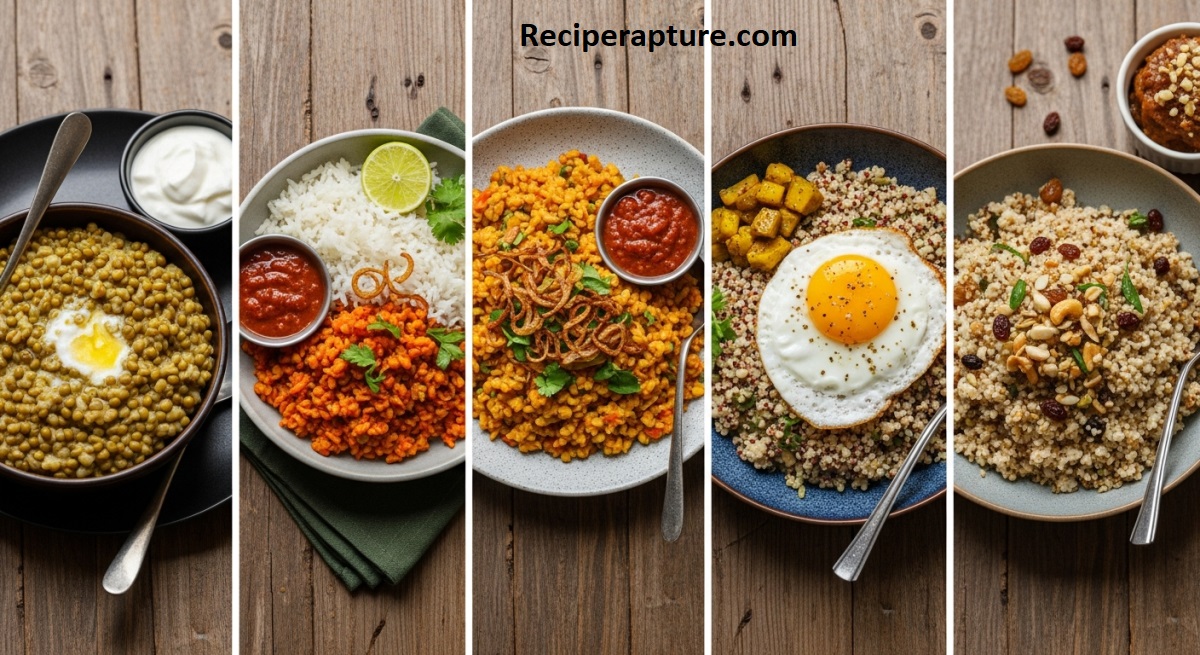
How to Make Khichdi – Traditional Pakistani Style
Khichdi is a beloved comfort food across South Asia, known for its simplicity, nutrition, and wholesome taste. Traditionally made with rice and lentils, it combines soft textures with subtle spices, making it a perfect meal for any time of day, from breakfast to a light dinner.
In Pakistan, khichdi is often served during fasting periods, family gatherings, or when someone needs a gentle, nourishing meal. This recipe focuses on a traditional Pakistani-style khichdi, highlighting the right ratio of rice and lentils, gentle seasoning, and a few aromatic touches to make it flavorful yet comforting.
Ingredients Breakdown of Khichdi
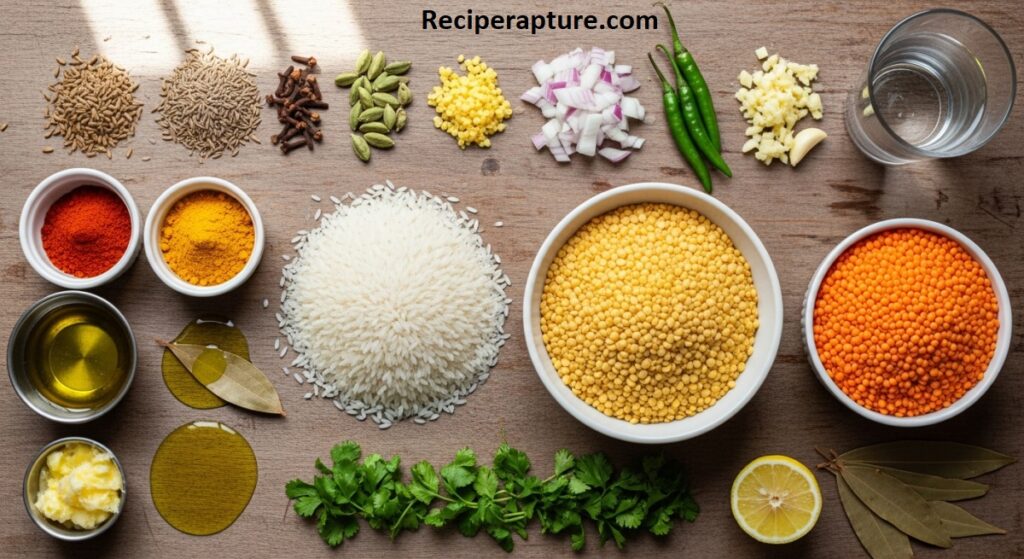
The heart of khichdi lies in the balance of rice and lentils. Typically, basmati rice is used for its fluffy texture and moong dal (yellow split mung beans) for creaminess and protein. Ginger, garlic, green chilies, cumin, and turmeric create a mild aromatic base without overpowering the dish.
Optional ingredients like ghee or butter add richness, while chopped cilantro or fried onions on top enhance aroma and flavor. Khichdi can also include vegetables such as carrots, peas, or beans, making it more nutritious and hearty. Using fresh ingredients and the correct proportions ensures the final dish is both flavorful and wholesome.
You Will Enjoy This: Kadhi Pakora | Delicious Yogurt Curry & Fritters
Equipment Essentials
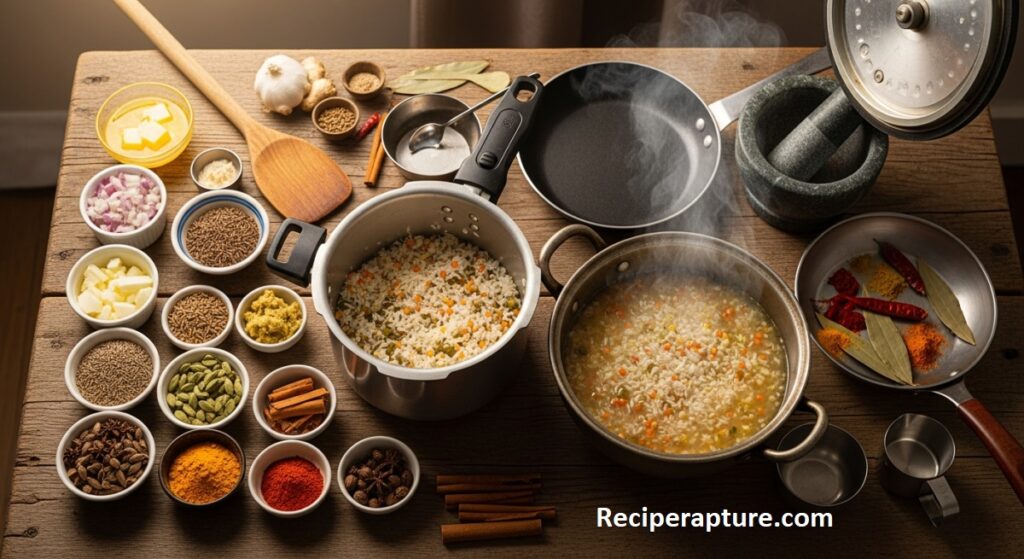
- Heavy-bottomed saucepan or pot
- Wooden spoon or spatula for stirring
- Measuring cups and spoons for accuracy
- Strainer for rinsing rice and lentils
- Serving bowls for presentation
Preparation of Khichdi
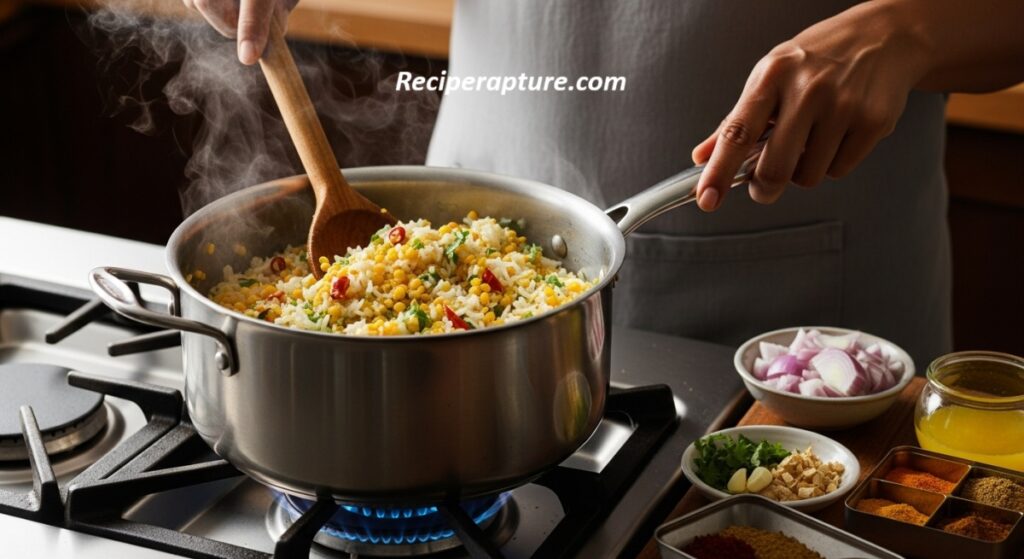
- Rinse rice and lentils thoroughly 2–3 times to remove excess starch.
- Chop vegetables (carrots, peas, and beans) uniformly for even cooking.
- Prepare aromatics: slice ginger, chop garlic, and slit green chilies.
- Measure spices: cumin seeds, turmeric, salt, and optional garam masala.
- Soak lentils for 15–20 minutes if you prefer faster cooking and a softer texture.
- Keep ghee, oil, or butter ready for tempering at the end.
Cooking Time Table
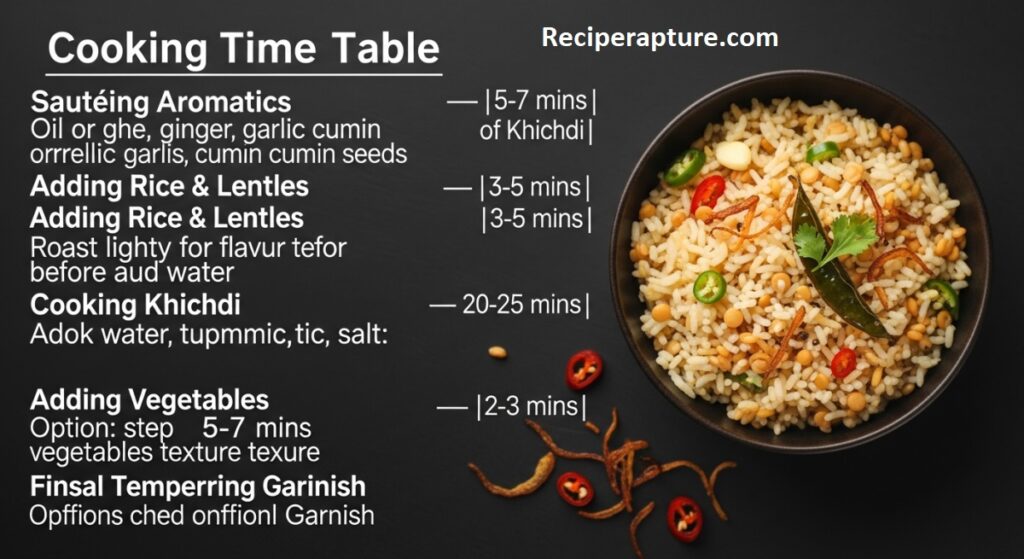
| Step | Time Needed | Details |
| Sautéing Aromatics | 5–7 mins | Oil or ghee, ginger, garlic, green chilies, cumin seeds |
| Adding Rice & Lentils | 3–5 mins | Roast lightly for flavor before adding water |
| Cooking Khichdi | 20–25 mins | Add water, turmeric, salt; cook until rice and lentils soften |
| Adding Vegetables | 5–7 mins | Optional step: add vegetables midway to maintain texture |
| Final Tempering & Garnish | 2–3 mins | Add ghee, fried onions, cilantro, optional chilies |
Step-by-Step Cooking Instructions of Khichdi
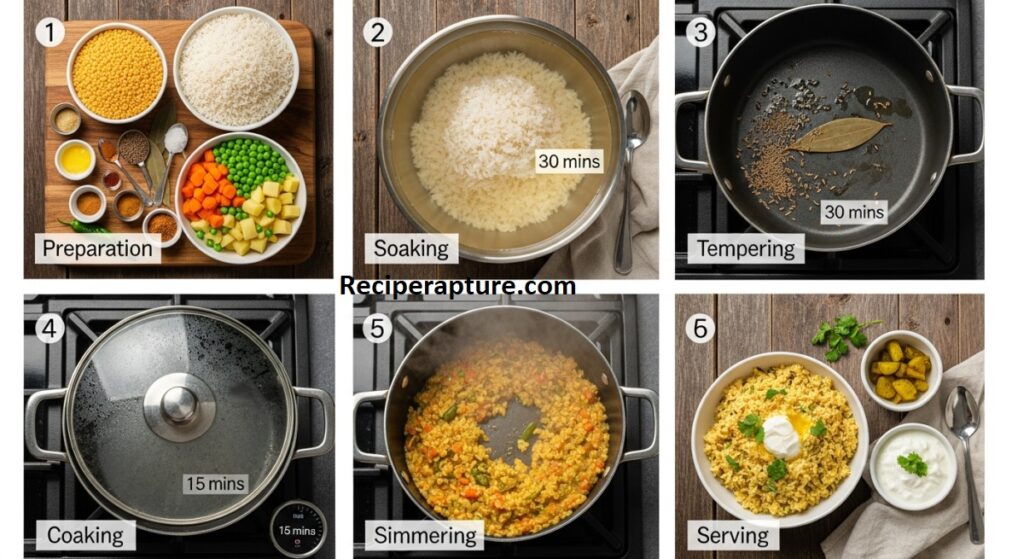
- Heat ghee or oil in a heavy-bottomed pot. Add cumin seeds and allow them to sizzle.
- Sauté ginger, garlic, and green chilies until fragrant. Avoid burning.
- Add rinsed rice and lentils, and stir to coat them in the oil and spices. Roast lightly for 2–3 minutes.
- Add water (roughly 4 cups per 1 cup rice-lentil mix), turmeric, and salt. Bring to a boil.
- Simmer gently, cover with a lid, and cook for 20 minutes until the rice and lentils are soft and porridge-like.
- Add chopped vegetables if using; cook an additional 5–7 minutes until tender.
- Check consistency: add a little water if it’s too thick; cook uncovered for 2 minutes if too watery.
- Final tempering: heat ghee with a pinch of cumin or mustard seeds, and pour over khichdi. Garnish with chopped cilantro or fried onions.
- Serve hot with yogurt, pickle, or papad on the side.
Serving Suggestions of Khichdi
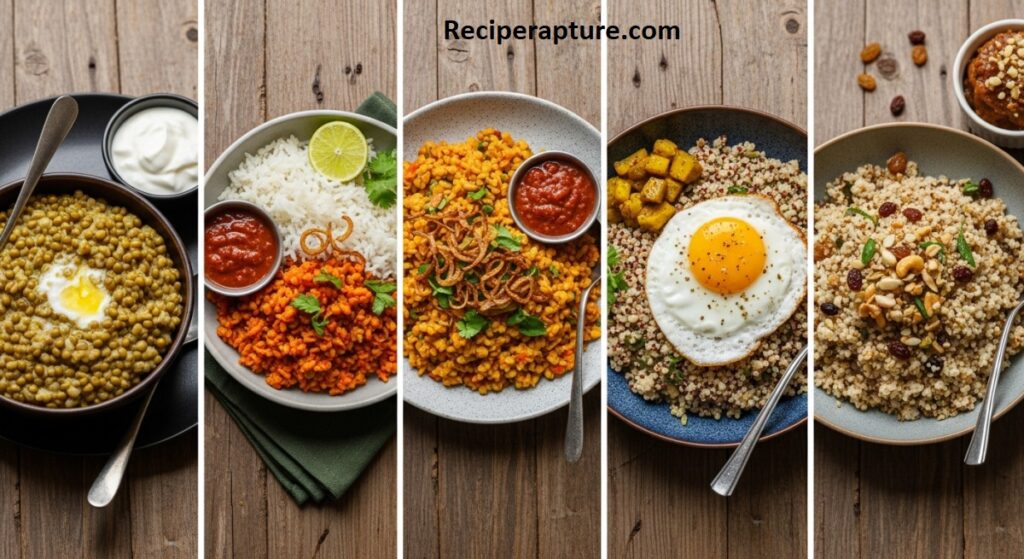
- Serve khichdi hot in deep bowls for a comforting meal.
- Pair with plain yogurt, raita, or pickle to enhance flavor.
- Garnish with fried onions, fresh cilantro, or a drizzle of ghee.
- Offer papad or naan on the side for a more filling meal.
- Can be served as breakfast, lunch, or a light dinner.
Comparison Table

| Variation | What’s Different | Taste & Texture |
| Plain Khichdi | Simple rice and lentils | Mild, soft, comforting |
| Vegetable Khichdi | Includes peas, carrots, beans | Nutritious, hearty, slightly textured |
| Spicy Khichdi | Adds green chilies & chili powder | Hotter, flavorful, aromatic |
| Ghee-Tempered Khichdi | Extra ghee for richness | Rich, aromatic, indulgent |
| Moong Dal & Rice Khichdi | Traditional protein-rich combination | Creamy, soft, protein-packed |
Tips & Variations of Khichdi
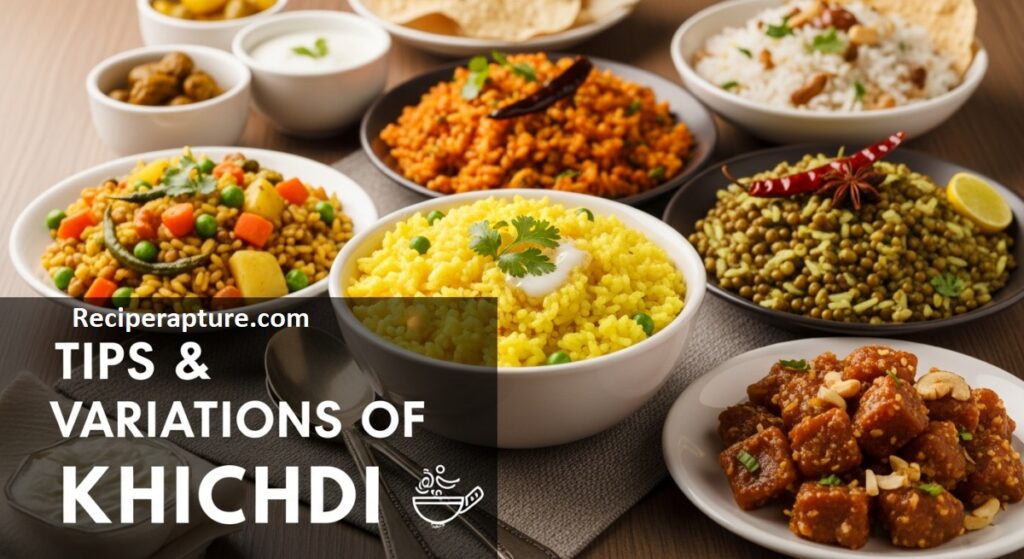
- Use basmati rice for fluffiness; short-grain rice can make it sticky.
- Adjust the water ratio based on desired consistency: more for porridge-like, less for thick khichdi.
- Add tempered spices at the end for enhanced aroma.
- Include seasonal vegetables for nutrition and color.
- For extra flavor, roast lentils lightly before cooking.
- Serve immediately; khichdi thickens as it cools, so add hot water if reheating.
Ingredient Table
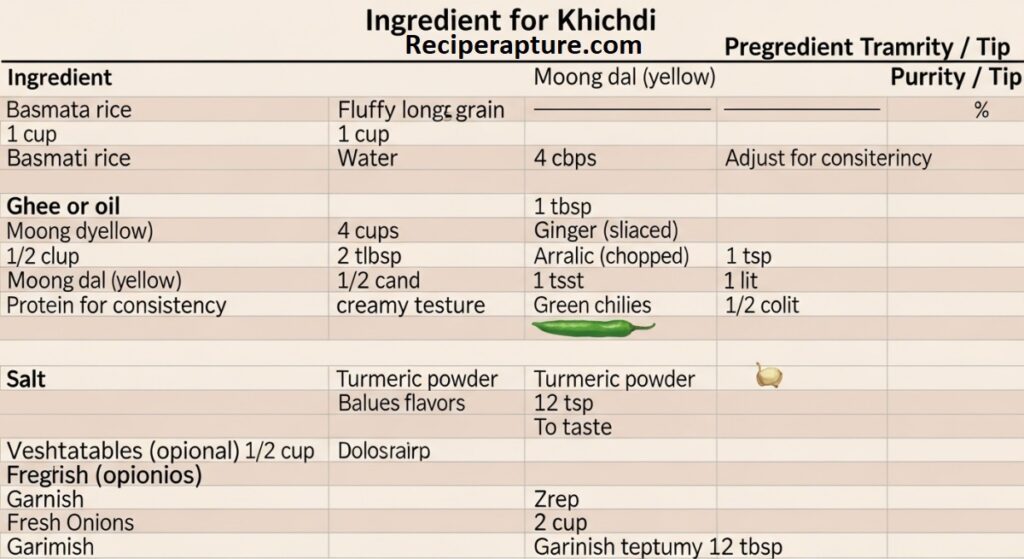
| Ingredient | Quantity | Purpose / Tip |
| Basmati rice | 1 cup | Fluffy, long-grain rice |
| Moong dal (yellow) | ½ cup | Protein and creamy texture |
| Water | 4 cups | Adjust for consistency |
| Ghee or oil | 2 tbsp | Base for sautéing and tempering |
| Ginger (sliced) | 1 tbsp | Aroma and flavor |
| Garlic (chopped) | 1 tsp | Aroma and taste |
| Green chilies | 1–2, slit | Mild heat (optional) |
| Turmeric powder | ½ tsp | Color and mild flavor |
| Salt | To taste | Balances flavors |
| Vegetables (optional) | ½ cup | Adds nutrition and color |
| Fresh cilantro | 2 tbsp | Garnish |
| Fried onions (optional) | 2 tbsp | Garnish for texture and aroma |
Nutritional Info (Approx. per serving)
- Calories: 220 kcal
- Protein: 8 g
- Carbohydrates: 35 g
- Fat: 7 g
- Fiber: 4 g
- Sugar: 2 g
Final Thoughts
Khichdi is the perfect comfort food, balancing simplicity and nutrition. It’s versatile, allowing customization with vegetables, spices, and garnishes. The traditional Pakistani style emphasizes slow cooking, subtle flavoring, and creamy texture. Whether for a busy weekday or a cozy family gathering, khichdi offers warmth, nourishment, and nostalgia in every bite.
Conclusion
By following this detailed recipe, you can create authentic, wholesome, and flavorful Pakistani-style khichdi at home. Paying attention to rice-to-lentil ratios, aromatics, and gentle simmering ensures a perfect creamy texture every time. Serve with accompaniments like yogurt, pickle, or papad, and enjoy a traditional dish that has been cherished across generations.