How Make to Biryani | Traditional Pakistani Style
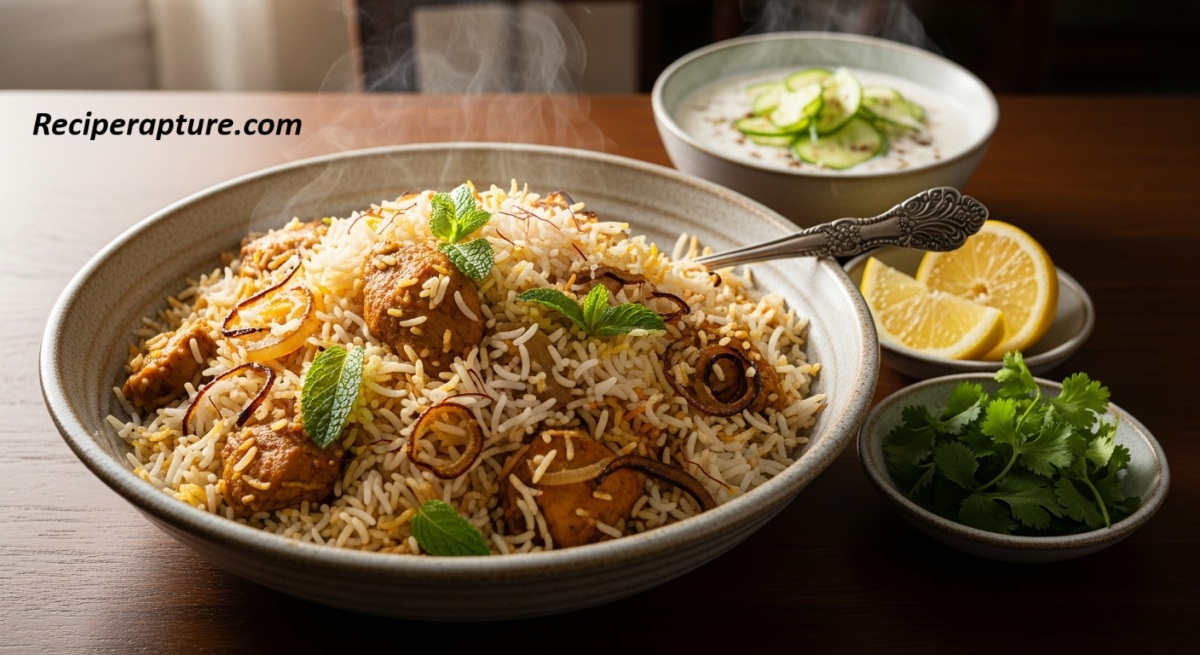
How Make to Biryani: Biryani isn’t just food; it’s an emotion in Pakistani homes. Every grain of rice carries history, culture, and the unmistakable aroma of saffron and spices.
This traditional Pakistani biryani combines tender meat, fluffy basmati rice, and rich masala layers that burst with flavor in every bite. Whether you’re cooking for a family dinner or a festive gathering, mastering biryani means unlocking one of Pakistan’s greatest culinary treasures.
Analysis of Ingredients of How Make to Biryani
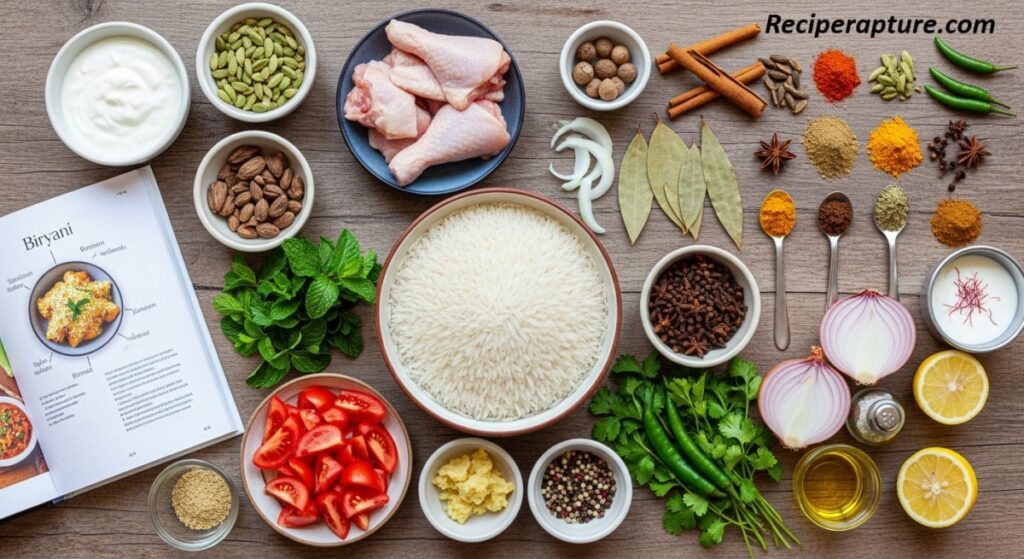
The magic of how to make biryani lies in its perfect balance of spice, meat, and rice. The foundation begins with basmati rice, known for its long grains and aroma. For the masala, you’ll use onions, tomatoes, yogurt, and a blend of whole spices like cardamom, cloves, and cinnamon for depth.
The meat (usually chicken, mutton, or beef) is marinated with ginger-garlic paste, chili powder, garam masala, and yogurt, giving it that signature heat and tenderness. Fresh mint, coriander, and fried onions add layers of fragrance, while saffron milk or yellow food coloring gives biryani its royal golden hue.
You Will Enjoy This: Fettuccine Recipe | Classic Italian Pasta Made Easy
Equipment Needed for How Make to Biryani

To make authentic Pakistani biryani, you’ll need:
- A heavy-bottomed pot (degchi) or non-stick biryani pan for layering and dum cooking.
- A sieve to drain the boiled rice.
- A deep skillet or wok for frying onions and making the masala.
- A wooden spoon or spatula for gentle mixing.
- Tight-fitting lid or dough seal for dum (steam cooking).
Getting Ready of How Make to Biryani
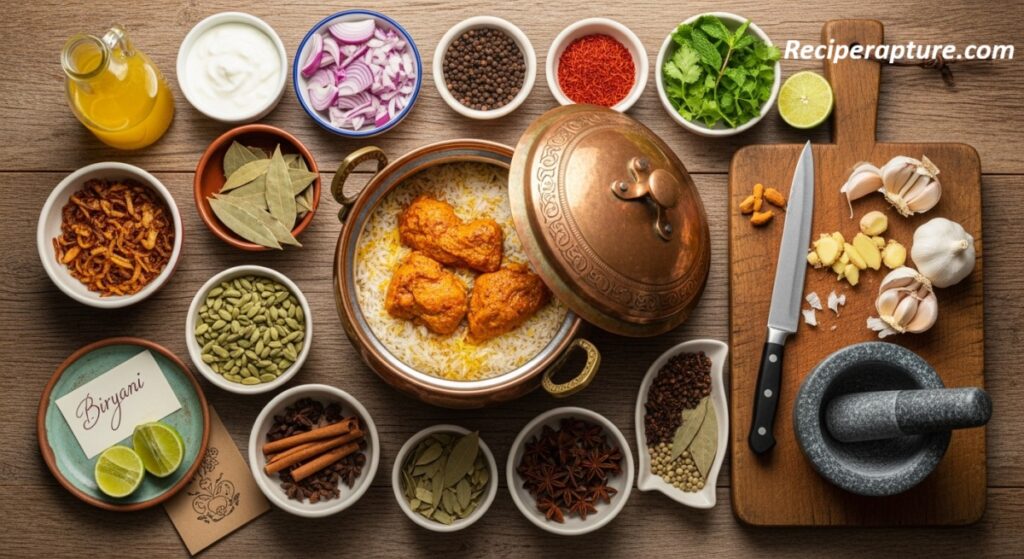
Marinate the Meat: Combine meat with yogurt, ginger-garlic paste, salt, and spices. Let it rest for at least 1 hour (or overnight).
Fry Onions: Thinly slice onions and fry them in oil until golden brown. Keep some for garnishing.
Boil Rice: Partially cook basmati rice with salt and whole spices—about 70% done. Drain and set aside.
Make Masala: In the same pot, cook marinated meat with tomatoes, yogurt, and spices until tender and thick.
Prepare for Layering: Gather all elements—rice, masala, fried onions, herbs, and saffron milk.
Cooking Time Table
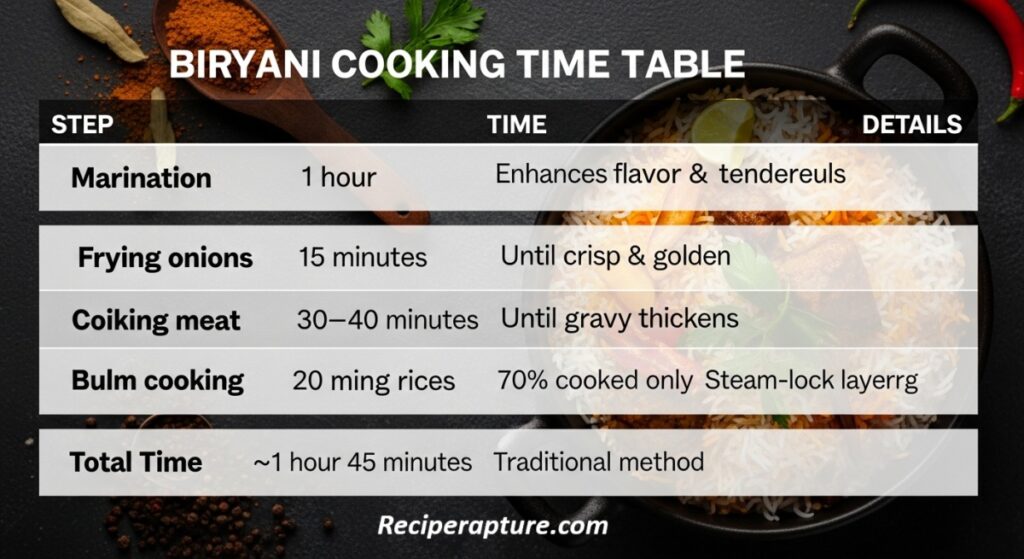
| Step | Time | Details |
| Marination | 1 hour | Enhances flavor & tenderness |
| Frying onions | 15 minutes | Until crisp & golden |
| Cooking meat | 30–40 minutes | Until gravy thickens |
| Boiling rice | 10 minutes | 70% cooked only |
| Dum cooking | 20 minutes | Steam-lock layering |
| Total Time | ~1 hour 45 minutes | Traditional method |
Detailed Instructions of How Make to Biryani

Marinate the Meat:
Mix meat with yogurt, chili powder, turmeric, salt, ginger-garlic paste, and garam masala. Let it rest to absorb flavors.
Fry the Onions:
Heat oil, add sliced onions, and fry until deep golden brown. Remove half for later garnishing.
Cook the Masala:
In the same oil, add marinated meat and cook until it changes color. Add tomatoes, yogurt, and spices. Cook on medium until the gravy thickens and oil separates.
Boil the Rice:
In a separate pot, boil rice with salt, bay leaf, cloves, and cardamom until 70% done. Drain.
Layering:
In a large pot, layer half of the rice, then spread the cooked meat masala evenly. Top with remaining rice, fried onions, mint, coriander, green chilies, and saffron milk.
Dum Cooking (Steam Cooking):
Seal the pot with a lid or dough. Cook on high flame for 5 minutes, then on low flame for 15–20 minutes.
Serve Hot:
Gently mix layers before serving. Enjoy the vibrant colors and aroma!
Serving Advice of How Make to Biryani
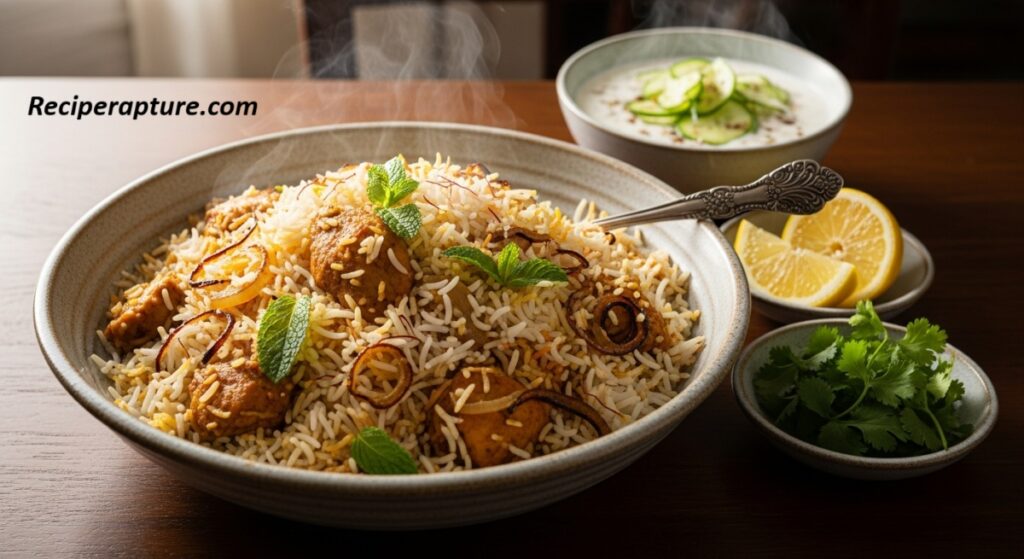
- Serve hot with raita (mint yogurt dip), kachumber salad, and papad.
- Add a side of fried potatoes or boiled eggs for Hyderabadi-style biryani flair.
- For festive meals, garnish with fried onions and lemon wedges.
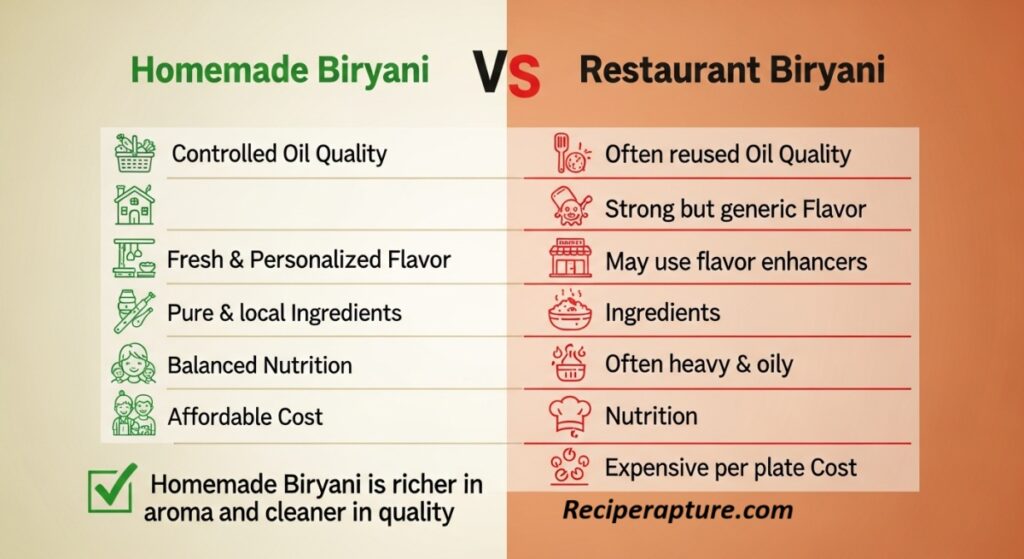
Comparison Table – Homemade vs Restaurant Biryani
| Aspect | Homemade Biryani | Restaurant Biryani |
| Oil Quality | Controlled | Often reused |
| Flavor | Fresh & personalized | Strong but generic |
| Ingredients | Pure & local | May use flavor enhancers |
| Nutrition | Balanced | Often heavy & oily |
| Cost | Affordable | Expensive per plate |
✅ Homemade biryani is richer in aroma and cleaner in quality.
Advice & Modifications on How make to biryani
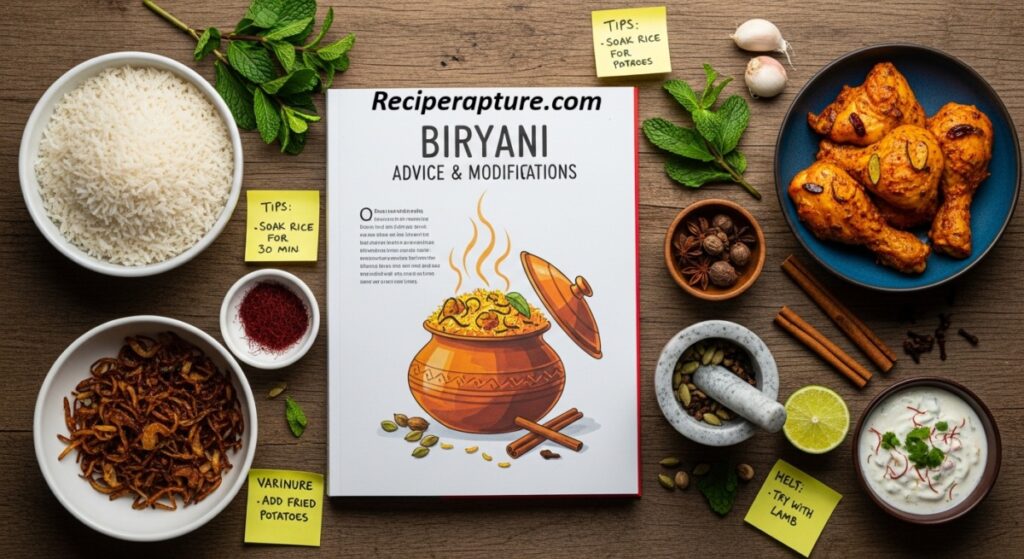
- Use long-grain basmati rice for the perfect texture.
- Don’t overcook rice before layering; it should remain slightly firm.
- Layer evenly to ensure every bite has rice and masala.
- Mutton Biryani: Increase dum time to 30 minutes for tenderness.
- Beef Biryani: Marinate overnight for soft, juicy meat.
- Vegetable Biryani: Replace meat with potatoes, peas, and carrots—delicious and light.
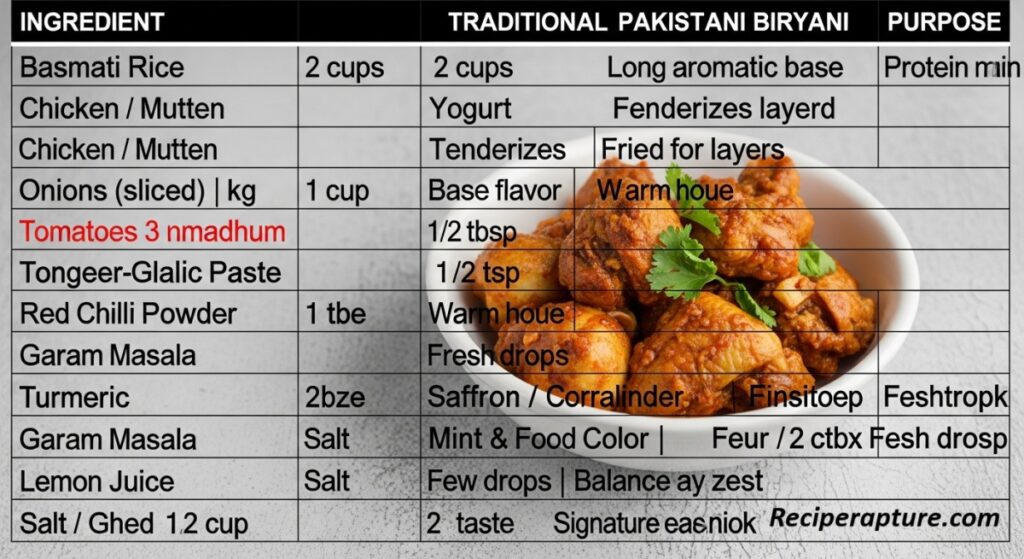
Ingredient Table for Traditional Pakistani Biryani
| Ingredient | Quantity | Purpose |
| Basmati Rice | 2 cups | Long, aromatic base |
| Chicken / Mutton | 1 kg | Protein main |
| Yogurt | 1 cup | Tenderizes meat |
| Onions (sliced) | 4 large | Fried for layering |
| Tomatoes | 3 medium | For rich masala |
| Ginger-Garlic Paste | 2 tbsp | Base flavor |
| Red Chili Powder | 1½ tsp | Spice & color |
| Turmeric | ½ tsp | Warm hue |
| Garam Masala | 1 tsp | Aromatic spice blend |
| Mint & Coriander | ½ cup each | Freshness |
| Saffron / Food Color | Few drops | Signature look |
| Lemon Juice | 2 tbsp | Balance & zest |
| Salt | To taste | Essential seasoning |
| Oil / Ghee | ½ cup | Richness |
FAQs
Q1: Can I make biryani without saffron?
Yes, use yellow/orange food coloring or turmeric milk instead.
Q2: How can I make biryani less spicy?
Reduce chili powder and use more yogurt or cream.
Q3: Why does my rice become mushy?
You likely overcooked it before layering; keep it 70% done only.
Q4: Can I use brown rice for biryani?
Yes, but increase soaking and cooking time; the flavor remains excellent.
Q5: What’s the difference between Sindhi and Hyderabadi biryani?
Sindhi biryani uses tangy yogurt and potatoes; Hyderabadi adds fried onions and saffron layers.
Nutritional Info (Per Serving)
| Nutrient | Amount |
| Calories | 480 kcal |
| Protein | 25 g |
| Fat | 18 g |
| Carbs | 55 g |
| Fiber | 2 g |
| Sodium | 700 mg |
High in protein and carbohydrates, perfect for festive energy.
Final Thoughts and a Call to Action on How make to biryani
Now that you know how to make traditional Pakistani biryani, it’s time to bring that rich aroma and layered perfection into your kitchen! Serve it for family dinners, Eid gatherings, or weekend feasts; this is one dish that never disappoints.
If you try this recipe, share your creation with the tag #PakistaniBiryaniMagicand let your friends smell the spice of tradition.
Conclusion
Biryani is more than just a meal; it’s a story of love, patience, and flavor. With this authentic recipe, you’ll master the art of creating the perfect Pakistani biryani: aromatic, colorful, and unforgettable.
Each spoonful celebrates the heritage of Pakistan’s culinary pride, so serve it with joy, and let the aroma do the talking.