Fettuccine Recipe | Classic Italian Pasta Made Easy
Few dishes represent Italian cuisine better than fettuccine, long, flat ribbons of pasta that perfectly cradle creamy sauces like Alfredo or rich tomato ragù. Originating from the heart of Rome, fettuccine (literally “little ribbons”) is cherished for its silky texture and delicate chew, making it one of the most versatile pasta types in the world.
Whether you’re serving it with a classic cream sauce, buttery herbs, or fresh seafood, this guide will teach you how to make authentic Italian fettuccine at home—simple, fresh, and absolutely delicious.
Ingredients Breakdown
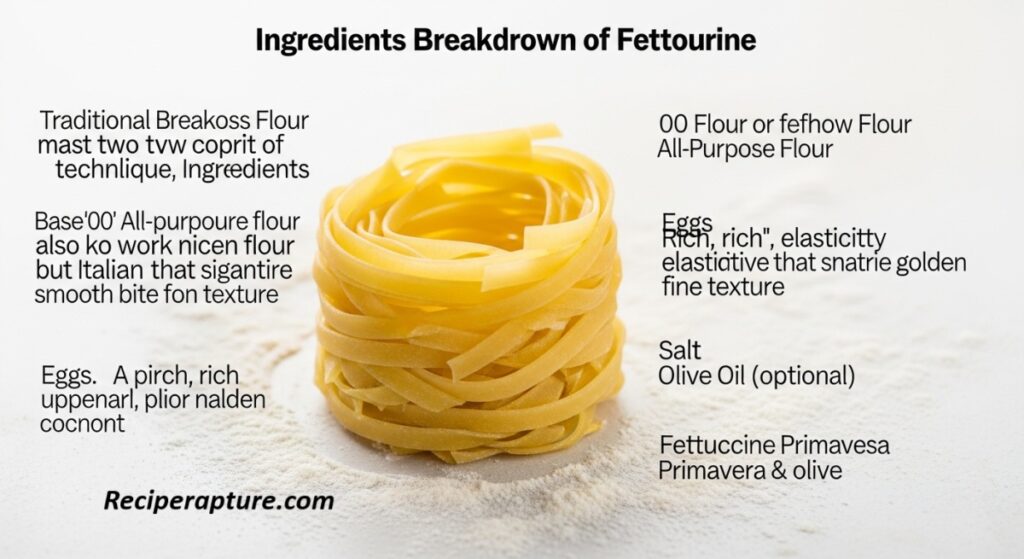
Traditional fettuccine is made using just two ingredients: flour and eggs. The magic lies in technique, not complexity.
00 Flour or All-Purpose Flour: The base of the pasta. “00” all-purpose flour also works nicely, but Italian flour produces a smooth bite and fine texture.
Eggs: Provide richness, elasticity, and that signature golden color.
Salt: A pinch enhances the natural flavor.
Olive Oil (optional): Adds smoothness and prevents the dough from drying.
Optional sauces you can pair it with:
Fettuccine Alfredo (cream, butter, Parmesan)
Fettuccine Bolognese (meaty tomato sauce)
Fettuccine Primavera (fresh veggies & olive oil)
You Will Enjoy This: Doodh Dulari Recipe a Colorful and Creamy Pakistani Dessert
Equipment Needed
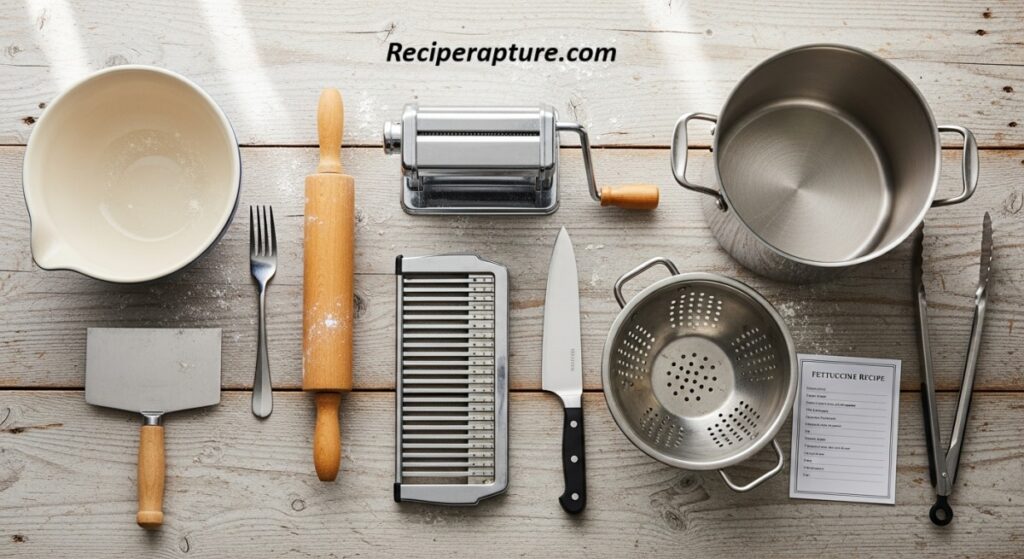
Making fettuccine doesn’t require fancy tools, but a few basics help ensure perfection:
- Mixing bowl
- Fork or bench scraper for combining dough
- Rolling pin or pasta machine
- Sharp knife or fettuccine cutter
- Large pot for boiling pasta
- Colander or strainer
- Tongs for serving
If you have a pasta roller attachment for your mixer, even better for uniform thickness.
Preparation
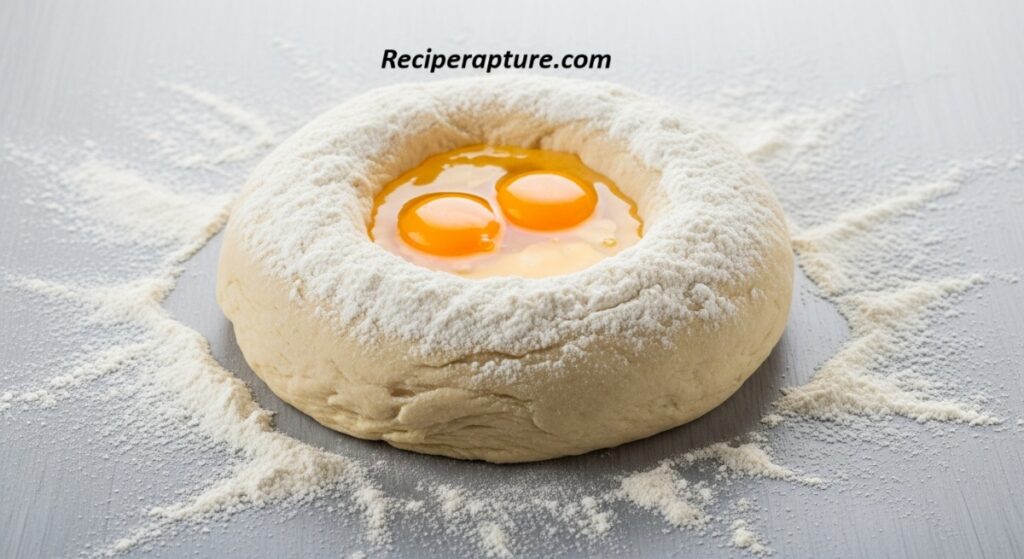
To begin, make a well in the middle of a clean surface using the flour. Crack the eggs into the well and beat gently with a fork. Add the flour to the eggs gradually until a dough starts to form.
Once combined, knead the dough until smooth and elastic—this takes about 8–10 minutes. Wrap it in plastic and let it rest for 30 minutes, allowing the gluten to relax. This makes rolling easier and prevents tearing.
Cooking Time Table
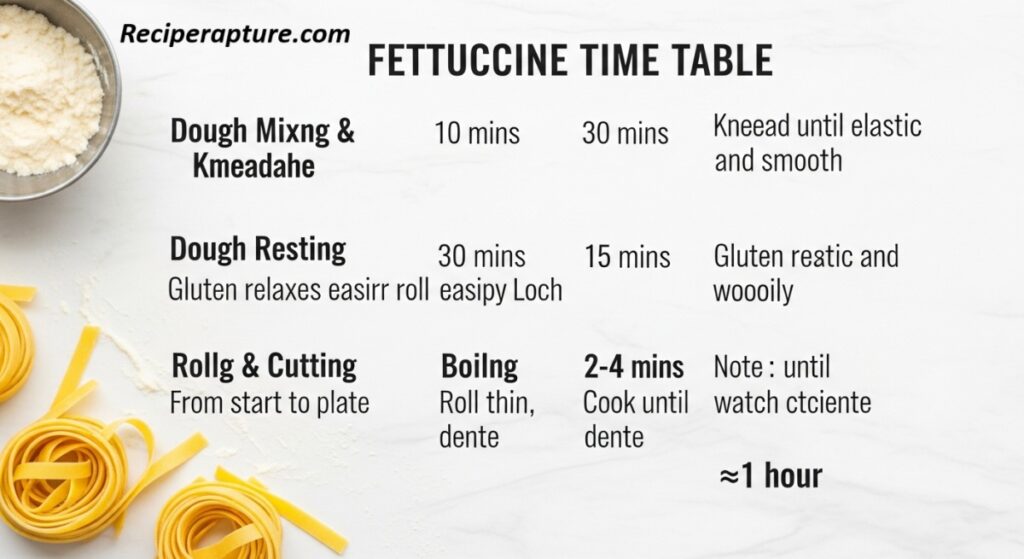
| Step | Time | Details |
|---|---|---|
| Dough Mixing & Kneading | 10 mins | Knead until dough is elastic and smooth. |
| Dough Resting | 30 mins | Allows gluten to relax; dough becomes easier to roll. |
| Rolling & Cutting | 15 mins | Roll thin sheets and cut into ribbons. |
| Boiling | 2–4 mins | Cook until al dente — tender but firm. |
| Total Time | ~1 hour | From start to plate. |
Step-by-Step Instructions
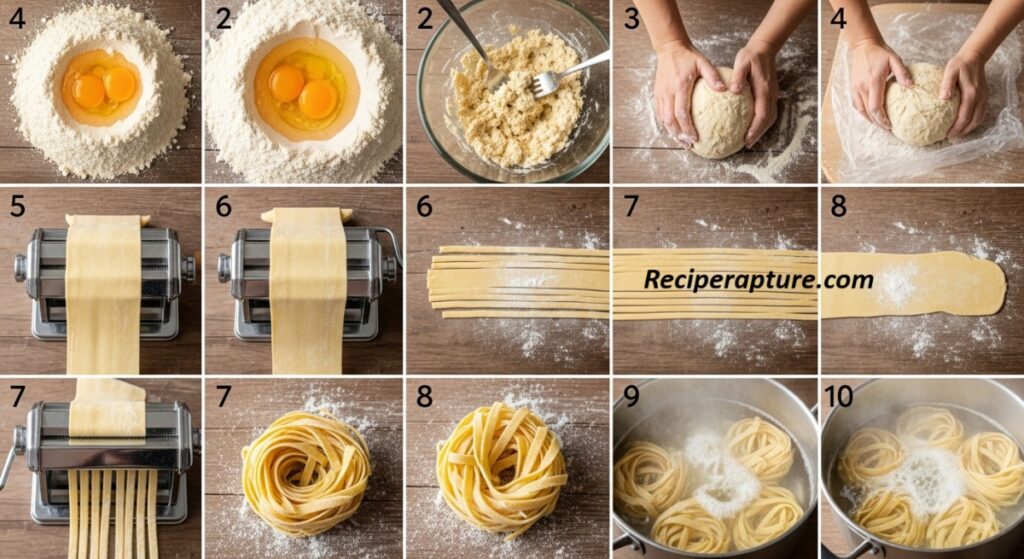
1. Make the Dough:
Place 2 cups of flour on a work surface, make a well, and add 3 eggs and a pinch of salt. Gradually mix with a fork, pulling in flour until a rough dough forms.
2. Knead:
Use your hands to knead for about 10 minutes until smooth and elastic. If the dough feels dry, add a few drops of water; if sticky, dust lightly with flour.
3. Rest:
After wrapping it in plastic wrap, let it sit at room temperature for half an hour.
4. Roll Out:
Divide dough into portions. Roll each piece with a pasta roller or rolling pin until about 1–2 mm thick.
5. Cut Fettuccine:
Lightly flour the sheets, fold them loosely, and slice them into ¼-inch-wide ribbons. Gently separate the strands.
6. Cook the Pasta:
Boil salted water in a large pot. Add fettuccine and cook for 2–4 minutes (fresh) or 8–10 minutes (dried) until al dente.
7. Toss with Sauce:
Drain, reserve some pasta water, and immediately toss with your chosen sauce: Alfredo, pesto, tomato, or olive oil.
Serving Suggestions
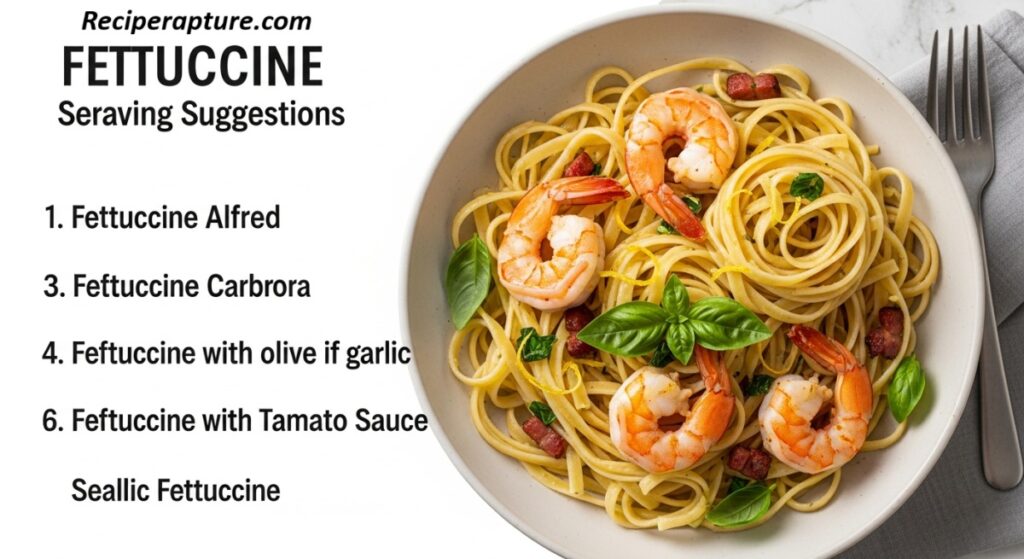
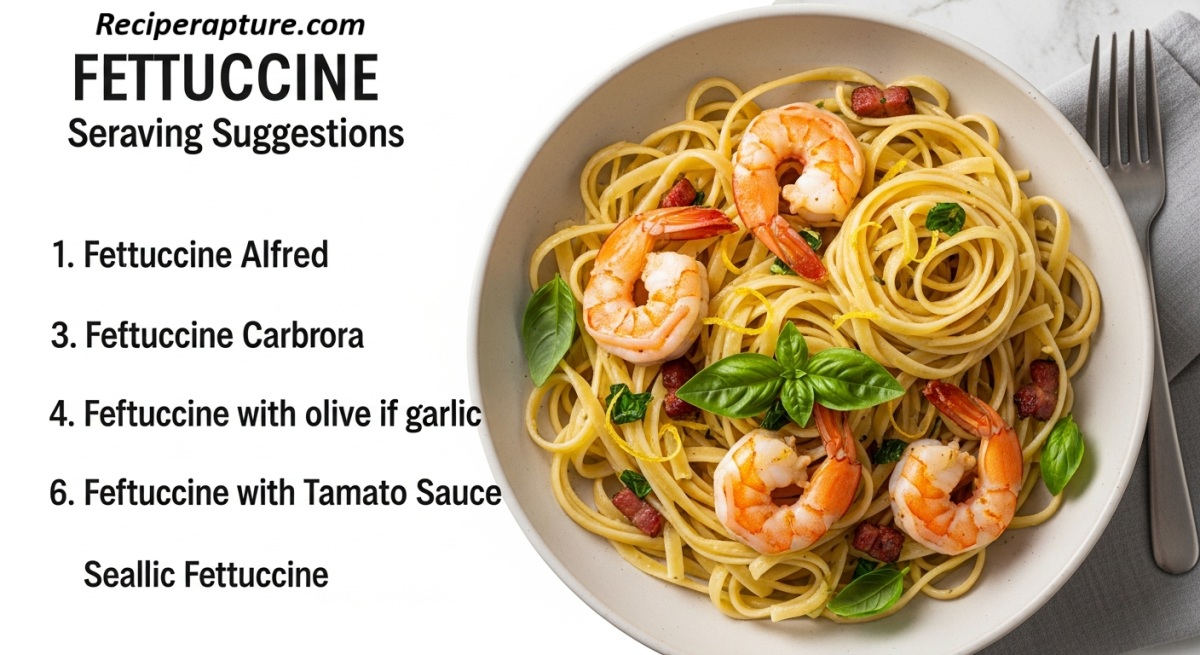
Fettuccine is perfect for both rich and light sauces. Try these combinations:
- Fettuccine Alfredo: Butter, cream, and Parmesan—the classic Roman comfort.
- Fettuccine Carbonara: Eggs, pancetta, and pecorino cheese.
- Fettuccine with Pesto: Fresh basil, olive oil, garlic, and pine nuts.
- Fettuccine with Tomato Basil Sauce: Simple yet full of Italian flavor.
- Seafood Fettuccine: Tossed with shrimp, garlic, and lemon zest.
Serve hot, topped with freshly grated Parmesan and a drizzle of extra virgin olive oil.
Comparison Table – Fresh vs. Store-Bought Fettuccine
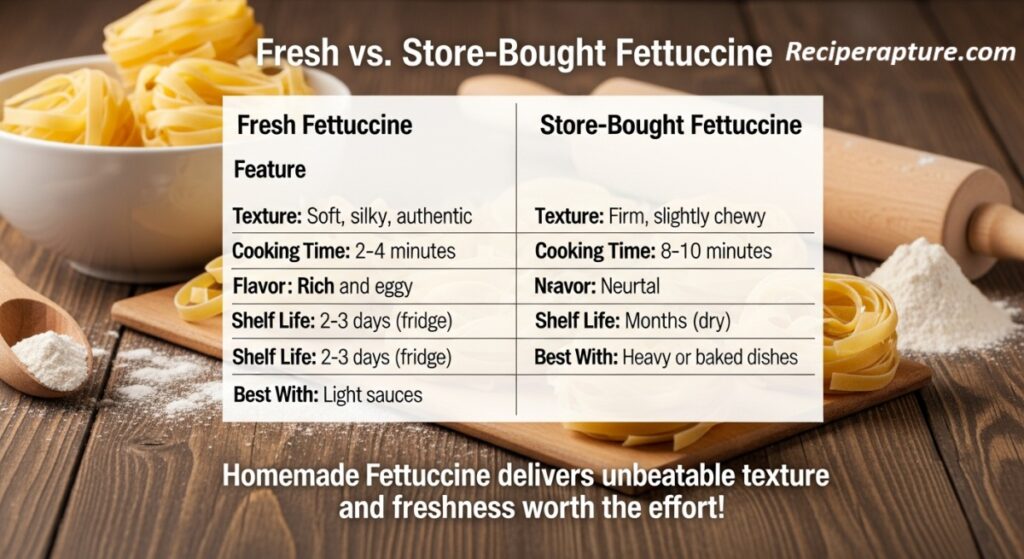
| Feature | Fresh Fettuccine | Store-Bought Fettuccine |
|---|---|---|
| Texture | Soft, silky, and authentic | Firm, slightly chewy |
| Cooking Time | 2–4 minutes | 8–10 minutes |
| Flavor | Rich and eggy | More neutral in taste |
| Shelf Life | 2–3 days (refrigerated) | Several months (dry) |
| Best With | Light, delicate sauces | Hearty, heavy, or baked dishes |
Homemade fettuccine delivers unbeatable texture and freshness worth the effort!
Tips & Variations
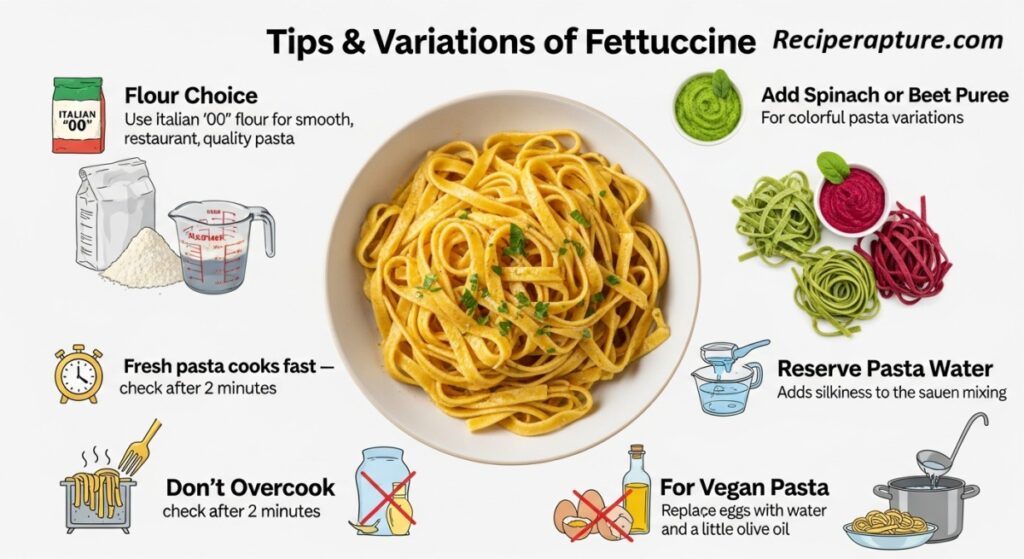
- Flour Choice: Use Italian “00” flour for smooth, restaurant-quality pasta.
- Add Spinach or Beet Puree: For colorful pasta variations.
- Don’t Overcook: Fresh pasta cooks fast—check after 2 minutes.
- Reserve Pasta Water: Adds silkiness to the sauce when mixing.
- For vegan pasta: Replace eggs with water and a little olive oil.
Ingredient Table
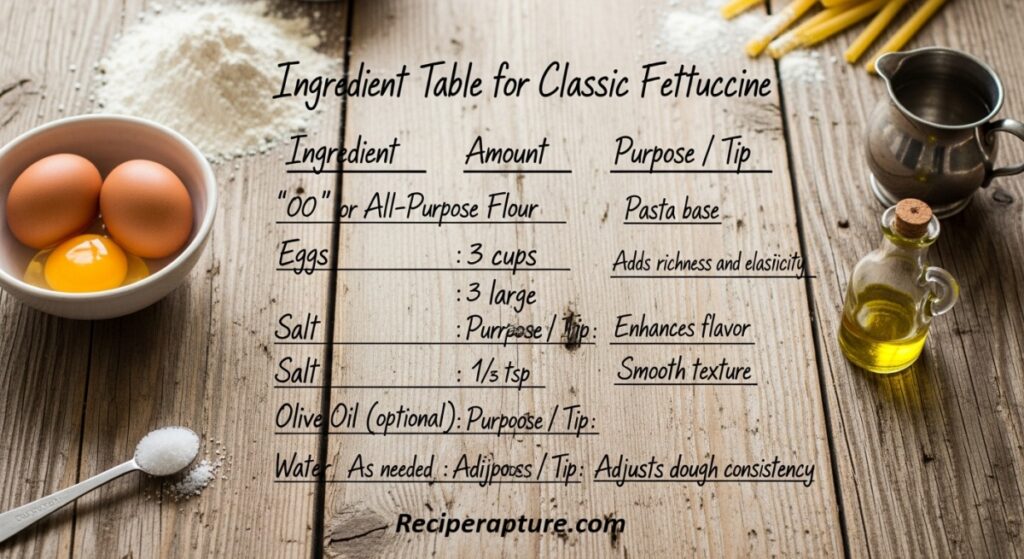
| Ingredient | Amount | Purpose / Tip |
|---|---|---|
| “00” or All-Purpose Flour | 2 cups | Forms the pasta base |
| Eggs | 3 large | Adds richness and elasticity |
| Salt | ½ teaspoon | Enhances flavor |
| Olive Oil (optional) | 1 teaspoon | Adds smooth texture |
| Water | As needed | Adjusts dough consistency |
Nutritional Info (Per Serving – Approx.)
Nutrient Amount
Calories 320 kcal
Protein 11 g
Carbohydrates 54 g
Fat 6 g
Fiber 2 g
Cholesterol 90 mg
Closing / Call-to-Action
And there you have it, your classic Italian fettucine made from scratch! With just flour, eggs, and a little love, you can recreate the timeless flavors of Italy right in your kitchen.
Try this recipe with Alfredo, pesto, or tomato sauce, and share your creation with family for a true Italian dining experience.
FAQ’s
Q1: Can I use a pasta machine for fettuccine?
Yes! It’s ideal for rolling thin, even pasta ribbons quickly.
Q2: Why does my dough feel tough?
It may be under-kneaded or too dry—add a few drops of water and continue kneading.
Q3: How do I prevent noodles from sticking?
Dust with flour and separate strands before boiling.
Q4: Can I dry homemade fettuccine?
Yes. Hang on a rack or lay flat for 12–24 hours, then store in an airtight container.
Q5: How can I make gluten-free fettuccine?
Use gluten-free flour blends or a mix of rice and tapioca flour with xanthan gum.
Conclusion
Fettuccine is the ultimate simple and elegant pasta, endlessly versatile. Its rich texture and ability to hold sauce beautifully make it a staple of Italian cuisine. Once you experience homemade fettucine’s silky smoothness, you’ll never look at boxed pasta the same way again.