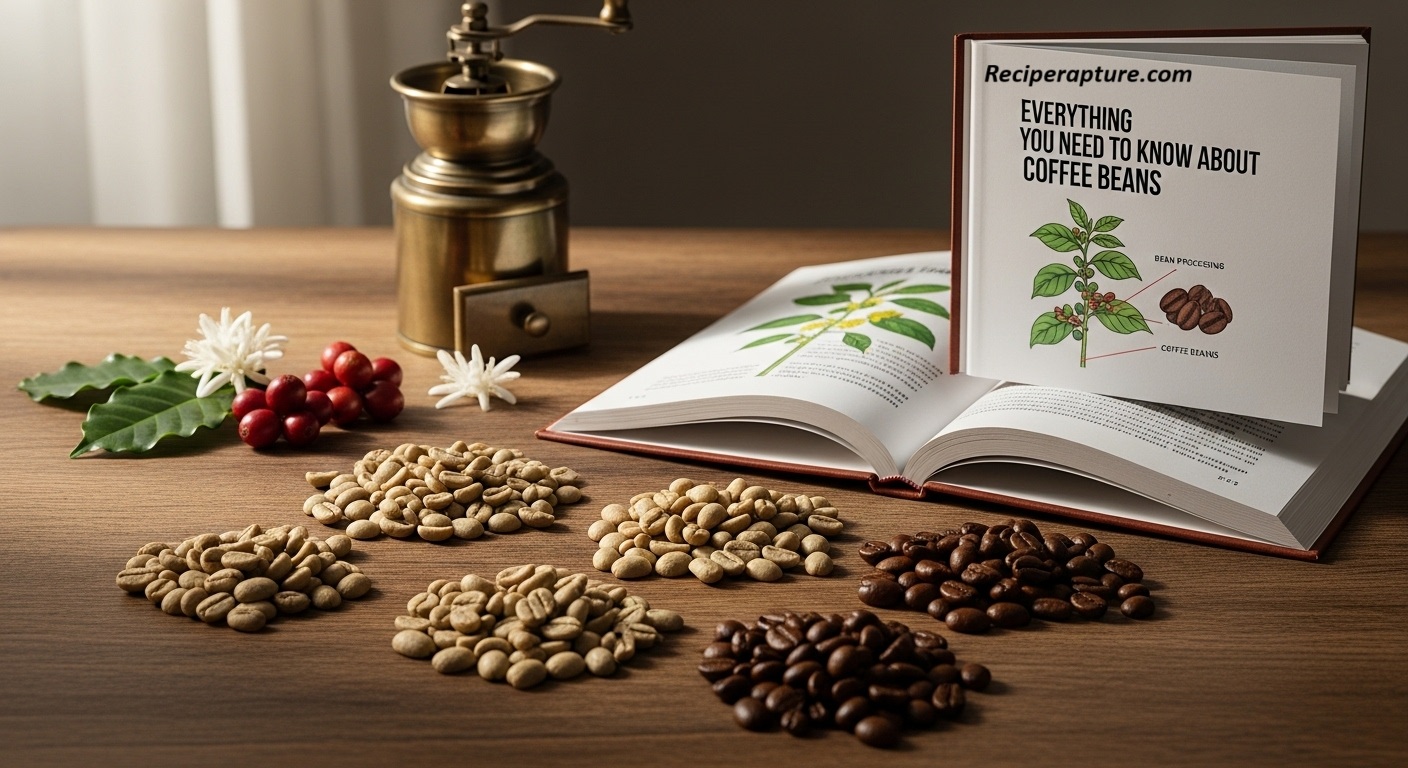
Everything You Need to Know About Coffee Beans
Coffee Beans: Coffee isn’t just a drink; it’s a global ritual, an energy booster, and for many, an art form. The beans are the key to a delicious cup of coffee.
From the rich, chocolatey depth of Arabica to the strong, bold notes of Robusta, every bean tells a story of its origin, roast, and brewing method. Understanding coffee beans helps you not only brew better coffee but also appreciate the subtle flavors, aromas, and textures in your cup.
Ingredients Breakdown of Coffee Beans

The only ingredient at the heart of this journey is the coffee bean, but its characteristics vary based on type and roast. Arabica beans are smooth, slightly sweet, and often have fruity or floral notes, while Robusta beans are stronger, with a bitterer, earthy profile. The roast level—light, medium, or dark—affects the flavor balance, aroma, and caffeine content. While coffee beans are the star, the role of water (quality and temperature) is equally important, as it makes up over 98% of your coffee.
Your Will Like This: How to Make Mango Squash at Home—Easy & Delicious
Equipment Needed
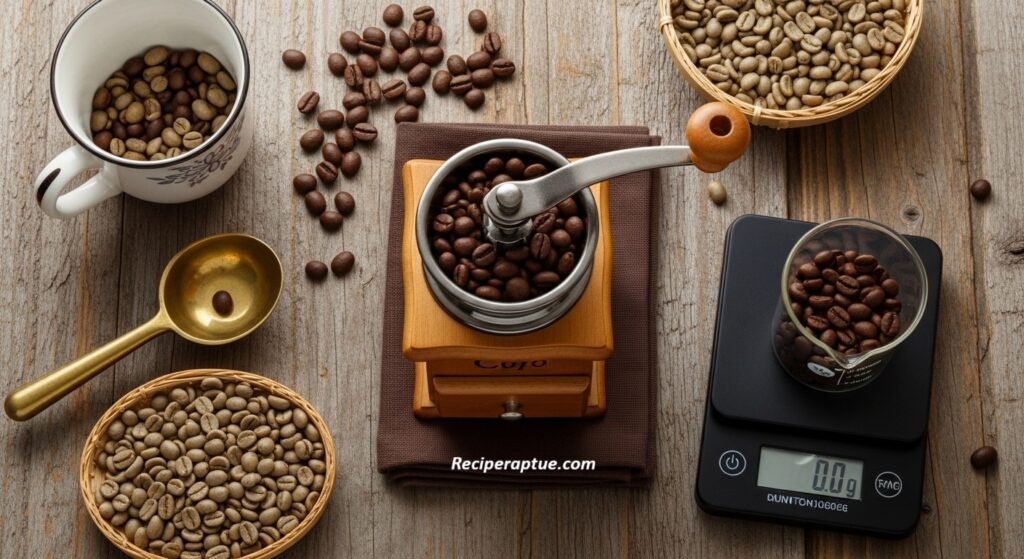
Coffee grinder—for freshly ground beans.
Coffee maker, French press, or pour-over kit—depending on your brewing style.
Kettle (preferably gooseneck)—for controlled pouring.
Coffee scoop or digital scale—to measure accurately.
Mug or insulated cup—to enjoy your coffee hot and fresh.
Preparation of Coffee Beans

Start by selecting your beans based on taste preference: Arabica for smooth, Robusta for strong, or a blend for balance. Grind the beans just before brewing for maximum freshness—grind size matters (fine for espresso, coarse for French press). Heat water to about 90–96°C (195–205°F) for optimal extraction. Finally, prepare your brewing setup according to the method you’ll use.
Cooking (Brewing) Timetable
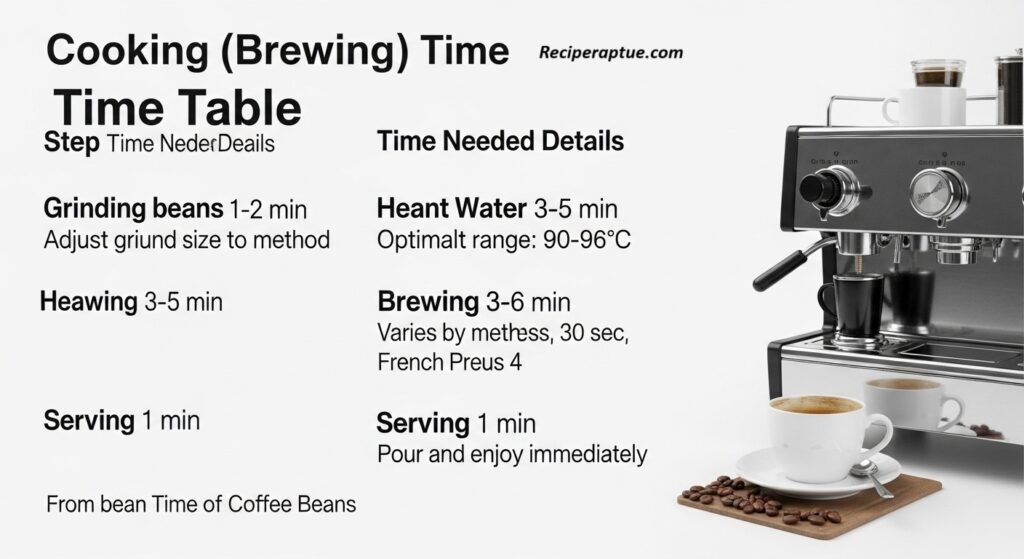
Step Time Needed Details
Grinding beans 1–2 min Adjust grind size to method
Heating water 3–5 min Optimal range: 90–96°C
Brewing coffee 3–6 min Varies by method (espresso 30 sec, French press 4 min)
Serving 1–2 min Pour and enjoy immediately
Total Time 8–12 min From bean to cup
📌 Quick enough for daily routines, flexible for special brews.
Step-by-Step Instructions of Coffee Beans
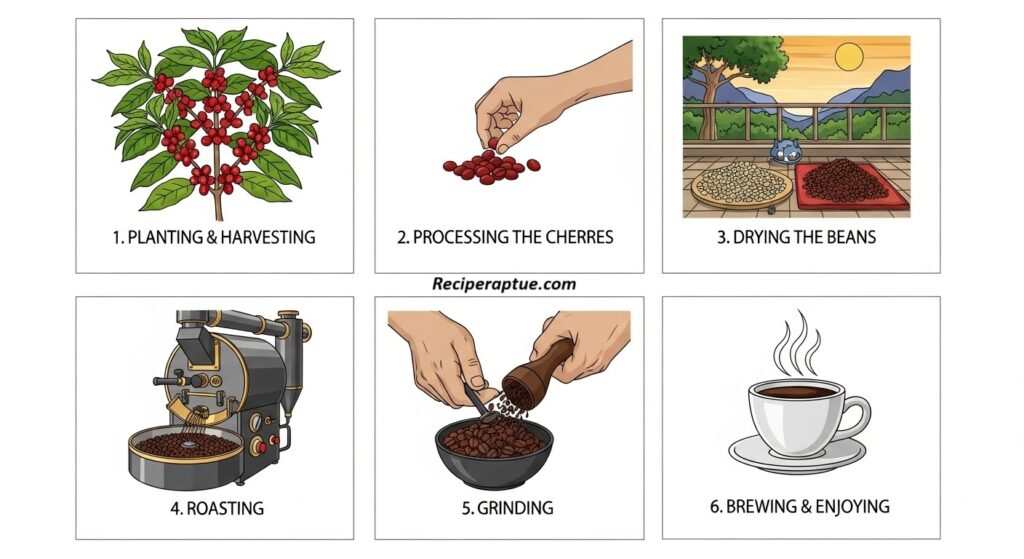
Measure coffee beans (about 1–2 tbsp per 6 oz water, or 10 g coffee per 180 ml water).
Grind beans according to brewing method: fine for espresso, medium for drip, coarse for French press.
Boil & cool water to 90–96°C.
Brew using your chosen method:
French press → steep 4 minutes, then press.
Pour-over → pour slowly in circles.
Espresso → 25–30 seconds under pressure.
Serve immediately for the freshest, most aromatic coffee experience.
Serving Suggestions of Coffee Beans

Enjoy it black for the purest flavor.
Add milk, cream, or plant-based alternatives for a smoother taste.
Sweeten with sugar, honey, or flavored syrups.
Pair with pastries, cookies, or breakfast dishes.
Chill and serve as iced coffee or blend into frappés for variety.
Comparison Table
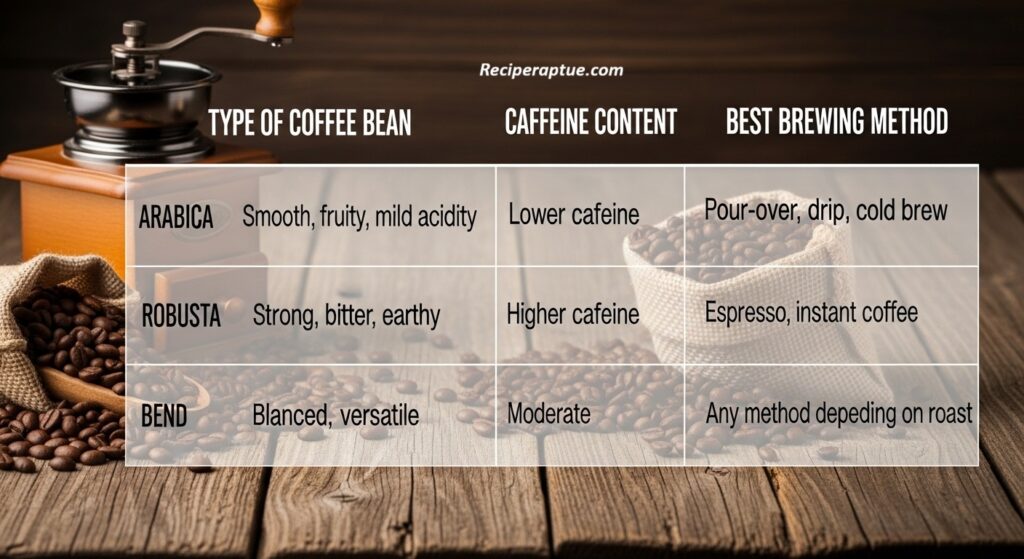
Type of Coffee Bean Flavor Profile Caffeine Content Best Brewing Method
Arabica Smooth, fruity, mild acidity Lower caffeine Pour-over, drip, cold brew
Robusta Strong, bitter, earthy Higher caffeine Espresso, instant coffee
Blend Balanced, versatile Moderate Any method depending on roast
📌 Arabica = flavor complexity, Robusta = strength, Blends = balance.
Tips & Variations
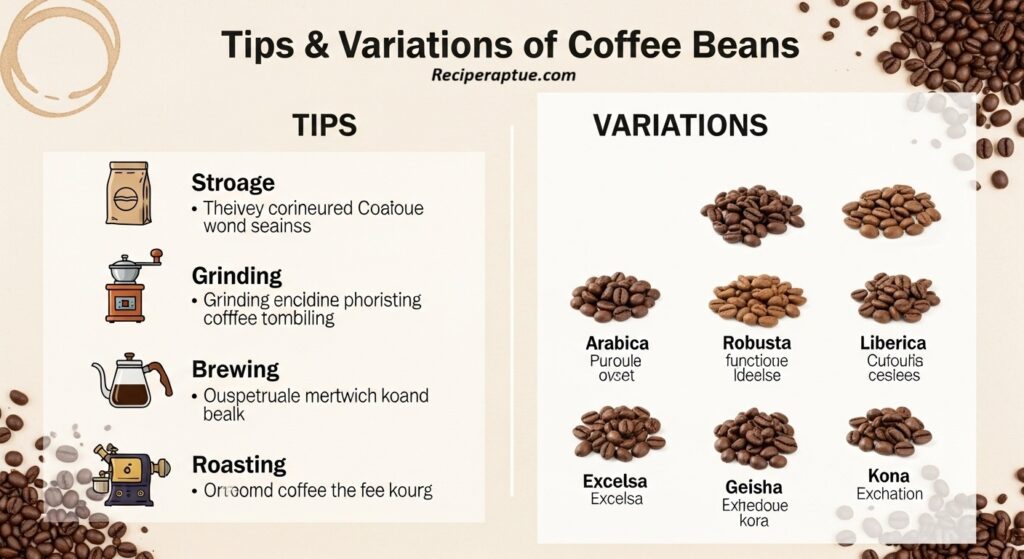
Always store beans in an airtight container away from light and heat.
Grind just before brewing to preserve aroma.
Experiment with different roast levels—light for floral notes, medium for balance, dark for bold richness.
Try flavored coffee beans (vanilla, hazelnut, caramel) for variety.
Use filtered water to avoid off-flavors.
Ingredient Table for Coffee
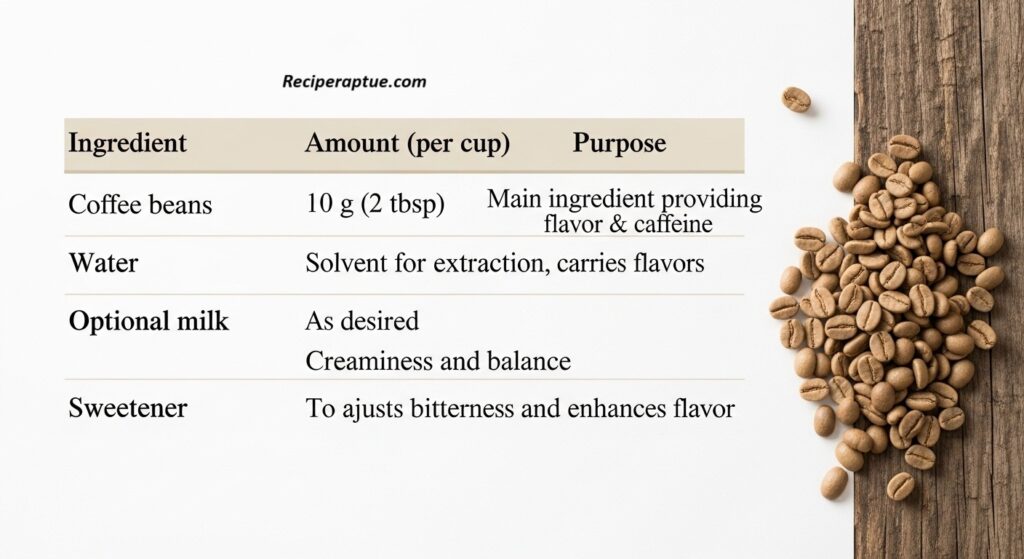
Ingredient Amount (per cup) Purpose
Coffee beans 10 g (2 tbsp) Main ingredient providing flavor & caffeine
Water 180 ml (6 oz) Solvent for extraction, carries flavors
Optional milk As desired Creaminess and balance
Sweetener To taste Adjusts bitterness and enhances flavor
FAQ’s
Q: How long do coffee beans stay fresh?
About 2–3 weeks after opening; best consumed quickly for flavor.
Q: Is it preferable to purchase ground coffee or whole beans?
Whole beans are fresher; grind them just before brewing for best taste.
Q: Is the dark roast or light roast higher in caffeine?
Light roast has slightly more caffeine per bean, but dark roast tastes stronger.
Q: Can I reuse coffee grounds?
No, reused grounds make weak, bitter coffee.
Q: What’s the healthiest way to drink coffee?
Black coffee, without added sugar or cream, is the lowest in calories and richest in antioxidants.
Nutritional Info (per 1 cup black coffee – no sugar/cream)
Calories: 2 kcal
Carbohydrates: 0 g
Protein: 0 g
Fat: 0 g
Caffeine: ~95 mg (varies by bean & brew)
Antioxidants: High
Closing / Call-to-Action
Now that you know everything about coffee beans, it’s time to brew smarter and savor better. Try a variety of beans, grind sizes, and brewing techniques until you have the ideal cup. Don’t settle for average coffee make every sip an experience!
Conclusion
Coffee beans are more than just the start of your morning; they’re a world of flavors waiting to be explored. From the type of bean to the roast and brewing method, each choice shapes your cup. By understanding the basics, you can transform your daily coffee into a personal ritual that brings comfort, energy, and joy.