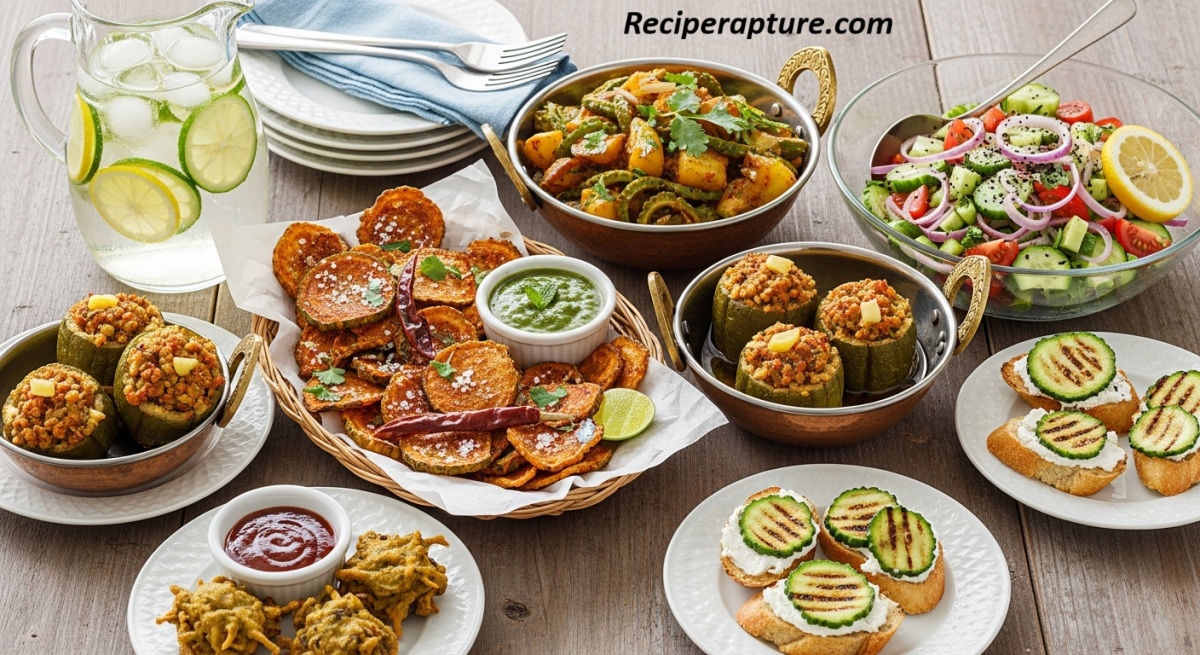
How to Cook Karela Vegetable | Easy Pakistani Recipe
Karela vegetable (bitter gourd) may seem intimidating at first because of its naturally strong flavor, but when cooked the traditional Pakistani way, with onions, spices, and slow sautéing, it transforms into a rich, aromatic, slightly caramelized dish that pairs perfectly with roti or parathas.
This recipe focuses on balancing the bitterness while keeping the authentic taste intact, making it ideal even for those who normally avoid karela. With careful preparation, gentle cooking, and layered spices, you can turn this simple vegetable into a wholesome, comforting meal.
Ingredient Insight of Karela Vegetable
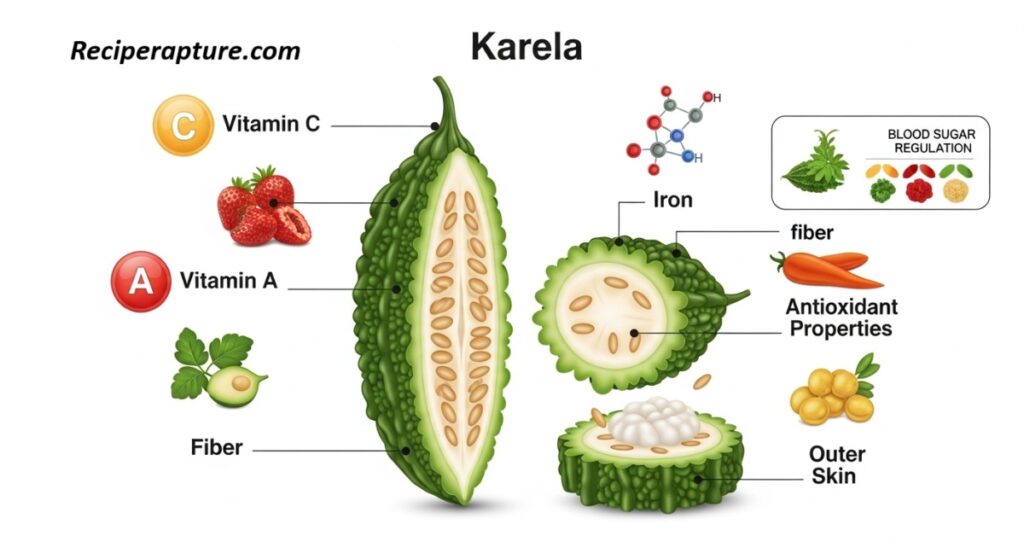
The key ingredients in this dish work together to create a deep, balanced flavor. Fresh karela provides the signature bitter notes, while onions add sweetness that naturally reduces the bitterness as they caramelize.
Tomatoes (optional) introduce subtle tanginess and moisture, but many traditional cooks prefer a dry-style version. Ginger and garlic give warmth and aroma, while spices like coriander powder, red chili, and turmeric bring the familiar Pakistani flavor base. Green chilies brighten the dish without overpowering it, and finishing with lemon juice helps freshen the overall profile.
You Will Enjoy This: How to Make Classic Hot Chocolate at Home
Kitchen Tools & Essentials Needed

- Heavy-bottomed skillet, wok, or karahi
- Sharp knife for slicing karela
- Cutting board
- Mixing bowl for salting karela
- Spatula for sautéing
- Optional: strainer for rinsing karela
Prep Work before Cooking of Karela Vegetable
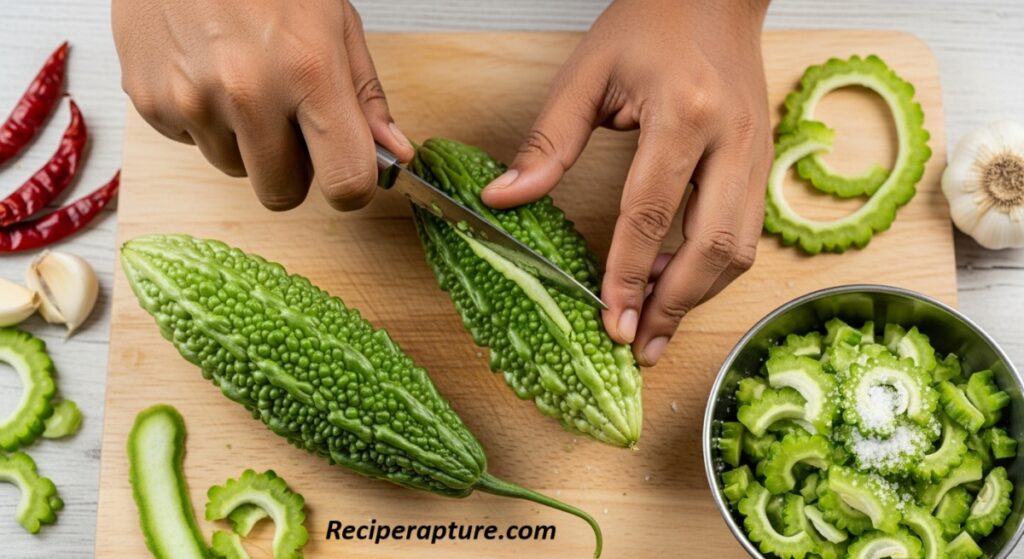
Begin by washing the karela thoroughly and then slicing them into thin rings so they cook evenly. Sprinkle a generous amount of salt over the slices and mix well; this step is essential for drawing out bitterness.
Let the salted karela rest for at least 30 minutes, then squeeze and rinse them with water 1–2 times. Meanwhile, prepare thinly sliced onions, chop tomatoes if using, slit green chilies, and measure out all spices so the cooking process flows smoothly.
Cooking Schedule Overview
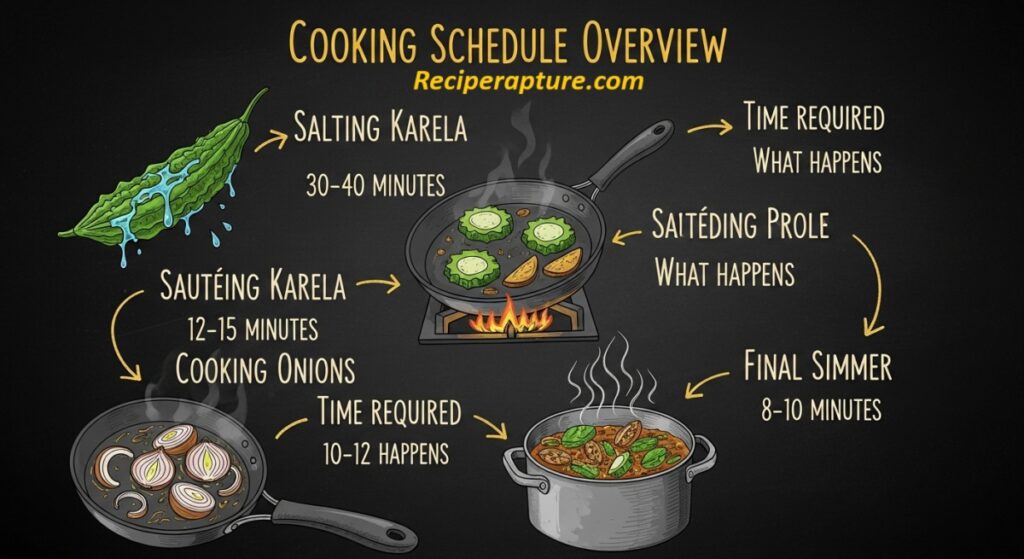
| Step | Time Required | What Happens |
| Salting Karela | 30–40 minutes | Bitter juices are released |
| Sautéing Karela | 12–15 minutes | Softens and begins browning |
| Cooking Onions | 10–12 minutes | Caramelizes for sweetness |
| Final Simmer | 8–10 minutes | Flavors blend together |
Step-by-Step Cooking Method of Karela Vegetable
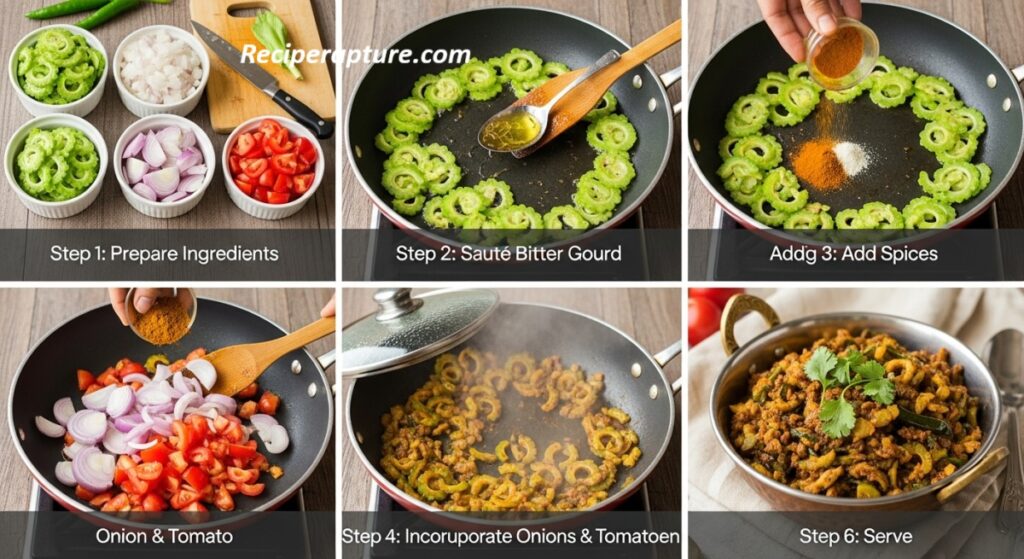
Heat oil in a heavy skillet and add the karela slices, sautéing them on medium heat until they begin to soften and slightly brown; this is crucial for reducing bitterness. Remove them and set them aside. In the same pan, add more oil if necessary and sauté the onions until deeply golden and caramelized; they should lose sharpness and turn sweet.
Add ginger-garlic paste and green chilies, cooking until fragrant. Now stir in the tomatoes (if using) along with red chili, coriander powder, turmeric, and salt.
Once the mixture softens, return the karela to the pan and mix thoroughly. Let everything cook on low heat so the spices meld together. Finish with a squeeze of lemon juice and optional fresh coriander.
Serving Ideas of Karela Vegetable

- Serve with hot phulka, chapati, or homemade paratha
- Pair with plain yogurt or raita to balance flavors
- Enjoy with steamed rice for a simple desi meal
- Add achar or green chutney on the side
Style Comparison Table
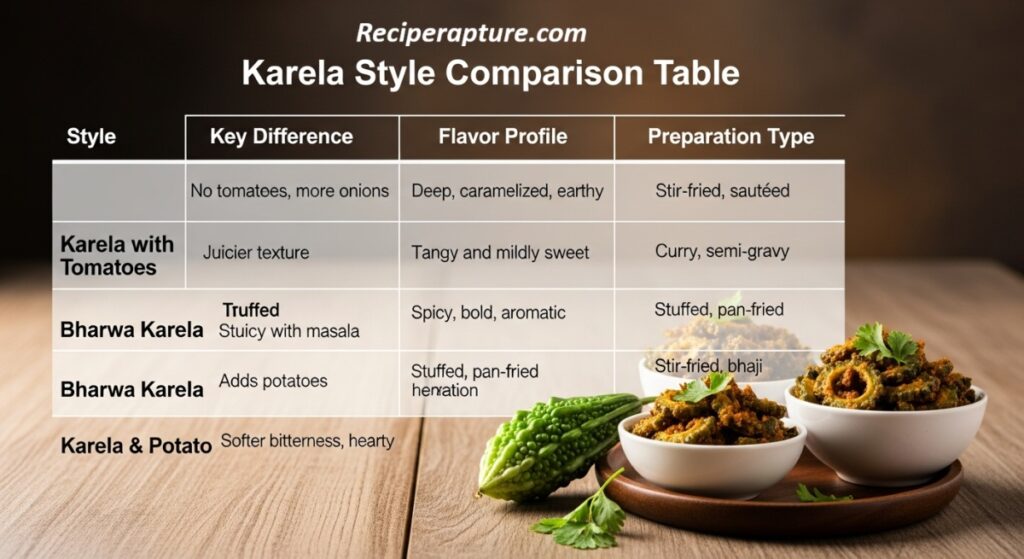
| Style | Key Difference | Flavor Profile |
| Dry Karela Masala | No tomatoes, more onions | Deep, caramelized, earthy |
| Karela with Tomatoes | Juicier texture | Tangy and mildly sweet |
| Bharwa Karela | Stuffed with masala | Spicy, bold, aromatic |
| Karela & Potato | Adds potatoes | Softer bitterness, hearty |
Tips & Variations of Karela Vegetable
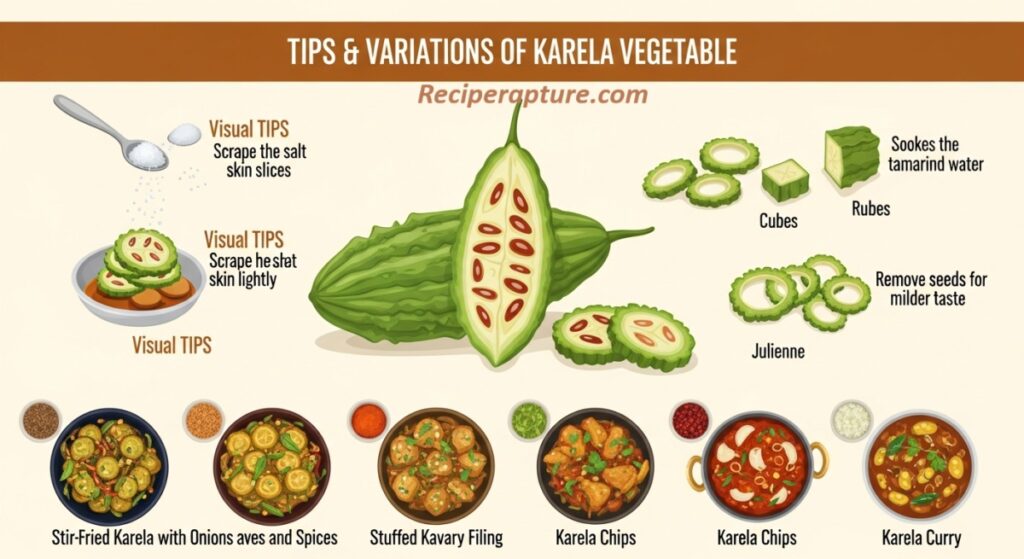
- Add a pinch of sugar only if bitterness remains too strong.
- For extra depth, fry the karela until crisp before mixing into masala.
- Add potatoes to reduce bitterness and increase volume.
- Always slice karela thin for faster cooking and better texture.
- If avoiding oil, steam karela first to soften them.
Ingredient Reference Table
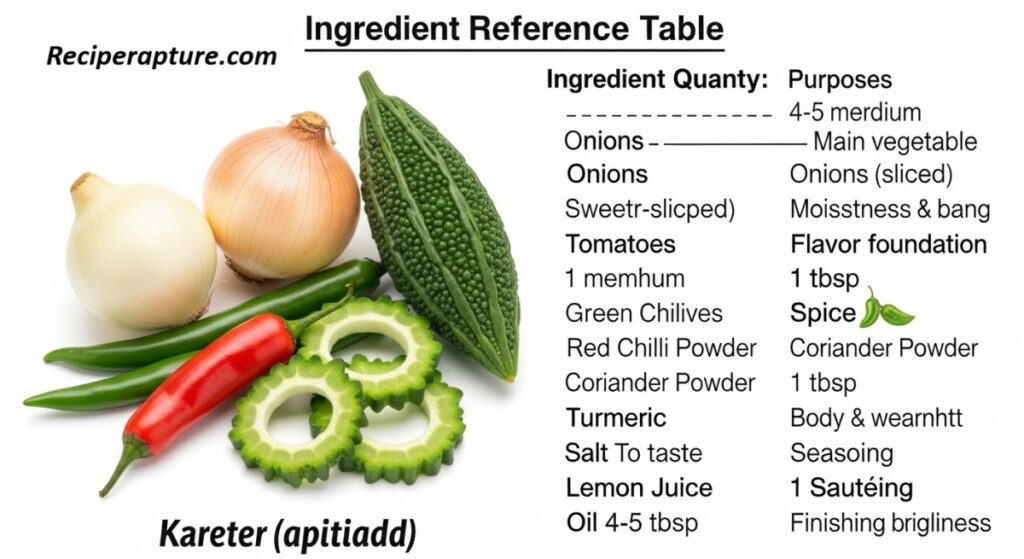
| Ingredient | Quantity | Purpose |
| Karela (bitter gourd) | 4–5 medium | Main vegetable |
| Onions (sliced) | 2 large | Sweetness & base |
| Tomatoes (optional) | 1 medium | Moisture & tang |
| Green Chilies | 2–3 | Heat & aroma |
| Ginger-Garlic Paste | 1 tbsp | Flavor foundation |
| Red Chili Powder | 1 tsp | Spice |
| Coriander Powder | 1 tbsp | Body & earthiness |
| Turmeric | ½ tsp | Color & warmth |
| Salt | To taste | Seasoning |
| Lemon Juice | 1 tbsp | Finishing brightness |
| Oil | 4–5 tbsp | Sautéing |
Nutritional Info (Approx. per serving)
Calories: ~150–170
Carbohydrates: 12–15g
Protein: 2–3g
Fat: 10–12g
Fiber: 3–4g
Rich in vitamins A and C and antioxidants
Final Thoughts
Karela is one of those vegetables that rewards patience; prepping it well, caramelizing onions properly, and cooking it slowly transforms a bitter vegetable into a comforting, aromatic dish. Once you master the salting and sautéing steps, making perfect karela becomes surprisingly easy and consistently delicious.
Conclusion
This easy Pakistani-style karela recipe is wholesome, nutrient-rich, and full of flavor, making it a wonderful addition to your everyday meals. With carefully balanced spices and simple ingredients, it turns a traditional bitter vegetable into a dish everyone at home can enjoy. Serve it fresh, pair it with warm roti, and enjoy a classic taste of home-cooked desi comfort.