How to Make Mutton Daleem—Authentic Pakistani Recipe
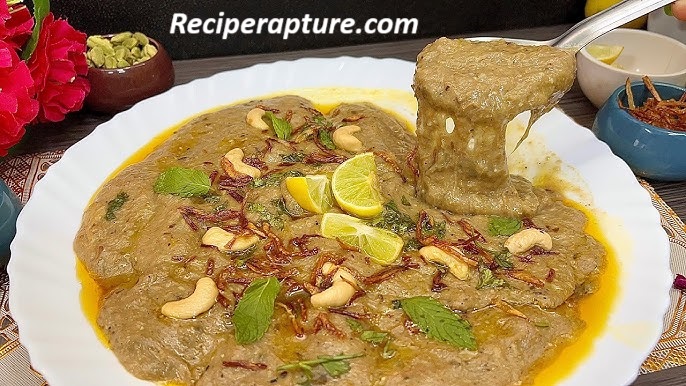
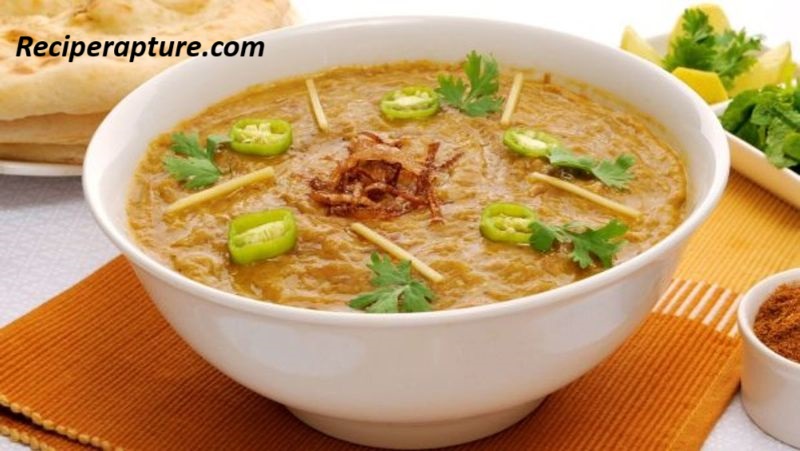
Mutton Daleem, also known as Haleem, is one of Pakistan’s most loved comfort foods: a thick, savory porridge made with slow-cooked mutton, lentils, and wheat, simmered for hours until it becomes rich, creamy, and deeply flavorful. Traditionally enjoyed during Ramadan, Muharram, or special occasions, Haleem is a dish that symbolizes warmth, sharing, and patience.
Every bite of Daleem bursts with flavor from tender shreds of mutton, nutty grains, aromatic spices, and that signature ghee drizzle on top. This recipe brings you the authentic Pakistani street-style Mutton Daleem, with a step-by-step process to help you perfect its thick, velvety texture at home.
Ingredients Breakdown for Daleem
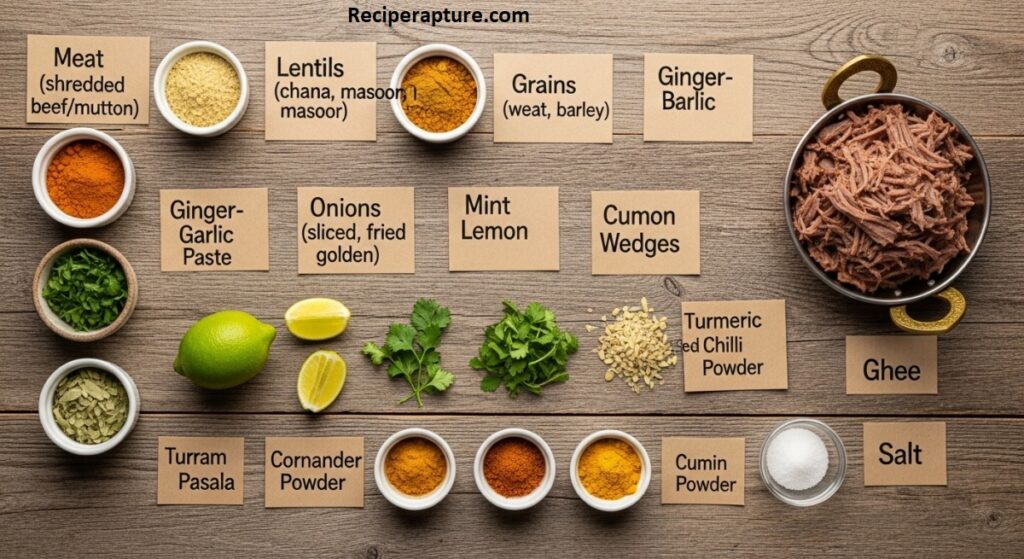
The soul of a good Daleem lies in the blend of grains, lentils, and meat cooked slowly together. Mutton provides deep, meaty richness, while cracked wheat (daliya) and lentils form the thick base. A balanced mix of spices like garam masala, cumin, and black pepper gives it warmth, and a generous amount of fried onions and ghee ties everything together for that classic, aromatic flavor.
Authentic Haleem uses various lentils chana dal, masoor dal, moong dal, and masoor to add depth and creaminess. Patience is key: the longer it simmers, the better it gets.
You Will Enjoy This: How to Make Gurday Kapooray—Step-by-Step Pakistani Recipe
Equipment Needed for Daleem
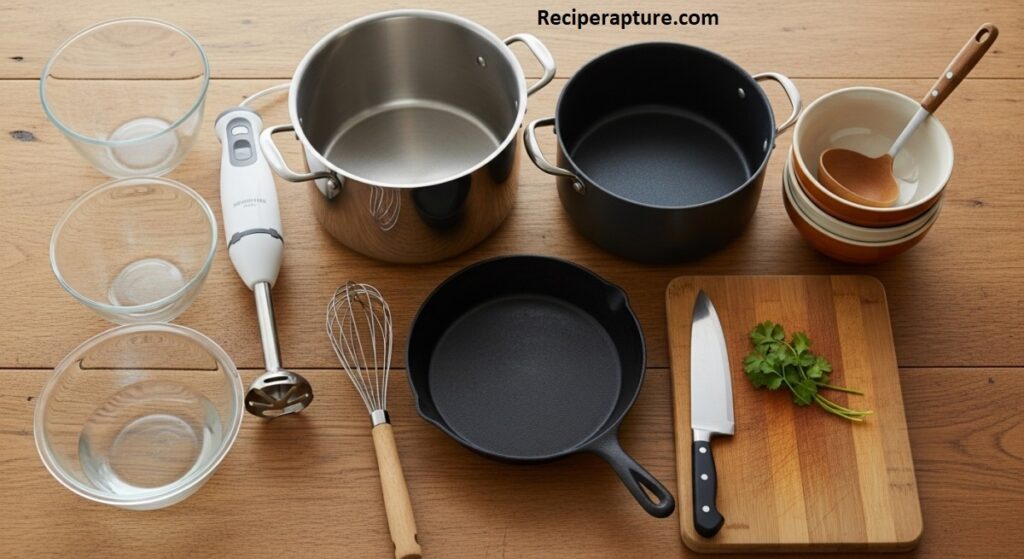
- Heavy-bottomed pot or pressure cooker
- Deep nonstick pot for final mixing
- Hand blender or wooden masher (for texture)
- Mixing bowls for soaking grains
- Frying pan (for tempering)
- Sharp knife and cutting board
- Serving bowls and ladle
Optional:
- Mortar and pestle for fresh spice grinding
- Slow cooker for traditional simmering
Preparation for Daleem
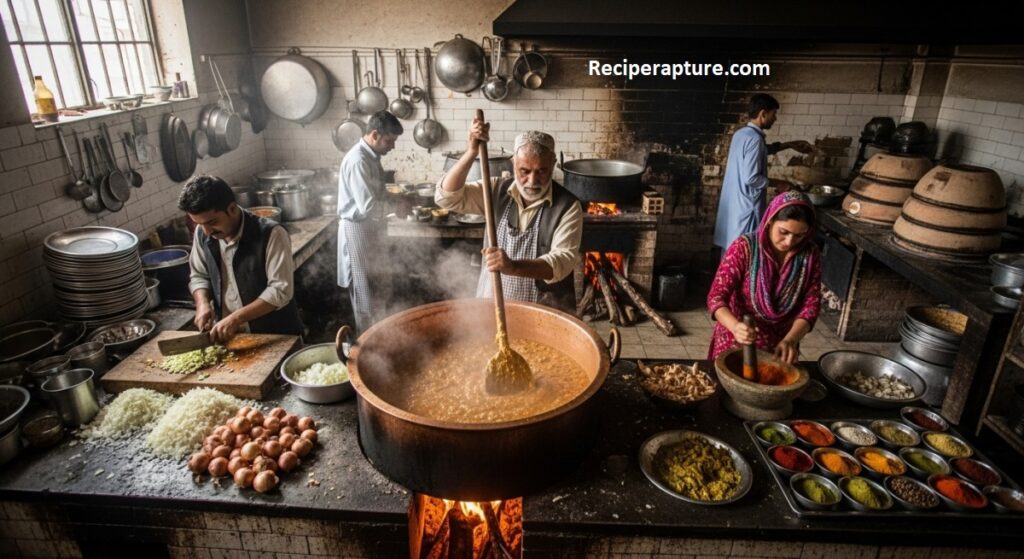
Start by soaking cracked wheat (daliya) and lentils overnight to soften them. Cook mutton with ginger-garlic, salt, and spices until tender and shred the meat finely. Separately cook lentils and wheat until mushy. Once both are ready, they’re combined, mashed, and simmered together with spices and ghee.
The goal is a smooth, thick, paste-like consistency where no grain or lentil stands out, but the mutton flavor shines through.
Cooking Time Table
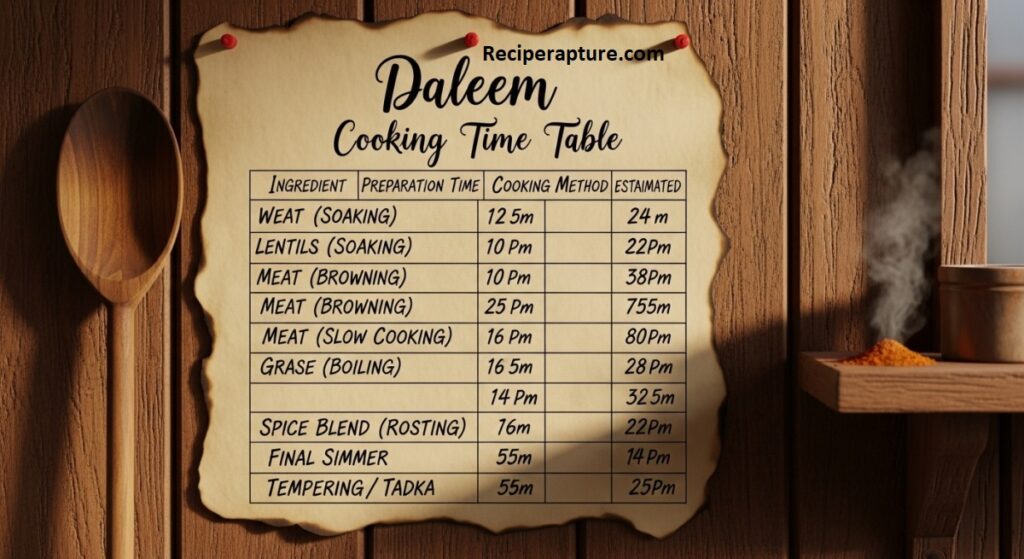
| Step | Time Needed | Description |
| Soaking lentils & wheat | 4–6 hours (or overnight) | Ensures grains cook soft |
| Cooking mutton | 30–40 minutes | Until tender and shred easily |
| Cooking lentils & wheat | 45 minutes | Until completely mushy |
| Combining & blending | 15–20 minutes | Blend for smooth consistency |
| Simmering with spices | 25–30 minutes | For deep flavor infusion |
| Tempering & finishing | 10 minutes | Ghee fry for aroma |
📌 Total active time: ~2 hours; full preparation with soaking: overnight process.
Step-by-Step Instructions for Daleem
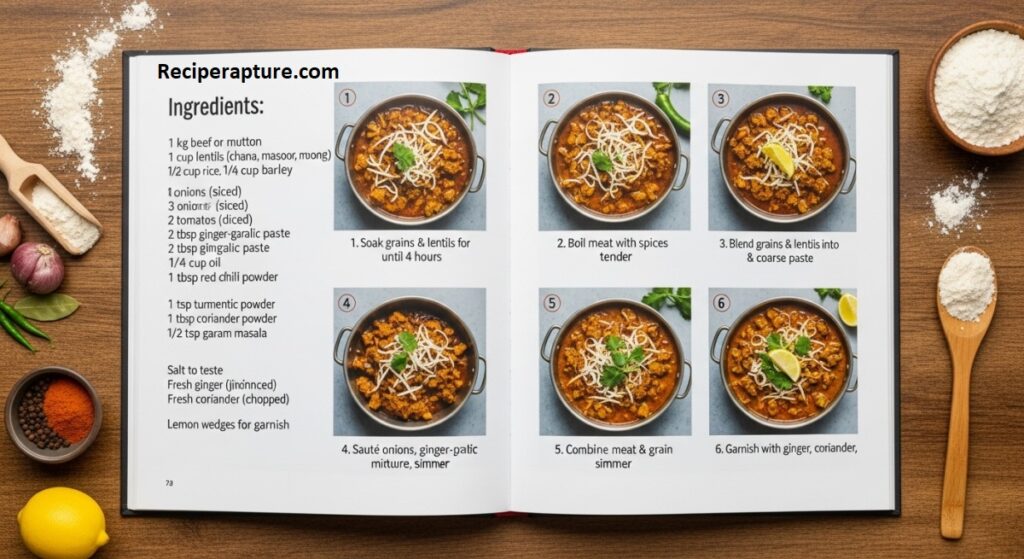
Soak the Grains & Lentils:
In a large bowl, combine 1 cup cracked wheat with all lentils (¼ cup each of chana dal, masoor dal, and moong dal). Soak overnight in plenty of water.
Cook the Mutton:
In a pressure cooker, add ½ kg mutton (with bone), 1 tbsp ginger-garlic paste, 1 tsp salt, 1 tsp red chili powder, ½ tsp turmeric, and 4 cups water. Cook until tender (about 30–40 minutes). Shred the meat and reserve the stock.
Cook the Lentil & Grain Mixture:
Drain soaked grains and cook them in 6 cups of water until completely soft. Use a hand blender or masher to create a thick paste.
Combine Mutton with Lentil Mixture:
Add shredded mutton and reserved stock into the lentil mixture. Stir continuously to combine.
Add Spices:
Add 1 tsp garam masala, 1 tsp cumin powder, 1 tsp coriander powder, salt, and black pepper to taste. Simmer on low heat for 25–30 minutes, stirring frequently to prevent sticking.
Temper with Ghee:
In a frying pan, heat 3 tbsp ghee, add 1 medium sliced onion, and fry until golden brown. Add this ghee and fried onions to the Haleem and mix well.
Final Touch:
Adjust thickness with a little warm water if needed. Cook another 5–10 minutes on low flame.
Serving Suggestions for Daleem
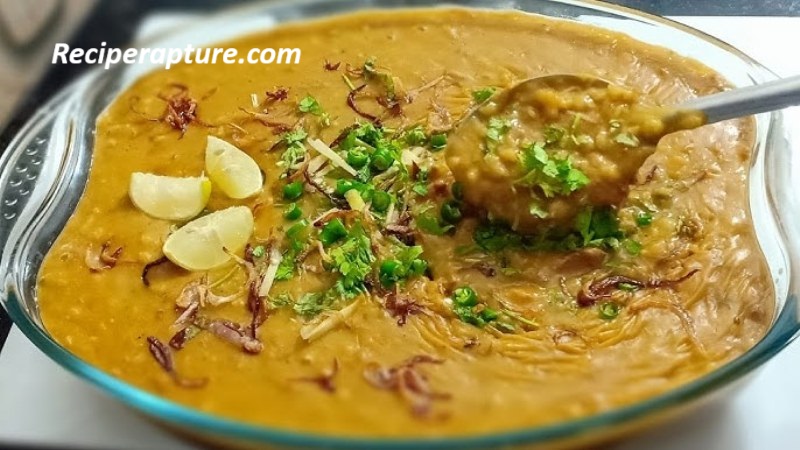
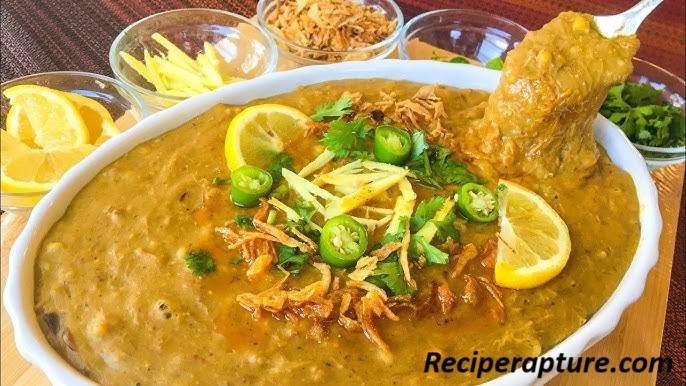
- Serve hot in deep bowls topped with fried onions, lemon wedges, fresh coriander, green chilies, and julienned ginger.
- Drizzle hot ghee or butter on top for an authentic taste.
- Pair with naan, paratha, or sheermaal for a rich traditional meal.
- Best enjoyed with iced lassi or chilled raita on the side.
Comparison Table for Daleem
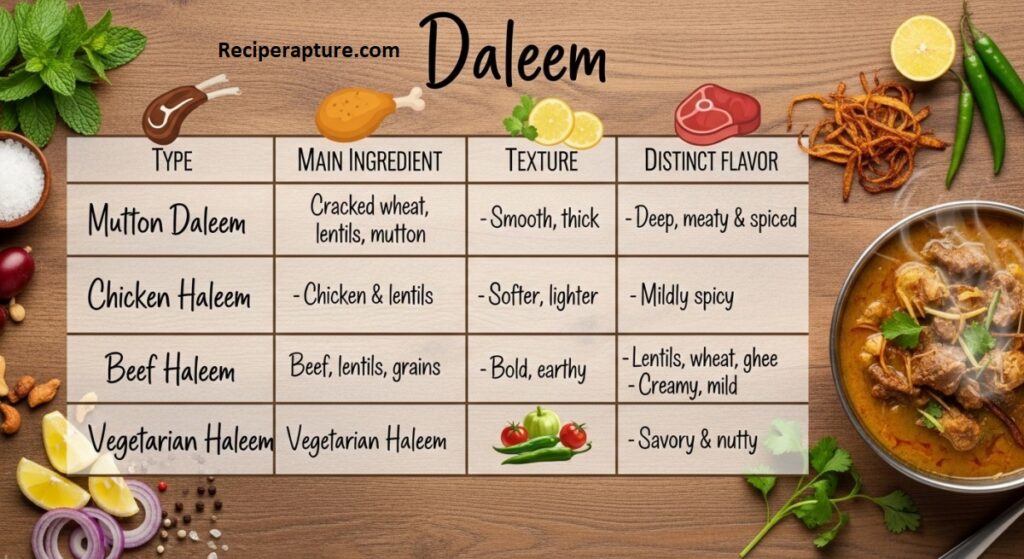
| Type | Main Ingredient | Texture | Distinct Flavor |
| Mutton Daleem | Cracked wheat, lentils, mutton | Smooth, thick | Deep, meaty & spiced |
| Chicken Haleem | Chicken & lentils | Softer, lighter | Mildly spicy |
| Beef Haleem | Beef, lentils, grains | Richer, heavier | Bold, earthy |
| Vegetarian Haleem | Lentils, wheat, ghee | Creamy, mild | Savory & nutty |
📌 Mutton Daleem stands out for its rich, meaty flavor and perfect balance of grains and ghee.
Tips & Variations for Daleem
- For extra creaminess, add a few tablespoons of boiled barley or oats to the mixture.
- Always roast the spices lightly before adding to enhance aroma.
- Don’t rush the simmering stage; slow cooking is what deepens the flavor.
- Add a smoked touch (dhungar) by placing hot coal in a bowl inside the Haleem pot, drizzling ghee, and covering for 2 minutes.
- For a spicy kick, mix in crushed red chilies or garam masala just before serving.
Ingredient Table for Mutton Daleem
| Ingredient | Amount | Purpose |
| Mutton (with bone) | ½ kg | Main protein & flavor base |
| Cracked Wheat (Daliya) | 1 cup | Gives thickness & body |
| Chana Dal | ¼ cup | Adds creamy texture |
| Masoor Dal | ¼ cup | Adds depth & color |
| Moong Dal | ¼ cup | Lightens texture |
| Onions (fried) | 2 medium | Flavor & garnish |
| Ghee | 4 tbsp | Richness & aroma |
| Ginger-Garlic Paste | 1 tbsp | Base flavor |
| Garam Masala | 1 tsp | Warm spice blend |
| Red Chili Powder | 1 tsp | Heat |
| Turmeric Powder | ½ tsp | Color & earthy tone |
| Cumin & Coriander Powder | 1 tsp each | Balance of spices |
| Salt | To taste | Essential seasoning |
| Lemon, Ginger, Coriander | As garnish | Fresh finish |
Nutritional Info (Per Serving – Approx.)
Calories: 420 kcal
Protein: 26 g
Fat: 22 g
Carbohydrates: 32 g
Fiber: 6 g
Sodium: 620 mg
(Values may vary depending on portion size and ghee quantity.)
Closing / Call-to-Action
Now that you’ve mastered the art of making authentic Mutton Daleem, bring this traditional comfort food to your table.
Whether it’s a family gathering, Ramadan iftar, or a cold winter evening, this dish will warm hearts and fill bellies with pure satisfaction.
Try it once—and you’ll see why Daleem holds a special place in every Pakistani home.
FAQs
Q: Can I make Haleem without a pressure cooker?
Yes! You can slow cook it in a heavy-bottomed pot—it just takes longer (about 3–4 hours).
Q: Can I use boneless mutton?
Yes, but mutton with bone gives better flavor and richer broth.
Q: What’s the difference between Daleem and Haleem?
Daleem is a regional variation—slightly thicker and richer, often using more ghee and less blending than traditional Haleem.
Q: How can I store leftovers?
Refrigerate for up to 3 days or freeze for up to a month. Reheat with a little water or stock to bring back texture.
Q: Is it okay to use pre-made Haleem mix?
You can, but the flavor is best when made from scratch with your own spice blend.
Conclusion
Mutton Daleem is more than just a dish; it’s a celebration of patience, heritage, and flavor. From the slow simmer of lentils to the tender strands of mutton melting into spiced ghee, every element tells a story of tradition and comfort. Follow this recipe, and you’ll have a bowl of rich, velvety, authentic Daleem just like it’s made in the heart of Lahore or Karachi.